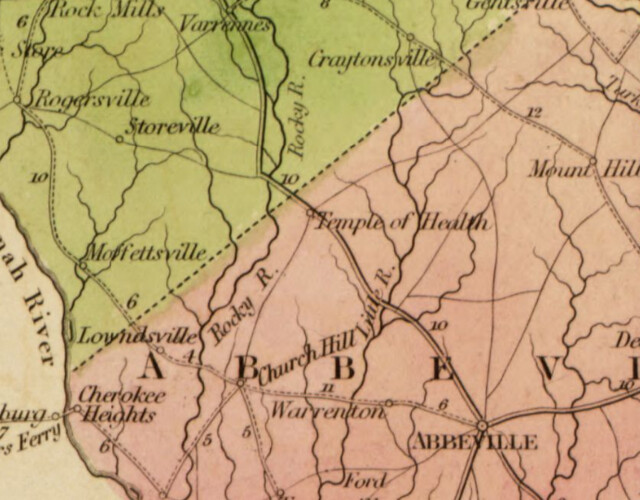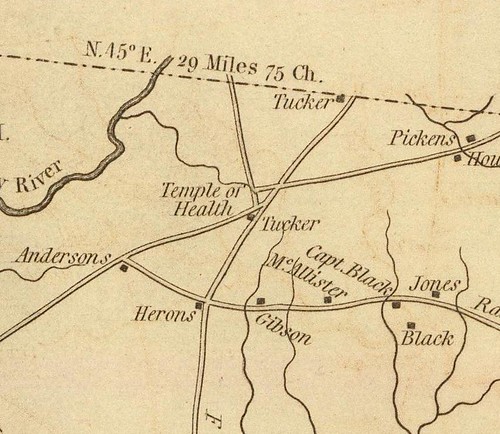
I had been trying to track down a place I’d seen on an old map. The Temple of Health was the name of a community and a post office, but it originally applied to an old inn on a stage coach route. The Stage Coach Inn was purchased and renamed for mineral springs on the property that supposedly had medicinal properties. After my initial research I had tried to visit the location of the Temple of Health near Antreville, but I hadn’t found anything. I had discovered that the original inn had been moved to a resort near Toccoa, Georgia. It was time to actually visit the Temple of Health.
Category: History and Genealogy
So, I was intrigued by this random name on a map. I had to find out more about it, so I had done some initial research. Now it was time to see if there was anything left of the old Temple of Health.
Tuesday, October 11, 2016
Antreville and the Temple of Health are small communities. I knew it wouldn’t take long to cover those areas, so I added a few more targets to my list to justify the trek down to Abbeville County. My plan was to head down to drive pretty much straight down to Antreville, check out a few sites I had tagged, then meander back through Anderson County by way of Lowndesville and a few other spots north of there. As usual, there would be discoveries along the way.
Read More “The Temple of Health: Ground-Truthing in Antreville” »
Sometimes it doesn’t take much to send me down a rabbit-hole of research. In this case it was a name on a map. I was looking at an 1839 atlas of the United States on the Library of Congress website when I spotted an unusual name in Abbeville – the Temple of Health. It was listed as a place name. When I checked the 1825 Robert Mills Atlas for Abbeville District, the name was there, too. I was intrigued. Why would this spot in the backwoods of South Carolina come to be known as the “Temple of Health?”
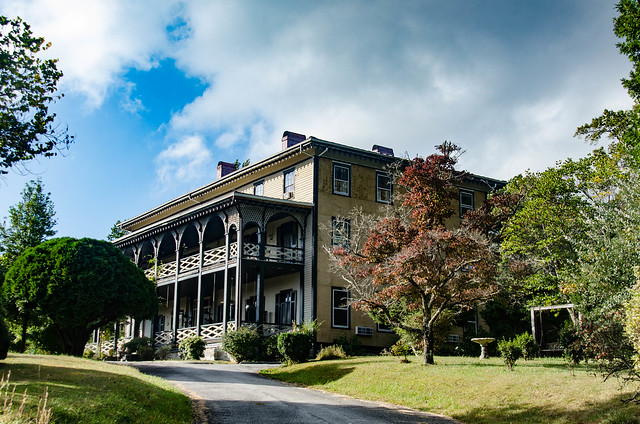
I was out and about searching for examples of buildings designed by 19th century architect Edward C. Jones. I had visited three locations in Henderson County, including the Mansouri Inn, St. John in the Wilderness, and Calvary Episcopal. It was now time to close the loop and head back to South Carolina. I only had one more target related to Edward Jones, but I was far from done with explorations.
Read More “In Search of Edward C. Jones – Part 3, the Trek to Spartanburg” »
In Part 1 of this series I took a look at the legacy of Edward C. Jones, a South Carolina architect who until just a few weeks ago was unknown to me. Having done a bit of research, I decided it was time to do a bit of ground-truthing. Wednesday was an absolutely spectacular fall day, despite an oncoming hurricane, so I wanted to take advantage of the weather while it held. My ramble would take me on a loop up through North Carolina then back down through Spartanburg. As usual on these rambles, I made discoveries I never intended, and met some cool people along the way.
Read More “In Search of Edward C. Jones – Part 2, the Trek through Henderson County” »

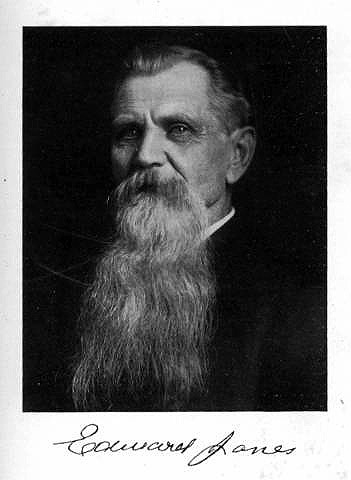
Edward C. Jones was nowhere on my radar. His name was completely unfamiliar to me, which is odd, since I’m very familiar with so many of the buildings he designed. I knew lots about Robert Mills, Rudolph Lee, and other South Carolina architects, but for whatever reason, I’d not paid attention to Jones. That all changed a few weeks ago. John Nolan from Greenville History Tours posted a series of photographs featuring buildings that Jones had designed. Seeing them next to each other the similarities leaped out. I knew I needed to find out more about this architect, and the buildings he designed.
Read More “In Search of Edward C. Jones – Part 1, The Architect” »
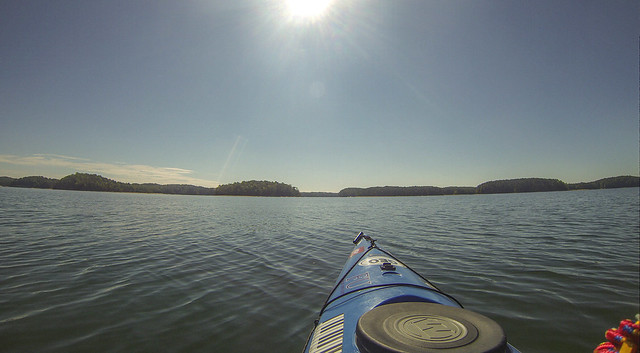
Bennie and I have been trying to keep to our paddling schedule, but the fates have been against us. On this last day of summer we had a nice trip to Jocassee planned, but then illness struck, and Bennie was unable to go. I had my boat loaded up, so I decided I’d head on out anyway, with a slightly altered itinerary. I have been wanting to check out the old Harrisburg Plantation Cemetery on “Ghost Island” in Lake Hartwell, so that’s where I set my sights.
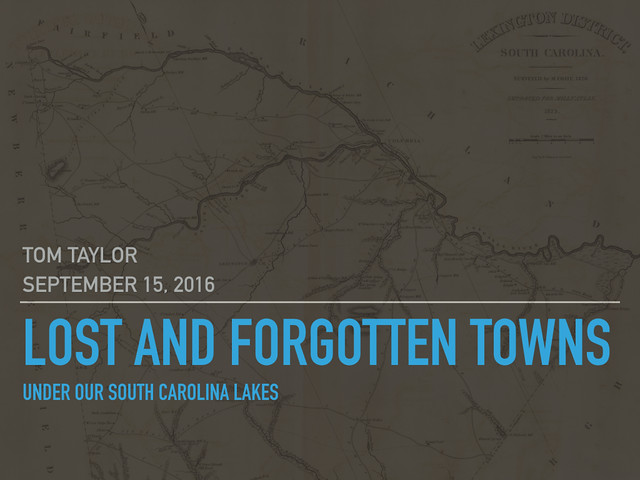
Several months ago I received and e-mail from Kes Crumpler. Kes is with the Lake Murray Power Squadron, and asked if I’d be willing to give a talk to their group about ghost towns under South Carolina’s lakes. Since I’m no stranger to public speaking, I said, “Sure!” Although I was completely unsure as to what a “power squadron” was.
Read More “Lost and Forgotten Towns under South Carolina’s Lakes” »
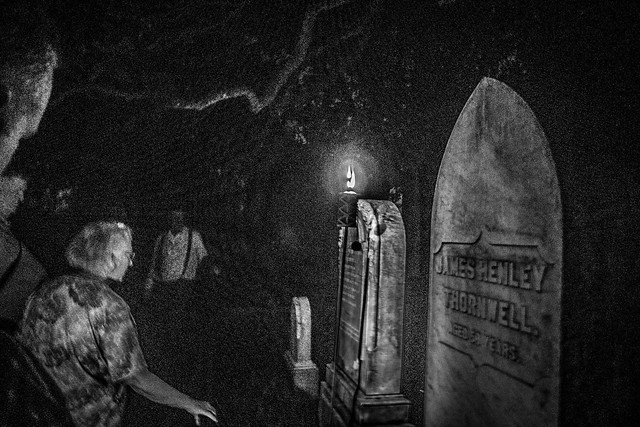
The second Thursday of each month Historic Columbia offers tours of the historic Elmwood Cemetery at the north end of town. I decided it was time to check it out, so I made reservations for Dwight Moffitt and me to attend.
Several weeks ago I spent some time searching for remnants of the Swamp Rabbit Railroad. This isn’t the famous one in Greenville that later became a popular trail. Instead, it’s a line constructed by the Ohio River and Charleston Railroad to serve textile communities in the Upstate. Despite ambitious plans, it was only completed from Blacksburg down through Cherokee Falls, then over to Gaffney. The railroad was short-lived, but in the early 1970s the section from Blacksburg to Cherokee Falls found new life as a scenic railroad for a bit. That, too failed, and now the railroad is abandoned.
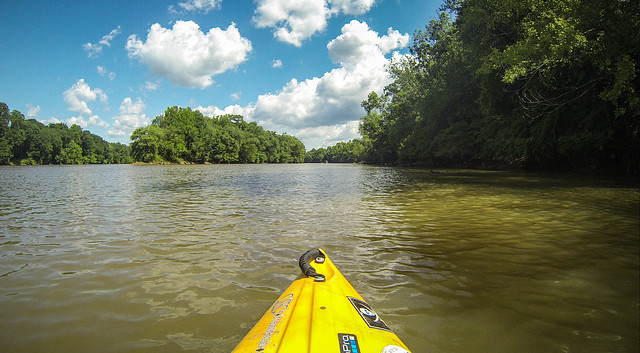
I had explored as much as I could by land. Google Earth indicated the existence of a couple of supports for the old railroad trestle in the Broad River, but I couldn’t get close enough to see them. The trestle crossed Goat Island, which also figures prominently in the story of the Swamp Rabbit. This past week Alan Russell and I were able to get out on the water, and visit these locations.
Read More “Chasing a THIRD Swamp Rabbit – Part 5, Paddling to Goat Island” »