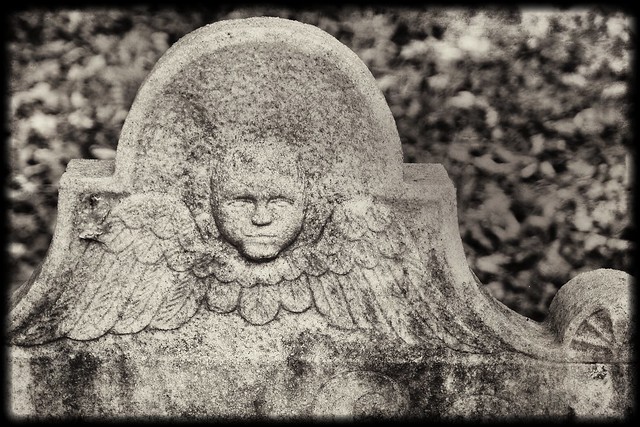
I first noticed this when we made our trek to the Promised Land with Glynda and Houston. At Cedar Springs ARP Church several of the more elaborate headstone slabs in the cemetery had the carver/artist’s name inscribed at the bottom.
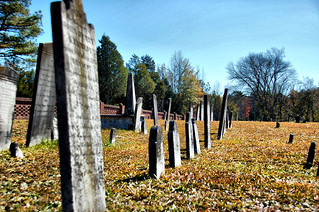
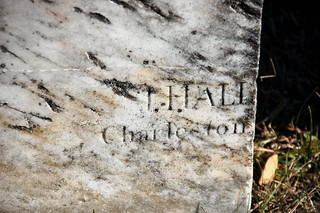
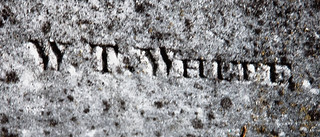
Then, when Dwight and his family traveled with me to Kingsville in Lower Richland County we stopped by the historic Congaree Baptist Church. There, on one of their headstones, was one of the names I had spotted at Cedar Springs – W. T. White.

Then, last Saturday on our way back from the Edisto River, Alan and I stopped by the old Pon Pon Chapel of Ease near Jacksonboro. There, at the bottom of one of the old slab stones, was the signature of J. White.
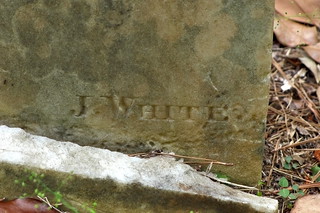
I began to wonder if W. T. White and J. White were related, and also wondered how their work became so wide-spread across South Carolina’s historic churches. Turns out they were part of a dynasty of stone carvers that did much, much more than just carving headstones.
The tale begins with Thomas Walker, a master stone carver from Scotland who came to Charleston shortly after the American Revolution. Walker was active as a stone carver from about 1790 to 1836. Walker was known for the “winged souls” motif, similar to the one in the image at the top of this post. However, he also incorporated floral and architectural images into his carvings.
Walker established a carving business in Charleston, and enlisted his family in the enterprise. His sons, David A. Walker, James E. Walker, Robert D. Walker, and William S. Walker, were active carvers up until the Civil War.
Walker’s son-in-law was John White, one of the first signature names I encountered. John White went into business with James Rowe, starting their own stone carving business. The firm of Rowe and White not only carved headstones, but was also involved in building construction. They are listed as the primary stone carvers for Robert Mills’ Fireproof Building in Charleston. Rowe and White were active from about 1819 until 1825.
John White’s son, also named John, and his grandson, William T. White, also got into the family business. John, Jr., was active from 1822-1850, and William was active from 1850-1870. Also active about the same time as William were his two brothers, Robert D. White and Edwin R. White.
Headstone carving changed to match the popular funerary art of the times. During the mid-19th Century forms other than the thin slab came into prominence, such as the broken column and obelisk. Manufacturing processes were also mechanized and streamlined. William White was listed in the census data of the time as the owner of the “Steam Marble Works”, which indicates that steam machinery was in use.
According to the Historical Marker Database…
The Walkers’ and Whites’ stones—usually cut from high-quality Italian marble, and carved with a grace and sophistication surpassing most other gravestone art in South Carolina and the rest of the region for this period—have been noted by several historians, art historians, and other scholars of historic funerary art in the Southeast. Relatively little in-depth research, however, has been conducted on the Walkers and the Whites; most of what is known is based on census records, listings in city directories, newspaper advertisements, and similar sources, and assessments of their standing are based on scholars’ familiarity with surviving examples of their work as viewed in context with the typical gravestone art of their day.
Headstones signatures were often carved with first initial and last name, but occasionally “Rowe & White” appear on some stones. Especially if the stone was intended for the Upstate, or someplace other than Charleston, the word Charleston or some form of abbreviation would be used to indicated the point of origin.
Headstones were a point of pride for a family, and an indicator of status. It’s not surprising that stones from one of the finest carving firms in Charleston would be ordered for burial sites throughout the state. Stones with one of the White signatures can be found throughout the Midlands and Upstate, as well as throughout the Lowcountry areas, with some examples even in North Carolina.
So, if you happen to find yourself in a historic church cemetery, look at the base of one of the older headstones. Chances are that it was carved by one of the Walkers or the Whites.
This is great, Tom! It sheds a little light on an episode in Faulkner’s “Absalom, Absalom!”
I found the grave of a David Walker in Westview Cemetery in Atlanta. Under his name it says Stonecutter born in Scotland. He died in 1894 and his marker says he was 34 years old, so he was born ca 1860, I”m pretty sure he must be related. I created a memorial for him on Findagrave, # 76623864 and have a photo posted there of his stone, very nice!
This is really fascinating. I appreciate you putting that information together. The White name is one I’ve seen in my travels through cemeteries as well. I didn’t realize the history behind it. THANK YOU!
Interesting! I would be very pleased if you could cite the sources of your data. I am interested because, in Matanzas, Cuba, my hometown, there is a gravestone slab, interred within the Cathedral, that is marked by Rowe and White, and is supposed to date to 1809. Is is this possible?
If you click on the link at the bottom of the post for “References”, it will take you to a list of sources.
That’s fascinating about the Rowe and White stone in Cuba.
Tom , way to go ….. Mantle Fielding’s Art Reference has a small space dedicated to the family and simply list the together as the “Walker Family” SC . Gravestone Sculptors . When I cross-reference the Walker name over into Davenport’s art price guide I see William Aiken Walker of SC active up until 1899 and well listed at auction . I wonder if that was part of the same family . Yes , now as my memory reflects he had a brother that I was looking for with the initials C.S. Walker . Did a watercolor of white dasieys . Thanks for the post !
Thank you so much for doing this research. I’ve found several stones in the First Methodist Cemetery in Franklin, N.C. (in the mountains) by the Whites. Two large markers by R.D. White commemorate brothers James W. and William Theodore Siler, who died in Virginia during the Civil War, 1862; their bodies not returned home. These are the only stones in the cemetery that face West rather than East. W.T. White’s name appears on stones of Little Walter (Johnston) (died 1856) and Mary L. Gray (d. 1831). The stone of Martha Adeline (Osborne) Johnston — little Walter’s mother — is marked “Walker.”
I based my previous comment on some notes I had made years ago. Out of curiosity, I returned to the cemetery and have some corrections and additions. The stone marked “Walker” is that of Laura A. Johnston, a child (died 1855). The Mary L. Gray stone (1831) is signed by J. White — that one is the oldest in the cemetery. W.T. White made the marker of Frances W. Gray (died 1843). The James Robinson (d. 1848) stone and that of William H. Robinson were done by W.T. White. From its quality, I would guess that the marble marker for Martha Love (died 1834) is by W.T. White, but it is broken and laid in the ground. The portion that would have held the signature is gone. In all of these, the name appears on the front, below the inscription.
This is most fascinating as I am a descendent of the Whites of Charleston. My family and I have seen some of the works done by them at the Magnolia Cemetery in Charleston while visiting my parents when they lived on Kiawah Island. Thank you and I will share with my siblings.