Just off of Old Easley Bridge Road sits a lovely old house, somewhat out of character for the surrounding mid-century ranch homes. The home has been beautifully restored and now operates as the Tanglewood Inn.
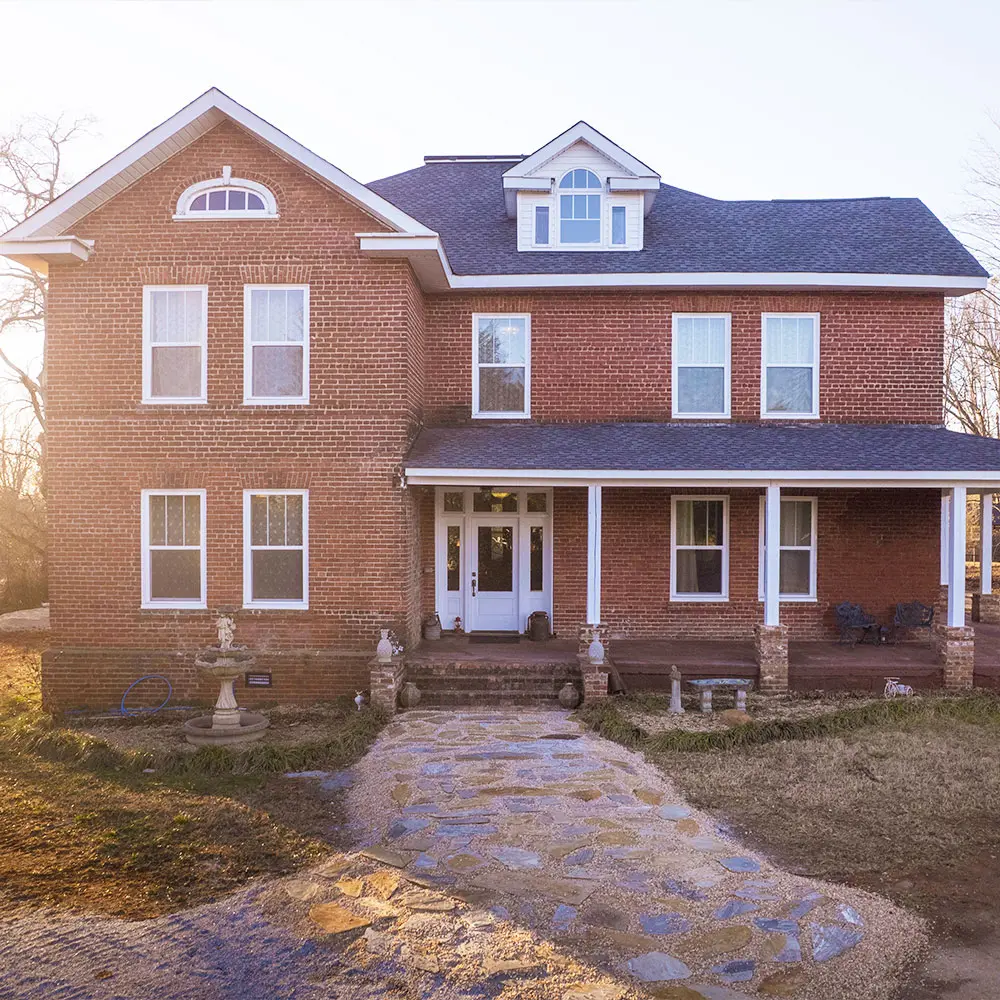
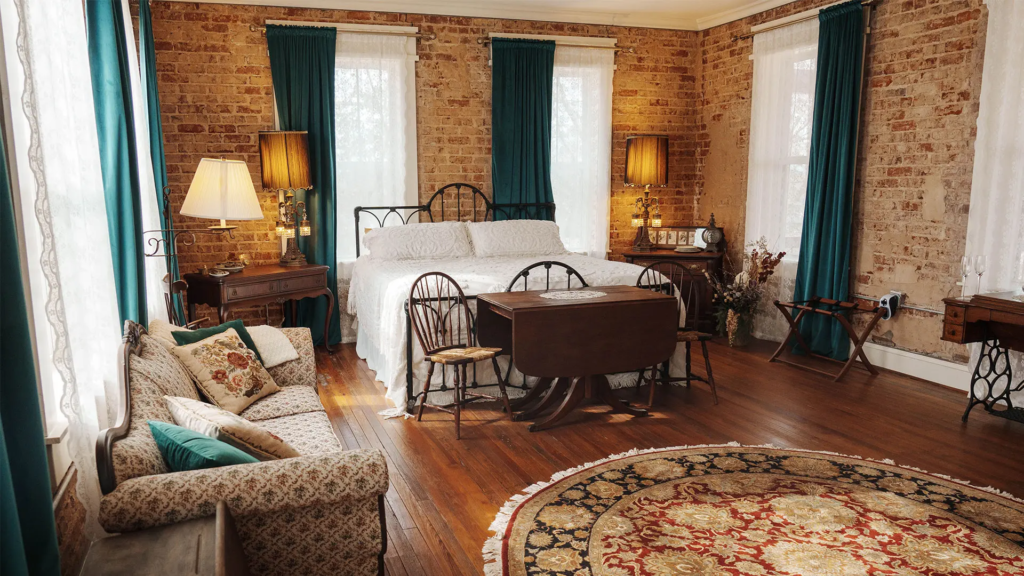
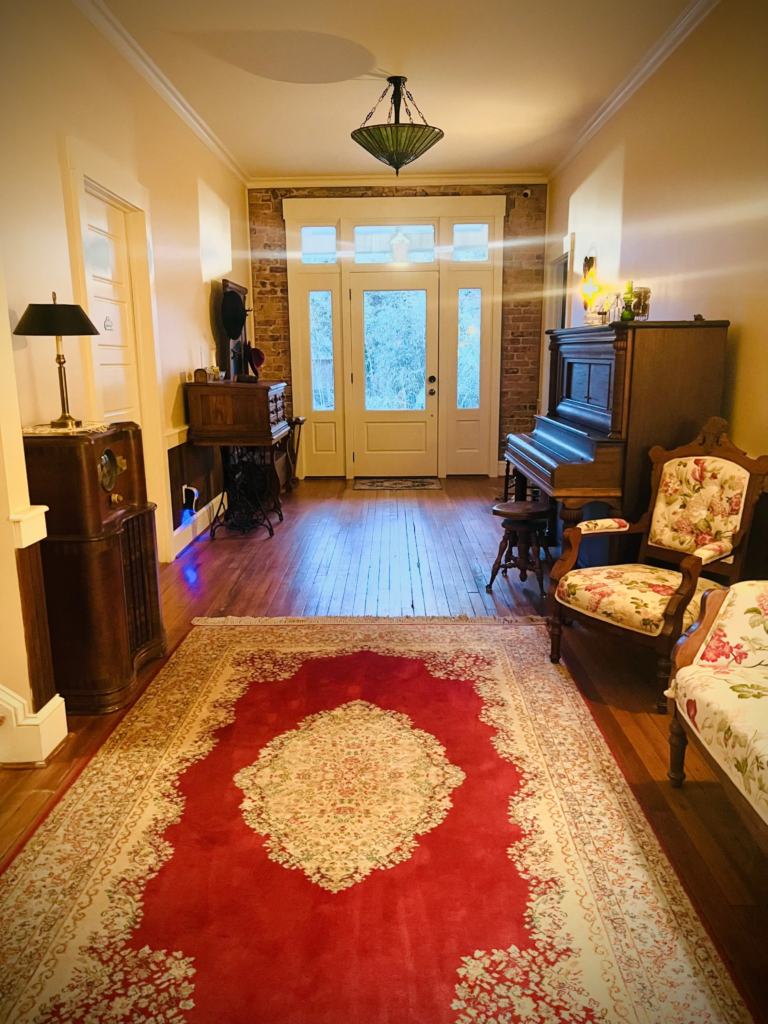
Behind the nicely appointed suites, the exquisite antiques, and comfortable common areas, though, lies a tale of tragedy.
The history of this area actually predates the city of Greenville. Greenville County was Cherokee land and off-limits to English settlers until Richard Pearis pulled his shenanigans and managed to establish a mill on the falls of the Reedy. Pendleton was the main settlement in the Upstate. At the crossroads of the road to Pendleton from Pearis’s Mill and the White Horse Road a settlement sprang up.
General John Blassingame was a Revolutionary War veteran who settled on a large farm between the Reedy and Saluda Rivers. He named his farm “Tanglewood Plantation”, a name which is still applied to the area. Blassingame’s name appears on the Robert Mills 1825 map of Greenville District.
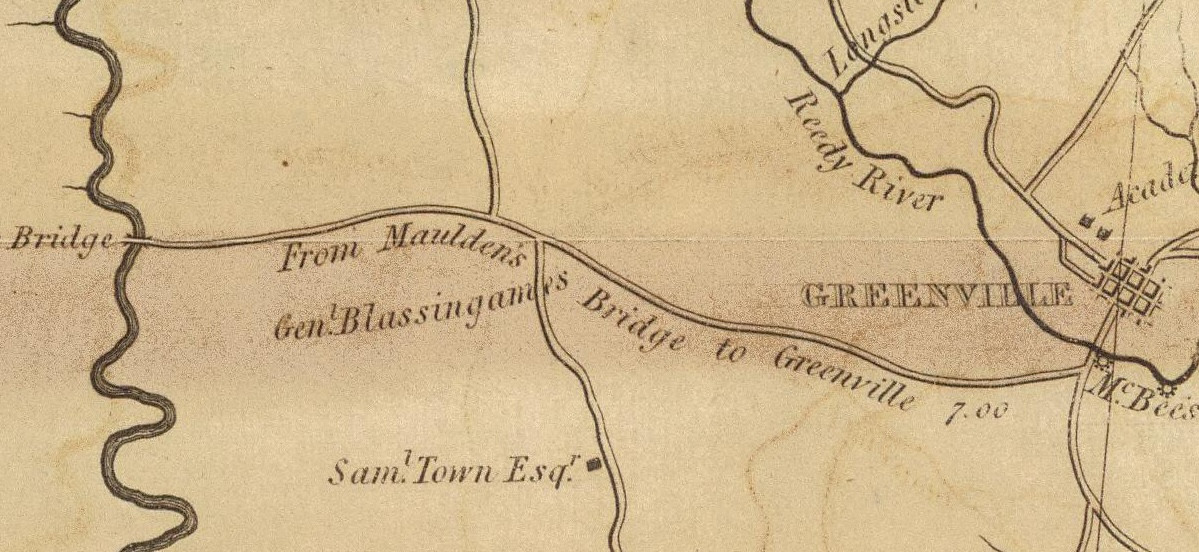
Alexander McBeth established a trading post and later a general store in the area in 1794. The Greenville Century Book by S. Crittenden, published in 1908, had this information about McBeth’s store…
“The following plot or parcel of land containing eight acres, and situated upon the Island Ford road leading from Saluda River to Reedy River, is hereby leased for the term of seven years from the first of January next ensuing, to the said Alex. McBeth & Co., on the following conditions : That the said Alex. McBeth & Co. are to erect thereon one frame store house, 30 feet by 18 feet, weatherboarded and shingled, and at the expiration of this lease, the same with any outbuildings they may erect is to revert to the said John Blassingame.”
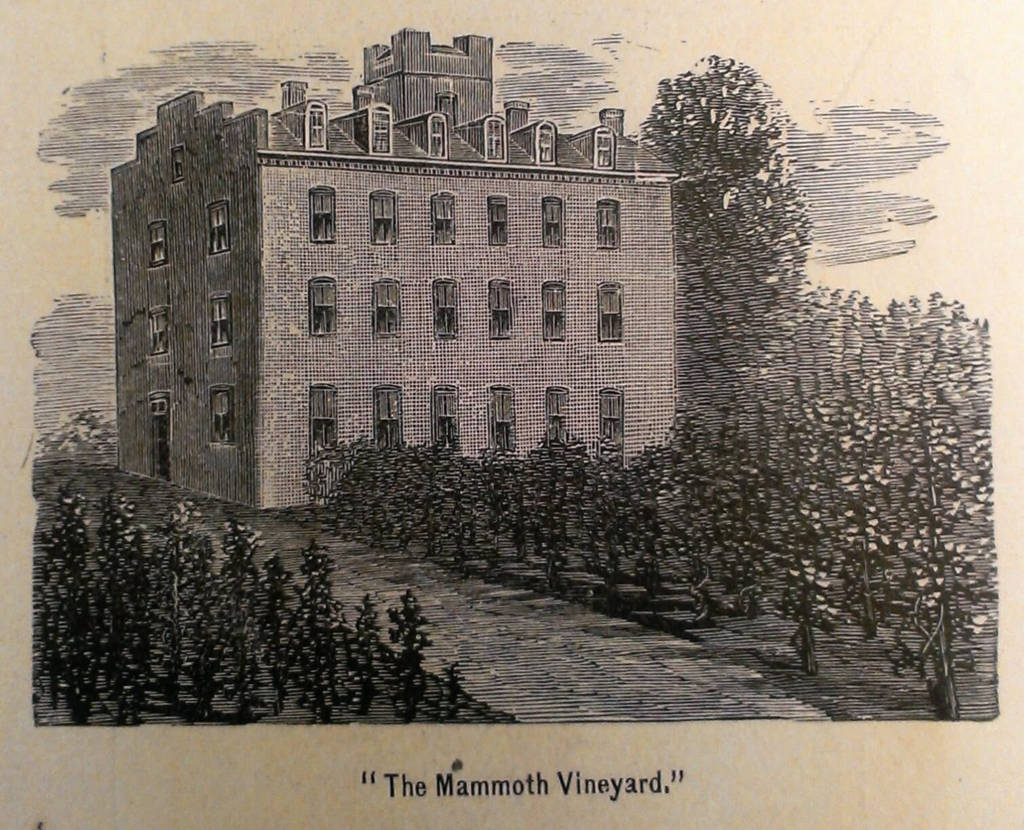
As for Blassingame’s plantation, Joel Poinsett also spent some time in the area, and his home also became known as Tanglewood. In the late 1800s the property was purchased by a French immigrant named Anthelme Carpin, who planned to plant a vineyard there. Carpin (or Carpan, as later articles spelled it), built several large brick structures for the production and storage of wine and a large house for his family. At the time his was the largest vineyard in South Carolina, and was known as “The Mammoth Vineyard.” Sadly, the Temperance Movement began to make wine production less profitable, so once again Tanglewood was up for sale.
That brings us to our particular house…
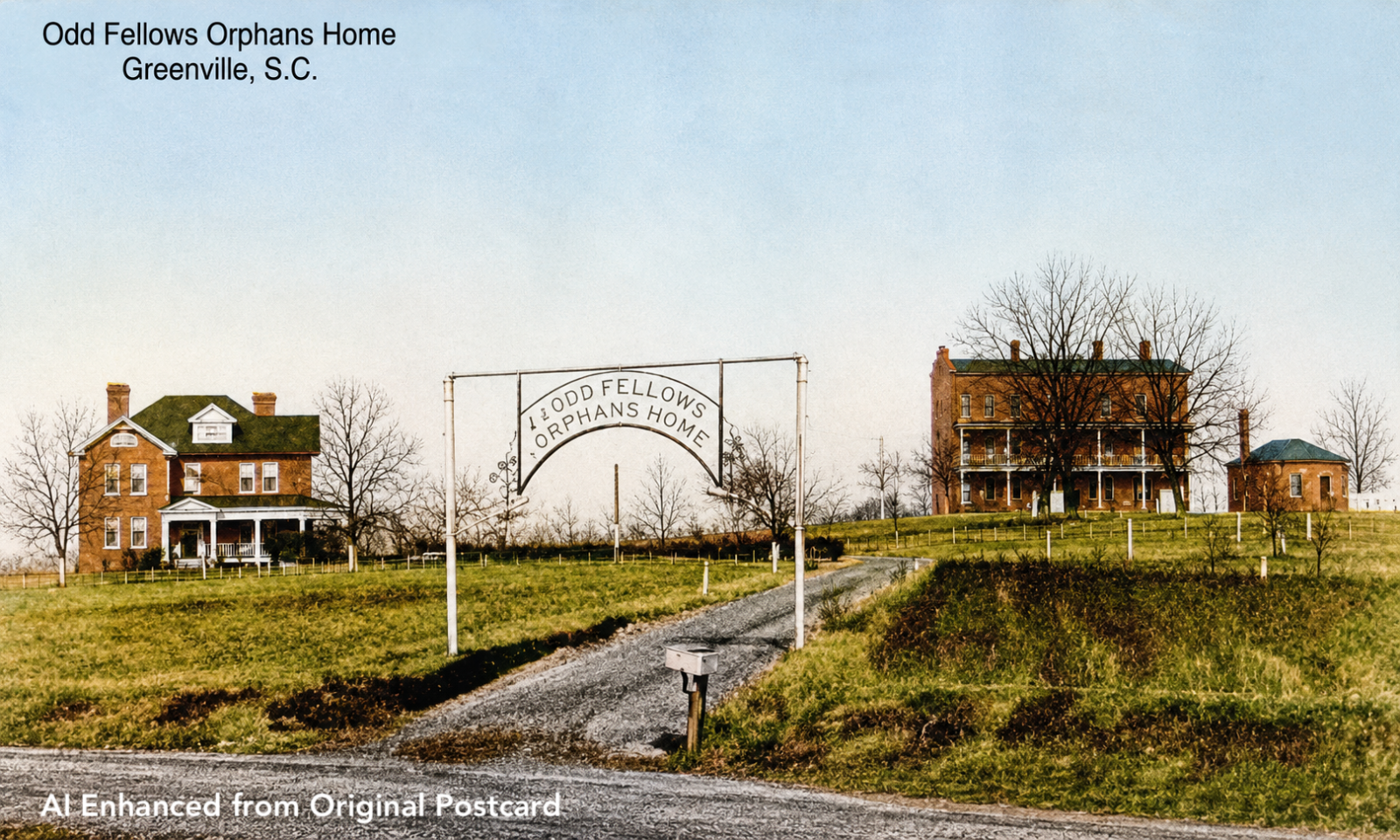
In 1903 the Greenville chapter of the Independent Order of Odd Fellows proposed building an orphanage in the Greenville area. IOOF had built orphanages across the United States, and several cities in the state, including Columbia and Charleston, submitted competing proposals. In January of 1904 the IOOF announced that Greenville had the winning proposal.
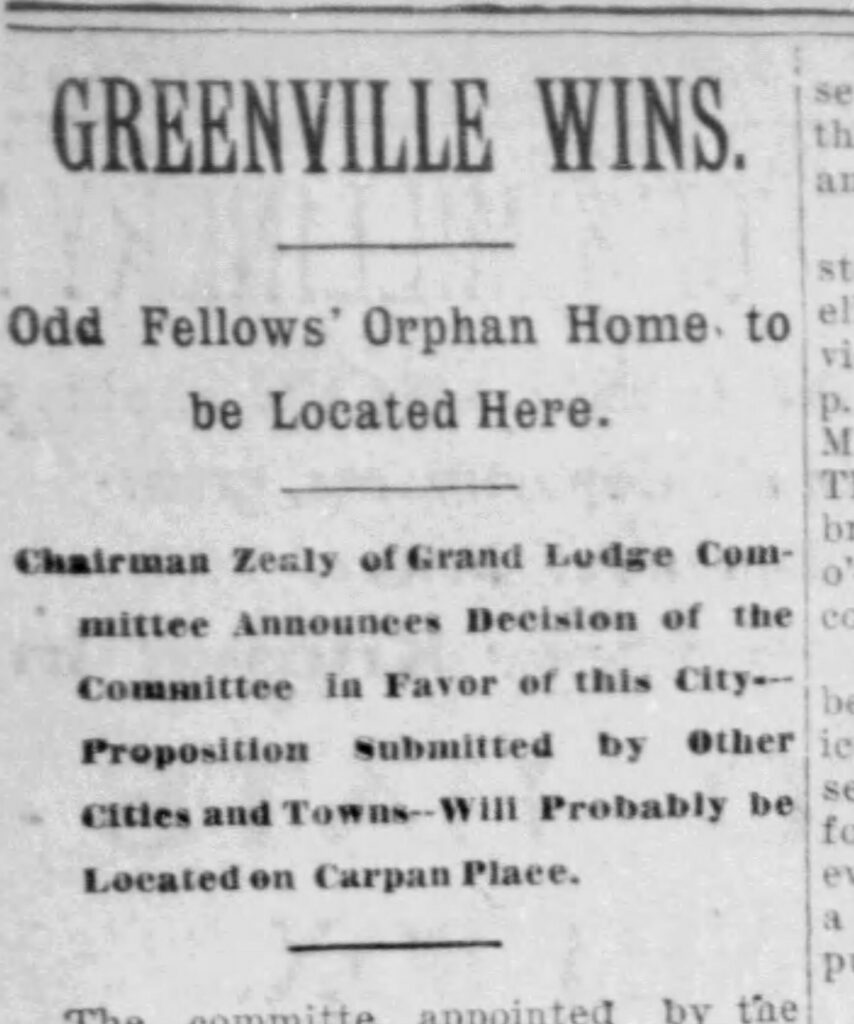
In the article it stated that, “It is the idea of the Odd Fellows to establish this home for the care of children of deceased members of the order. It is understood, though, that its inmates will not be confined exclusively to children of Odd Fellows.”
The proposed location for the new orphanage would be on the “Carpan Vineyard Place”, which had once been part of Blassingame’s Tanglewood Plantation. The location was selected because it “commands a superb view of the Blue Ridge Mountains and surrounding country,” but more importantly because there were already buildings in place that could be used for the orphanage. The 1904 article has this description of the property:
The building on that place is a well built structure, four stories high, with dormer windows above and contains large dry cellars. There are sixteen rooms on the first two floors, while the third floor can be arranged for eight comfortable rooms and others can be added on the fourth floor.
There are 78 3/4 acres of land on the farm through which a bold stream flows. Also three springs and a well, which brings forth water plentiful and pure. Practically all the land is in cultivation and most of it is good fertile soil. In addition to the main building there is a first class brick tenant house and stables conveniently located. With all these advantages, this is an ideal place, one most suitable for a school or an orphanage.
By 1905 the purchase of the Carpin/Carpan Place was complete and work began on making the property suitable for the orphanage.
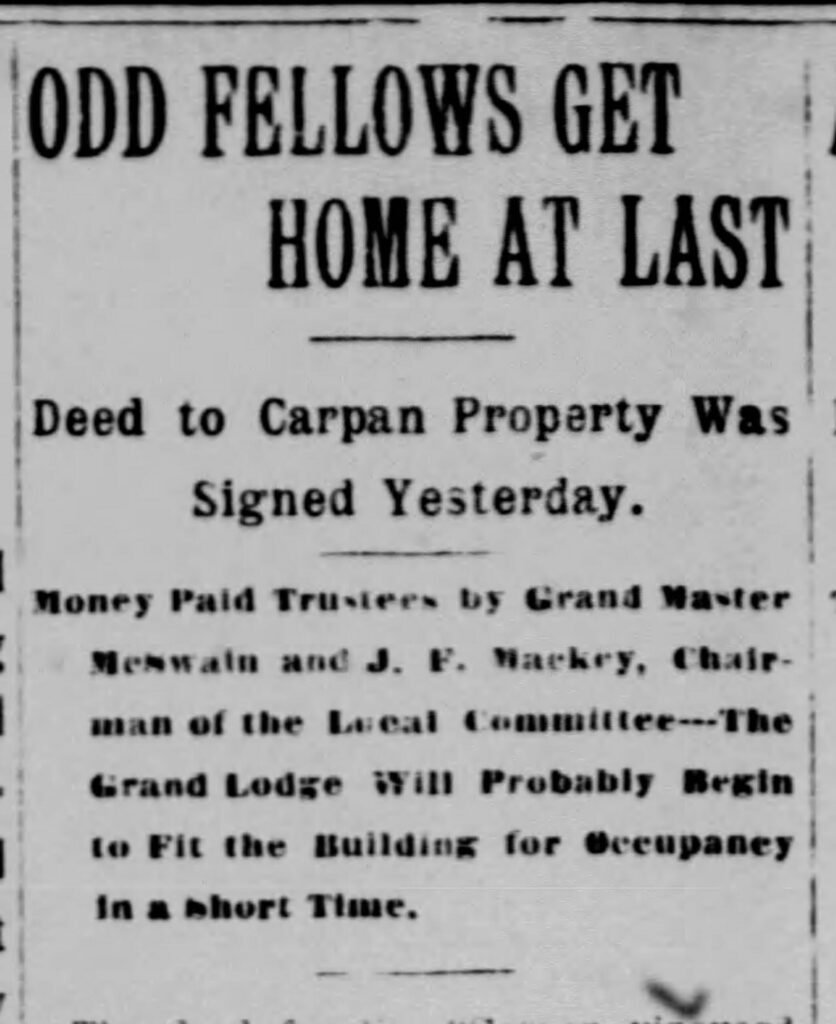
In September of that year the orphanage opened, and Thurston U. Vaughn was announced as superintendent of the institution.
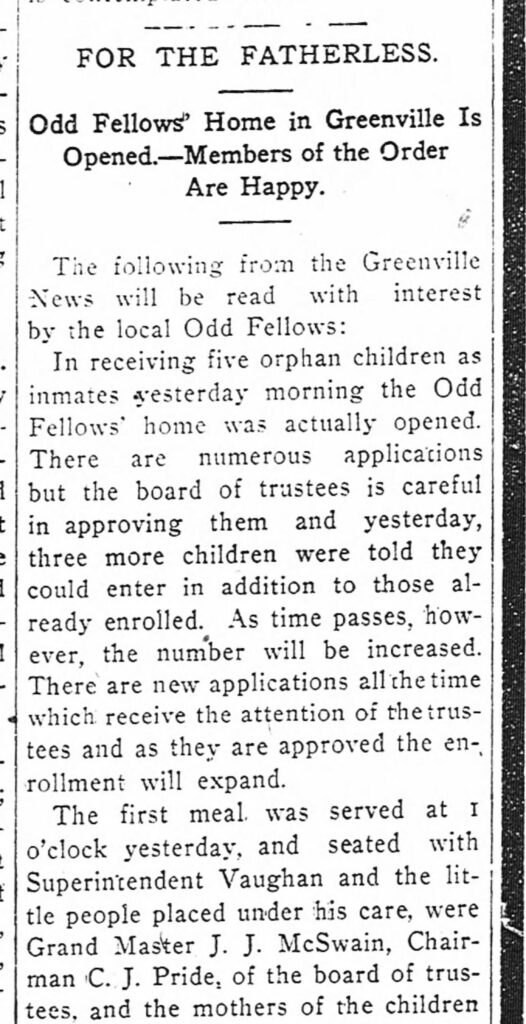
Superintendent Vaughn started his career as a teacher in the upper part of Greenville at Locust Hill School even before getting a degree. He entered Furman in 1900 and continued to work as a teacher and principal of the school while pursuing his degree. By the time of his graduation Vaughn had left Locust Hill and was serving as assistant principal of North Greenville High School in Tigerville.
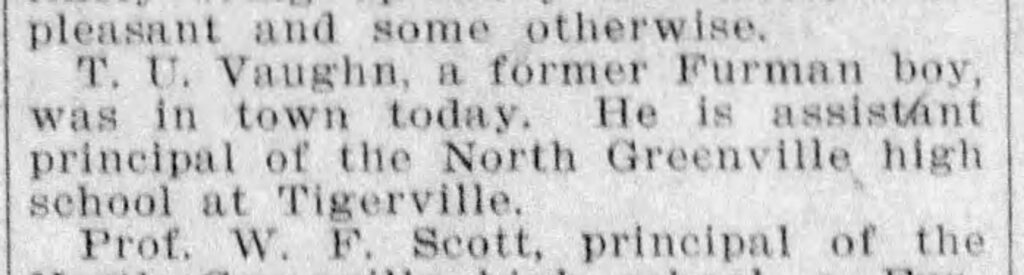
Shortly thereafter Vaughn was named superintendent of the orphanage.
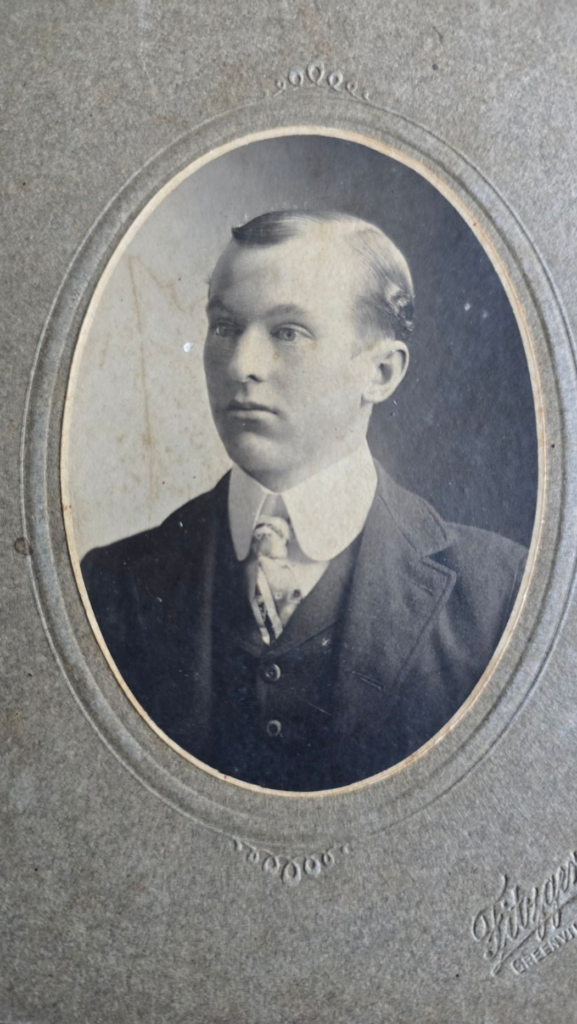
Vaughn was a rising star, an honor student while at Furman, and a frequent contributor to the local paper with his thoughts on education and home life. I found one article from 1902 that seemed to be the bridge to his career at the orphanage, where he draws connection between home and school life.
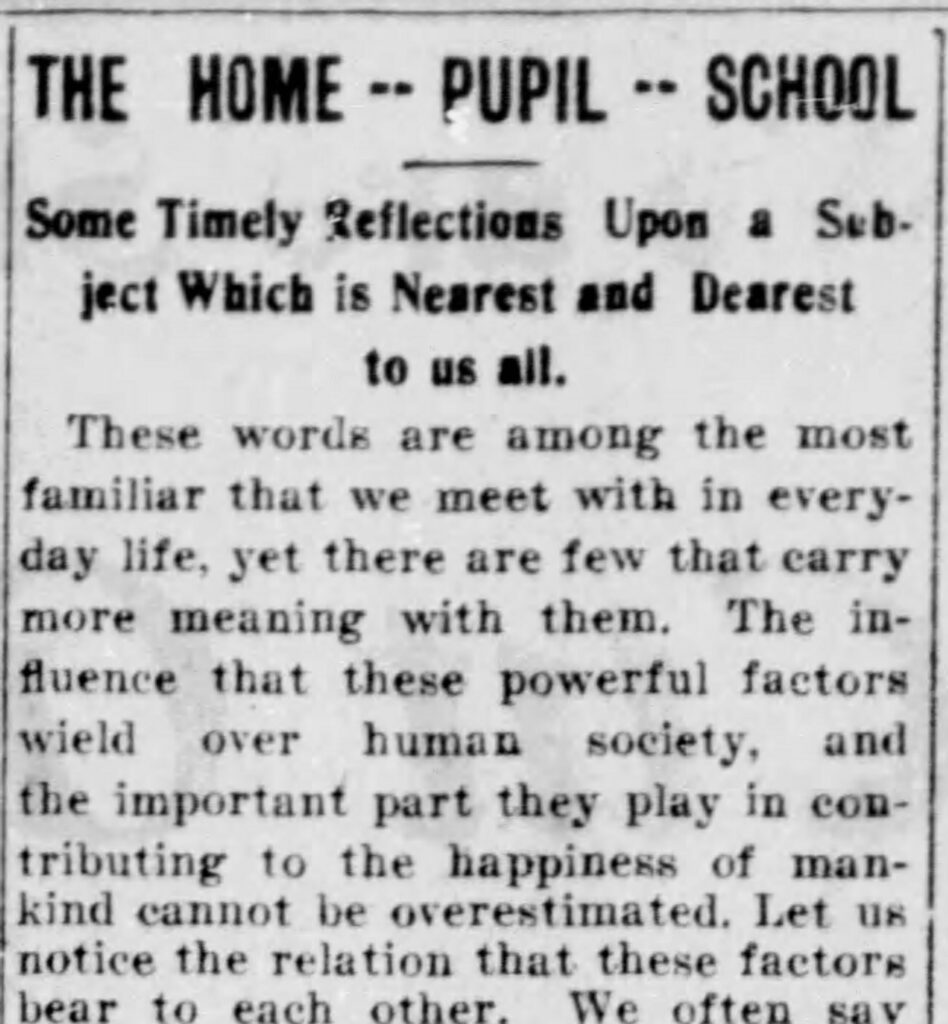
In the article, Vaughn states the following:
If parents could realize that they are daily making a contribution which is going to be either a blessing or a curse to the world, surely they would be more careful in their words and conduct in the home. Call over the criminal list. As a rule, we trace them back to a home in which unpleasantness and discontent existed. The importance of self-respect was neglected and that taste and love for truth and purity that make up a stable character failed to be imparted. Let us make our homes more attractive and pleasant and give rise only to such impulses as will lead to purer thoughts and nobler aspirations. Each home is a kindergarten and you parents are the teachers after whom your children are copying daily.
Wise words. As a teacher dealing with children from bad home situations, I can vouch for this sentiment. It’s a shame that Vaughn didn’t take his own words to heart later in his career, but that’s getting ahead of the story.
I haven’t been able to find specific details about what life was like for the orphans in Tanglewood. If it’s anything like how orphanages from that time period are portrayed, it was strict, institutionalized, and involved lots of chores. I saw one comment that the children were expected to help raise food on the large farm surrounding the orphanage. All of these chores were mixed in with schooling and religious education.
Vaughn was involved with the daily operations of the orphanage, but he was also its primary fund-raiser. I found multiple announcements where he would give talks to local Odd Fellows lodges, as well as various churches and civic groups in the area. Though not presented by Vaughn himself, I found one article by H. G. Smith that reported on the population of the orphanage.
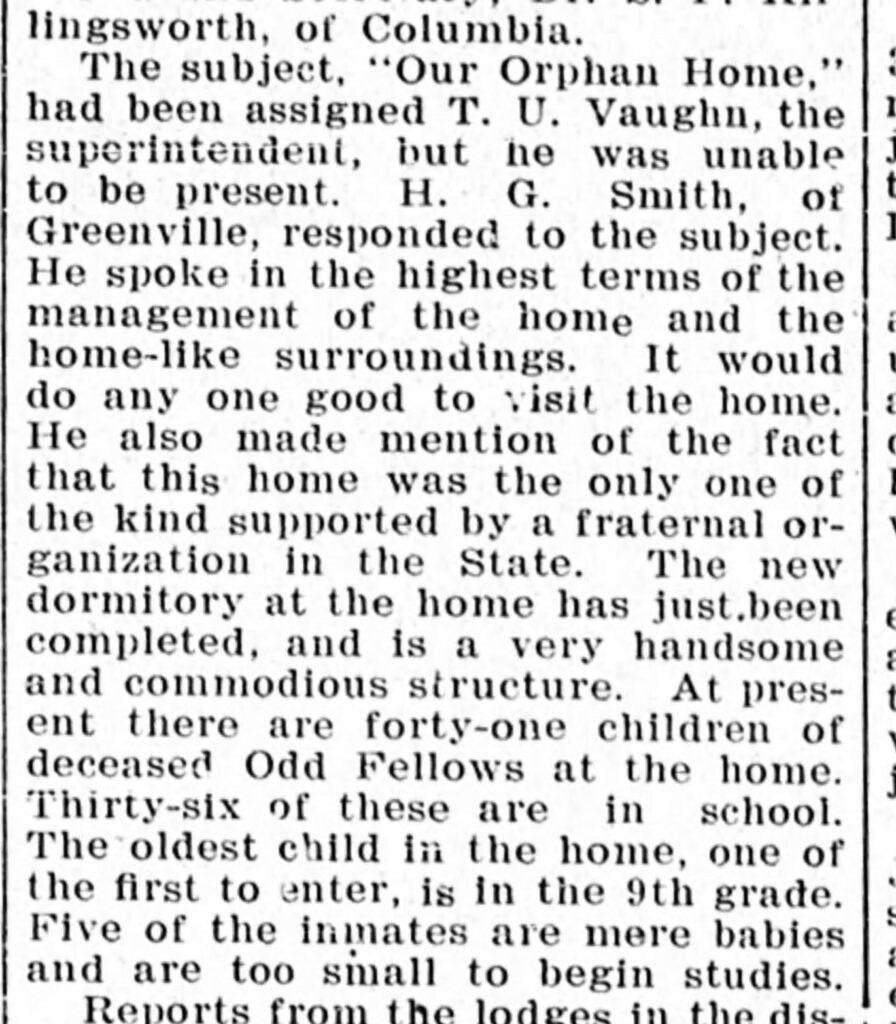
The new dormitory at the home has just been completed, and is a very handsome and commodious structure. At present there are forty-one children of deceased Odd Fellows at the home. Thirty-six of these are in school. The oldest child in the home, one of the first to enter, is in the 9th grade. Five of the inmates are mere babies and are too small to begin studies.
The new dorm didn’t last long, though. In 1910 it was destroyed by fire.
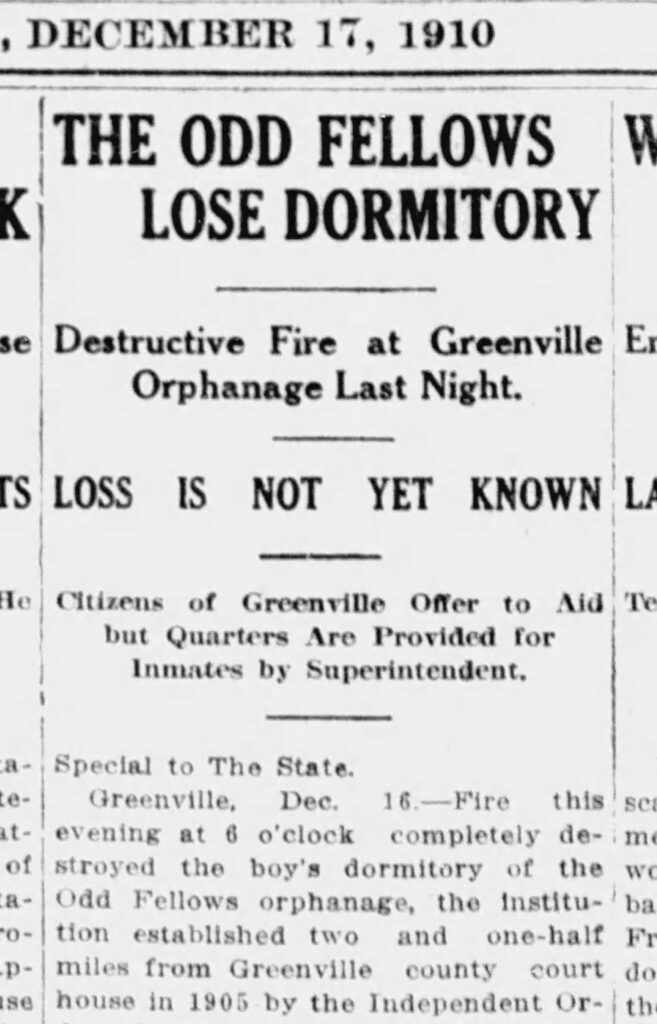
The building was a total loss. Fortunately, the boys were out on the farm doing evening chores, so no casualties were reported. The articles reporting on the fire state that the population at the time was about 50 – 26 girls and 24 boys of various ages.
By 1911 a new dorm was built for the boys. Vaughn and his associates continued to raise funds and provide reports to civic groups. All these reports were glowing, citing progress made by the organization and the growth of the children. But there was a problem – a big one. Thurston U. Vaughn was a predator.
Continued on the next page…
What a story! Very informative and well written. Thanks for the insight into a tragic history.
Great story. Thank you for your fantastic research!
I live not far from there and have tried to find out more about the house, but didn’t find nearly as much info as you did. One source claimed that there were multiple bodies of orphans and aborted babies buried on the property.
The current interior photos are amazing. I took photos of in 2018 when it went up for sale. It had been gutted and was in terrible shape. The upstairs looked like it had been divided into numerous small rooms, which made me think it was being used as a boarding house.
You can see my photos here:
https://www.facebook.com/groups/AOI.SC/permalink/1817176131756904/