NOTE: This is a transcript from the Carolina Ghost Towns Podcast episode “How to Find a Ghost Town”. I figured this would be the best way to share the links I mentioned in the episode.
So, how does one go about finding a ghost town? I get this question quite a bit, so I thought I’d do a couple of episodes on the techniques I use. Today’s episode is going to be a bit different. I’m not going to be talking about a specific town, but about resources I use to find these towns. I’m going to start with some obvious suggestions then move to some not-so-obvious techniques. Finally, I’ll talk a little bit about how I research these towns.
First, it helps to know what a ghost town is. I’ve said it before. Southern ghost towns are different from the classic western ghost towns. These could be covered in vegetation, subsumed by other towns, or completely gone. The Department of the Interior uses the following classification system for ghost towns.
Class A: Barren Site
Class B: Rubble and/or roofless buildings remain
Class C: standing abandoned buildings with no population
Class D: Semi/near abandoned towns with small populations
Class E: Busy historic community.
Class F: Restored town or state park with a historical old town
Class G: Absorbed into a neighboring city
Class H: No original buildings remaining on site
My experience is that most ghost towns are Class D, not quite abandoned, or Class G, absorbed into a neighboring city. But there are others that can be found.
Start with the obvious. There are lots of well-known sites in the Carolinas, and finding these is easy. Using your favorite search engine, just search for the term “ghost town” plus your target state. Wikipedia even has a list of ghost towns for each state. These are usually woefully incomplete, but it’s a start. With all of the new AI features, you can probably generate a decent starter list.
There are a few other websites that specifically list ghost towns. These should show up in search engine results, too. Most of the ones I’ve found are very much old-school websites that haven’t been updated in ages.
Next, check social media. If you’re on Facebook there are lots of groups for abandoned this or abandoned that. Many of these are region specific. As you might imagine, these are hit or miss. Sometimes folks just post a leaning old building with no actual town. Sometimes they don’t identify the location, and I’m OK with that. Some of these sites are endangered and might be “loved to death” by the inquisitive, if not outright damaged by vandals.
I’ve been a map geek for as long as I can remember. I collected National Geographic maps, and any time we stopped at a gas station I snagged a state highway map, back when those were given out for free.
These days online maps work just as well. There are some excellent historic maps and map collections available. My favorite, and the one I reference most often on this show, is Robert Mills 1825 Atlas of South Carolina. So far I’ve not found any collection as thorough for any other state. At that time South Carolina had districts instead of counties, and there is a map for each district showing towns, taverns, stores, churches, and other significant landmarks. It’s amazing. The entire collection is available on the David Rumsey Map Collection.

The Rumsey Collection hosts maps for other states, as well as different types of maps for South Carolina. There are old railroad and highway maps dating from the early 1800s through the 20th Century.
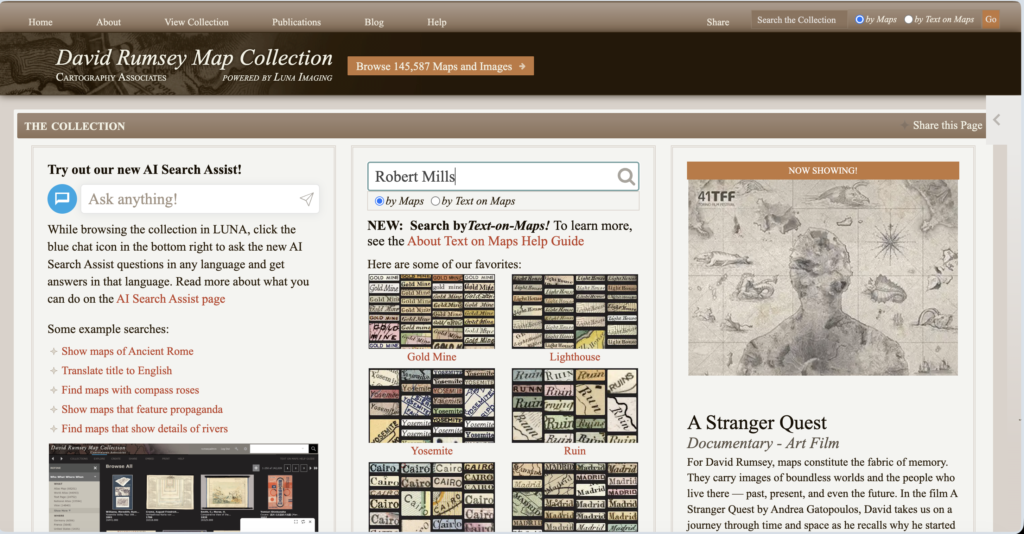
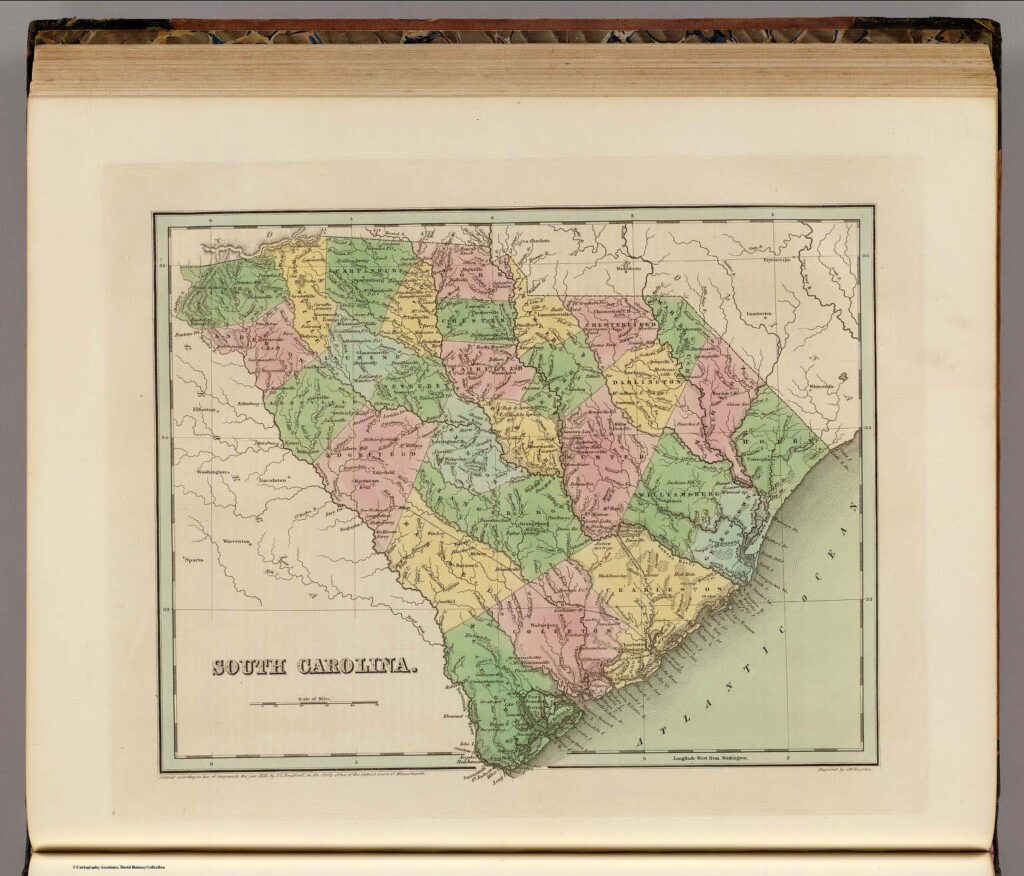
These historic maps are great for showing changes over time. When browsing these maps I look for place names I’ve never heard of. Sometimes these turn out to be lost towns or communities. I’ll add those to my list for further exploration.
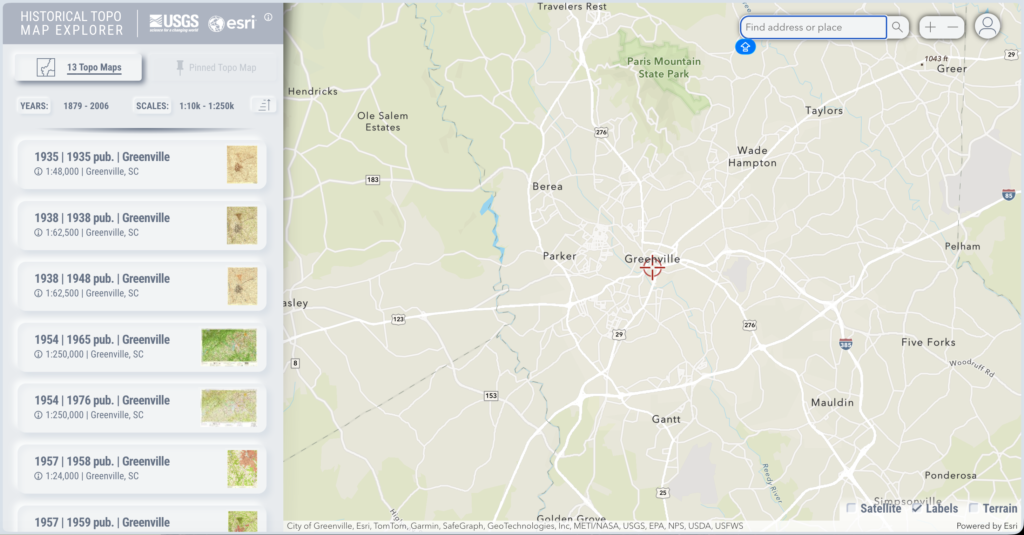
The US Geological Survey has published topographic maps since the late 1800s. ArcGIS has a website where you can explore historic USCS maps from anywhere in the US. You can search for a location, such as a county or town, and click on that location to see what historic maps are available. The website then shows the topographic map on top of a present-day map. There is a fader for comparison.

These old maps not only help you find ghost towns, but they can help see how prominent a town or community was during a particular time frame. Another resource that helps determine what was in a town is the Sanborn Insurance Map collection. These are highly detailed maps of towns and cities from across the United States. Created in the late 19th and early 20th Centuries, these maps allowed fire insurance companies to assess their liability. For researchers like myself, it lets us see what might have been in a town.
There are other excellent collections of online maps. South Carolina, North Carolina, and Georgia have digital archives that include maps. The Library of Congress is another great source of historic maps.
The US Geological Survey maintains a database called the Geographic Names Information Service, or GNIS, or just Geonames, for short. This database includes all the names for any geographic feature imaginable, from hills to rivers to islands to…well, just about anything. Up until 2014 the database included man-made features such as schools, churches, bridges, and other structures. Those structural features are more volatile and subject to change than geographic features, so they were eliminated in 2014.
As an aside, I managed to download quite a bit of the pre-2014 data, so I still have most of the structural data for at least our region. Here’s a link to that data.
If a feature in the geonames database is no longer extant, it remains in the database but has the designation “historical” added to it. The current database includes towns and populated places. If a town or populated places has that historical designation, it might be a good bet that it’s a ghost town. Geonames includes latitude and longitude coordinates so that you can pinpoint it on a map or in Google Earth. Speaking of which, Google Earth is great for seeing present details for the site, whether from overhead views or through Streetview.
Once you’ve found a potential ghost town, you’re going to want to find out more about it. Google, or whatever your favorite search engine might be, is your friend. It will let you know if anyone else has written about that town. Dig past the first few pages of hits and you might find historical surveys or archeology reports about the site. If your site has a common name, you’ll get more hits than you want and will need to narrow the search parameters. Include the state name or, better yet, the state and county name. If there’s a nearby geographic feature, include that.
Many states have a digital clearinghouse for online archives. For example, the SC Memory website lets users search participating organizations through a single portal, which includes universities, libraries, and historical societies. The Library of Congress is another great searchable database.
In the podcast episode I failed to mention to other excellent resources. Carolana.com is a great place to find information about towns and history in both of the Carolinas. I especially like the listing of post offices for each county. You can tell if a town was large enough to support a post office and when that was established.
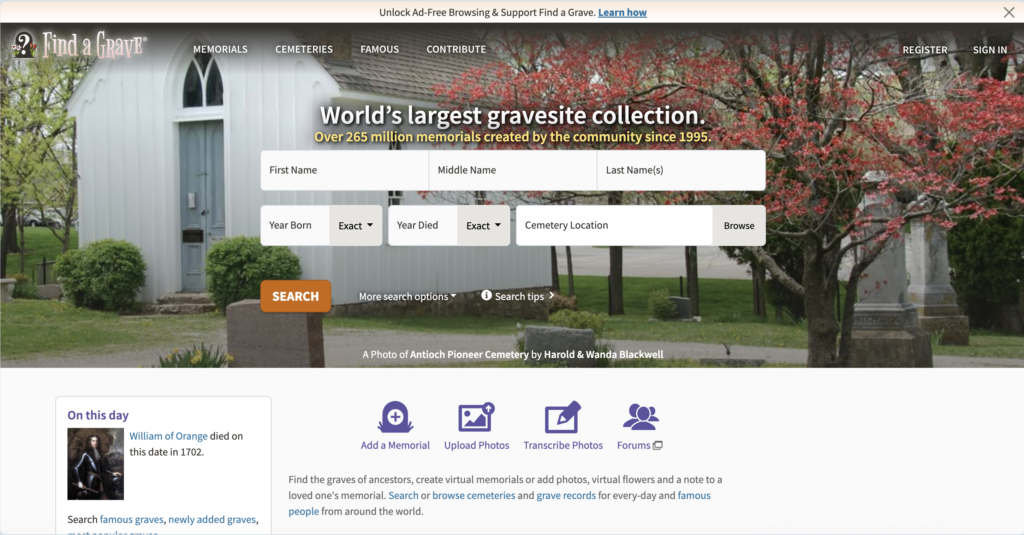
The other resource I failed to mention in the episode is Find-a-Grave. If you have the name of a prominent individual from the town, he/she might be listed here. Sometimes the only remnant of a town is a church, or maybe even just a cemetery. These will be listed here as well.
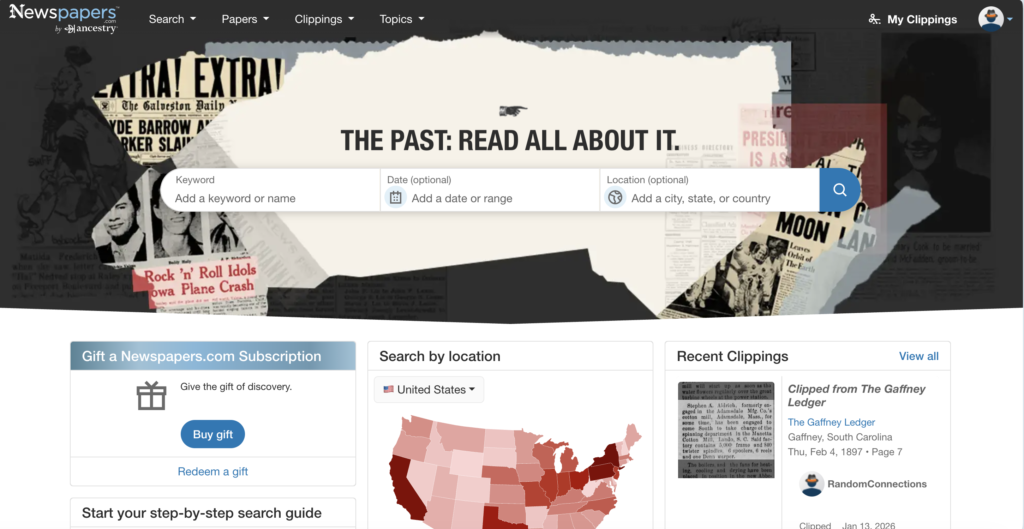
One of my favorite resources is Newspapers.com . It’s subscription-based, but sometimes you can get free access through local libraries. I’ll search the town name and order the results from oldest to newest so that I can find the earliest mention of the town. Early news reports and advertisements provide insight into the life and commerce of the town.
Use more than just the name of the ghost town for your searches. Sometimes there are variations in spelling, and you may have to search several common spellings for the site, and not just the official one. Use nearby features such as valleys or rivers as search terms. If you find the name of a prominent individual, merchant, or institution such as a school or church, search for those.
If you REALLY get ambitious, there are these things called books that might provide some insight. Not everything is online. I regularly haunt the South Carolina Room of the Greenville County Library.
Finally, there is nothing like a bit of ground-truthing. Whenever possible I try to visit the site. Sometimes that’s just not possible. The site is on private property, or sometimes even under water.
If you’re lucky, you’ll find some old buildings and ruins. More likely, there won’t be anything there but the name, or maybe a historical marker. Sometimes churches and especially cemeteries long outlive the town. These are definitely worth a visit.
Treat these places with respect. Don’t trespass and don’t disturb fragile structures. Document. Take nothing but notes and photographs. By all means, just spend a few moments and try to absorb the history all around you.