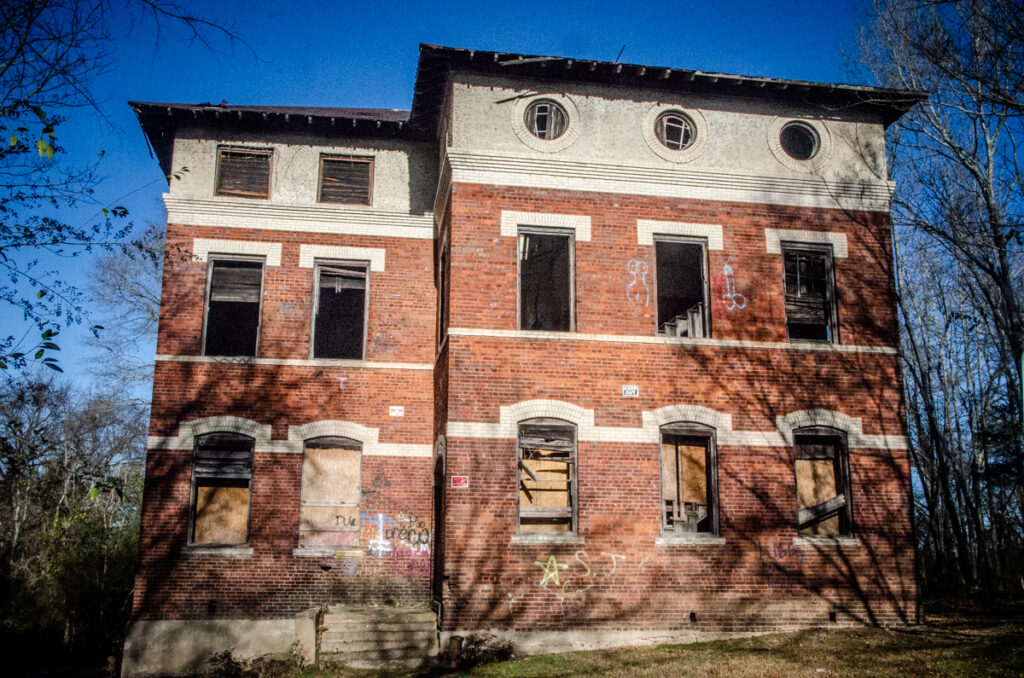
Next week is MLK Day, when Alan and I do our traditional exploration. This year Alan had a conflict, so we pushed the exploration forward a week. This year we decided to explore the old community of Lando and its iconic school building in Chester County. The school is one of the last remaining buildings on the town of Lando. It had been a mill village, but with the closure of the local textile mill, the town went into decline. I had seen lots of images of the old school online, and thought it was high time we paid it a visit.
As always, a bit of history first…
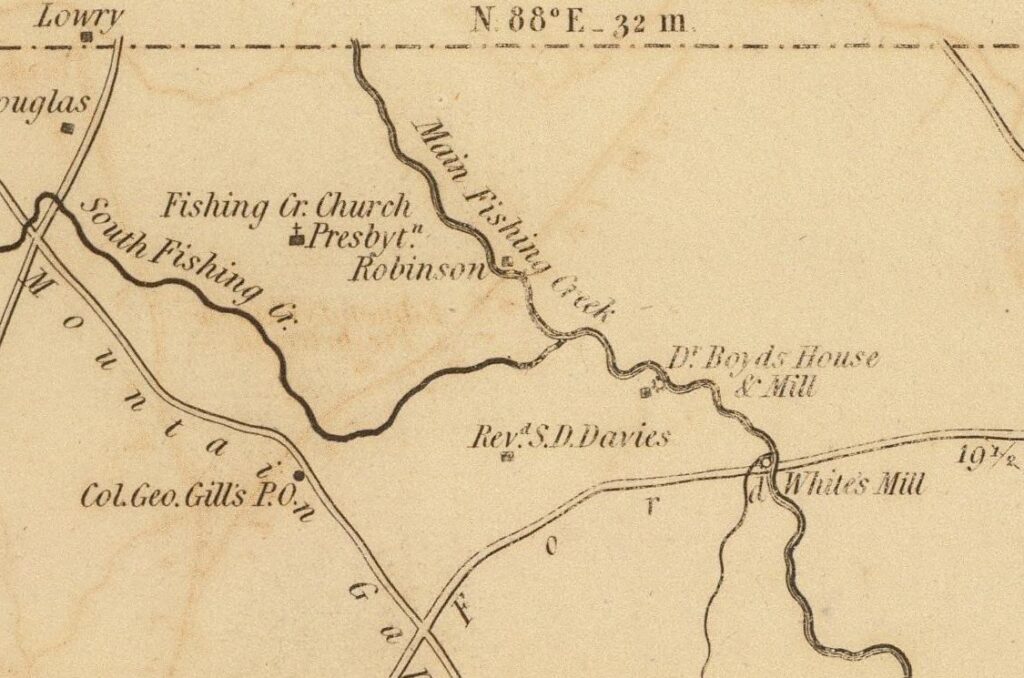
Lando is located on Fishing Creek in the western portion of Chester County. According to Wikipedia, the area was settled around 1760 and was first known as “Walker’s Mill.” Robert Mill’s 1825 map of the district shows this as “White’s Mill” on the road to Landsford Canal.
In the late 1880s a group of investors set up the Fishing Creek Cotton Factory. By 1882 this first factory was complete and The Rock Hill Herald reported the following:
It was our good fortune to be present on Friday when the finishing touch was put upon the Fishing Creek Cotton Factory, and witness the first revolution of the wheel that marks a new era of prosperity for our county….It is the property of a corporation composed of men of York and Chester Counties…Captain Ferguson H. Barber, of Rock Hill, is the largest stockholder and president since the organization of the company.
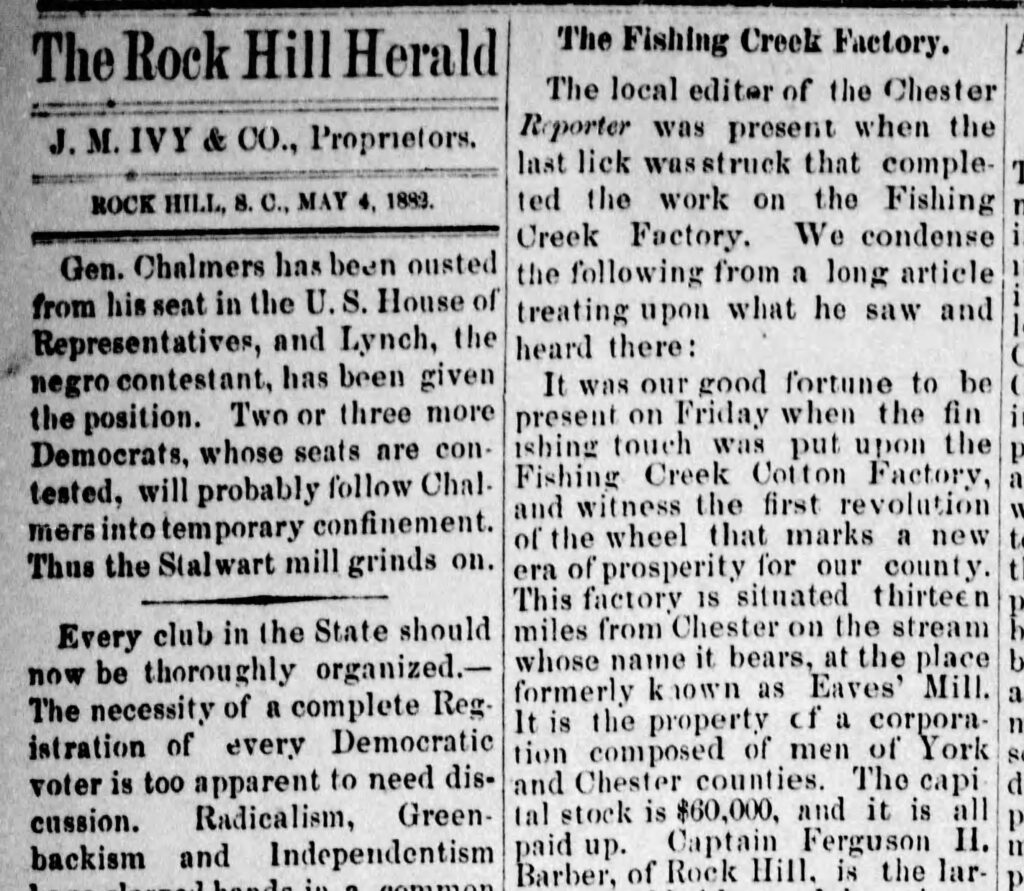
The article goes on to describe the dimensions of the mill and its capacity of 6000 spindles.
The mill and community, simply known as “Factory” for awhile, went through ups and downs, with fires, storms, and bankruptcy. In the early 1900s the Heath Brothers took over the mill and rebuilt and expanded it, renaming it as Manetta Mill. According to one source, the name was derived by combining two of the Heath brothers’ wives, Mary and Nettie. The name Lando for the community was another combination from two engineers on the railroad, Lane and Dodson.
In 1905, the company built the Lando School for workers and added a company store. A short line railroad, the E&M, ran from Edgemoor to Manetta. The mill continued in operation until the 1990s, and at one time was the world’s largest manufacturer of blankets. The school closed in the 1970s and now nothing is left of the mill but ruins.
Alan and I grabbed breakfast in route, as is our usual custom, then headed across country to Chester County. We arrived at the Lando Community and had no problem finding the old school. Another car had pulled onto the dead-end street and we thought we would have company, but they turned around and left. Maybe we spooked them.
I was quite dismayed at the state of the school. The building was covered in obscene graffiti. There were no parking and no trespassing signs everywhere. We decided to get some exterior shots and not violate the signs.
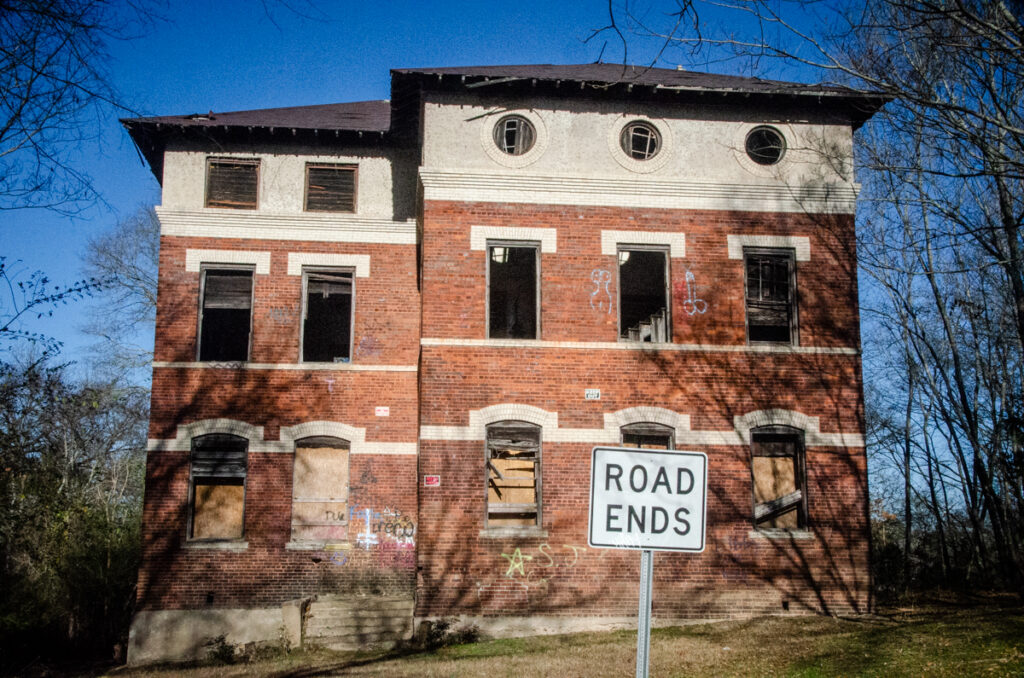
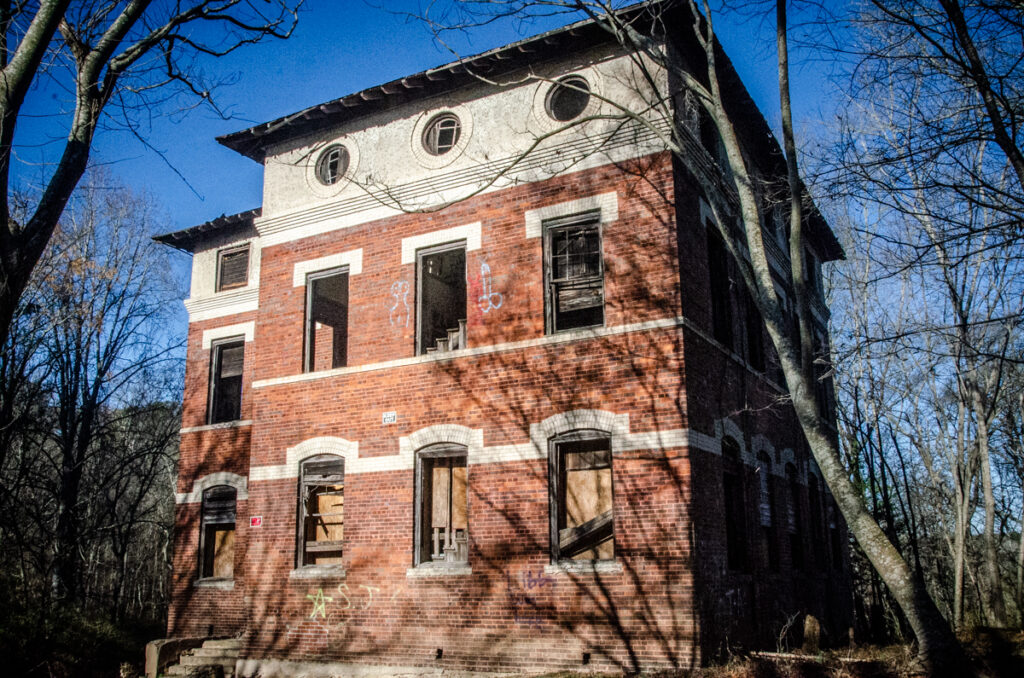
Despite the graffiti I could appreciate the Italianate architecture. Having researched how many buildings in the Upstate used this design, I wondered who the architect was, but I haven’t been able to find him.
For Christmas I got a small beginner drone – nothing fancy, but I thought it might be useful on these explorations. Since we had no intentions of entering the building I thought I might be able to fly it close to some of the open upper windows for an interior view. I did manage to get a few shots, but I couldn’t get far enough back to get an overhead shot of the whole school because of the tree cover.
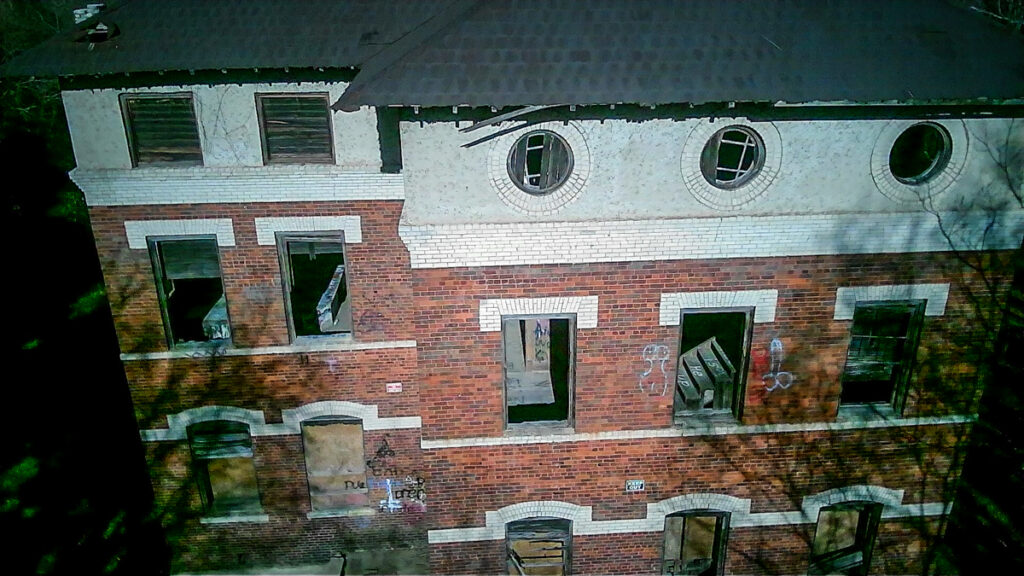
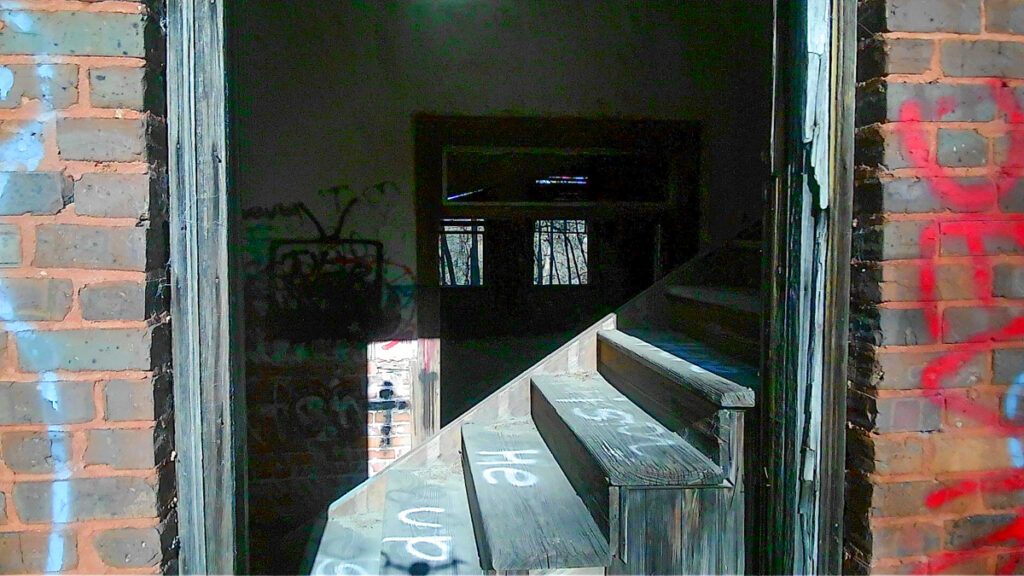
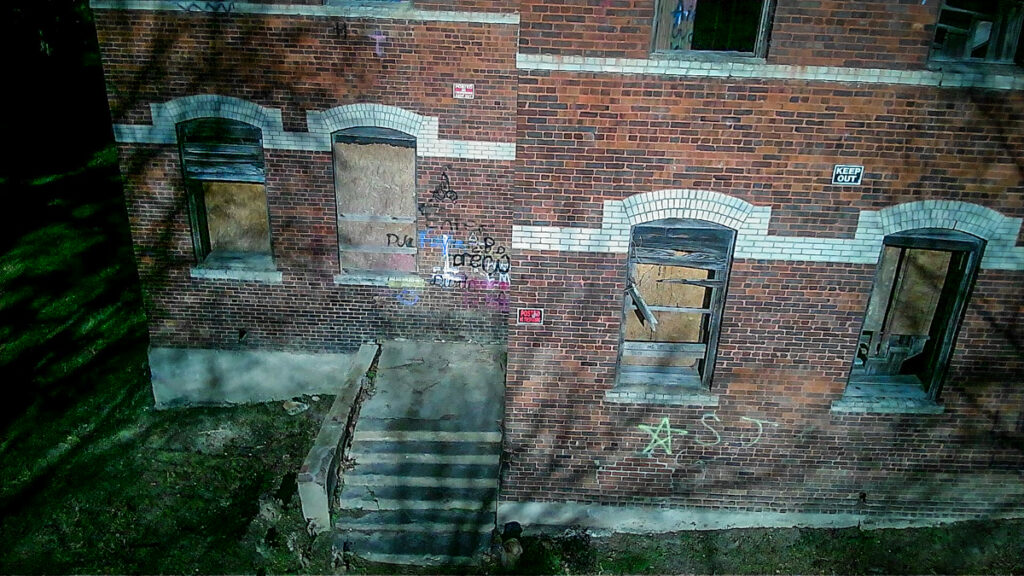
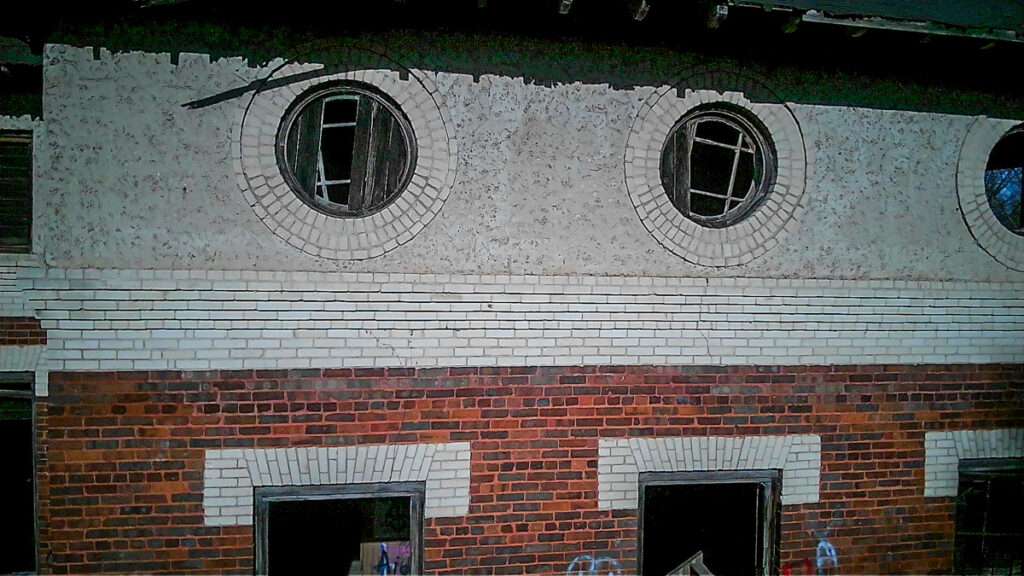
Alan managed to get a shot of the drone in action.
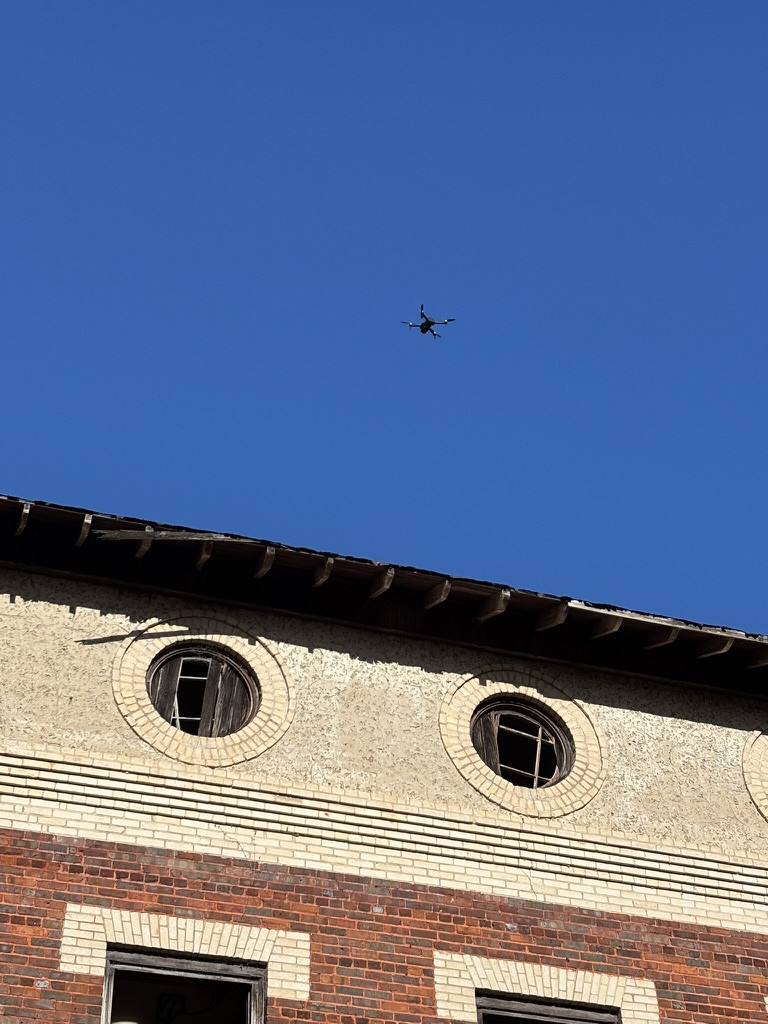
The Lando School is on the National Register of Historic Places. The Nomination Form (PDF) for the site has an excellent description of the interior.
The school is a three-story rectangular brick building of Italian Renaissance Revival design. Set upon a concrete foundation, it features brick on the first two floors and brick and stucco on the third floor. The L-shaped hipped roof is in two sections, with one over the classroom section and another over the entrance and stairwell, and is clad in pressed metal shingles. The roof structure is wood frame with exposed rafter tails and a beaded board frieze evident beneath the wide eaves of the building….
The first two floors of the school housed classrooms and the main level of the auditorium, while the third floor was essentially balcony seating for the auditorium. There are three classrooms on the first floor, measuring 20’x13’, 28’x19’ and 20’x32’. The five-foot-wide staircase on the east [front] elevation exterior wall rises directly from a ten-foot wide entry or stair hall. No railing or balustrade remains on the staircase. Under the stairs on the first floor is a coal room. On the second floor, measuring 32’x32’, a sliding divider is used to partition two classrooms and also provides open seating for the auditorium. There is also a small storage room measuring ten by ten feet, as well as a small office. There is a fire exit on the west elevation on the second floor. The third floor balcony seating has six levels and extends across the northern elevation. The balcony is over the divided room on the second floor and measures 17’x32’….
There are no restrooms in the school. Heating was supplied by coal/wood burning stoves. Three large brick chimneys, the stacks for which once towered above the roofline and supported six stoves within the building, are still present but without the stacks.
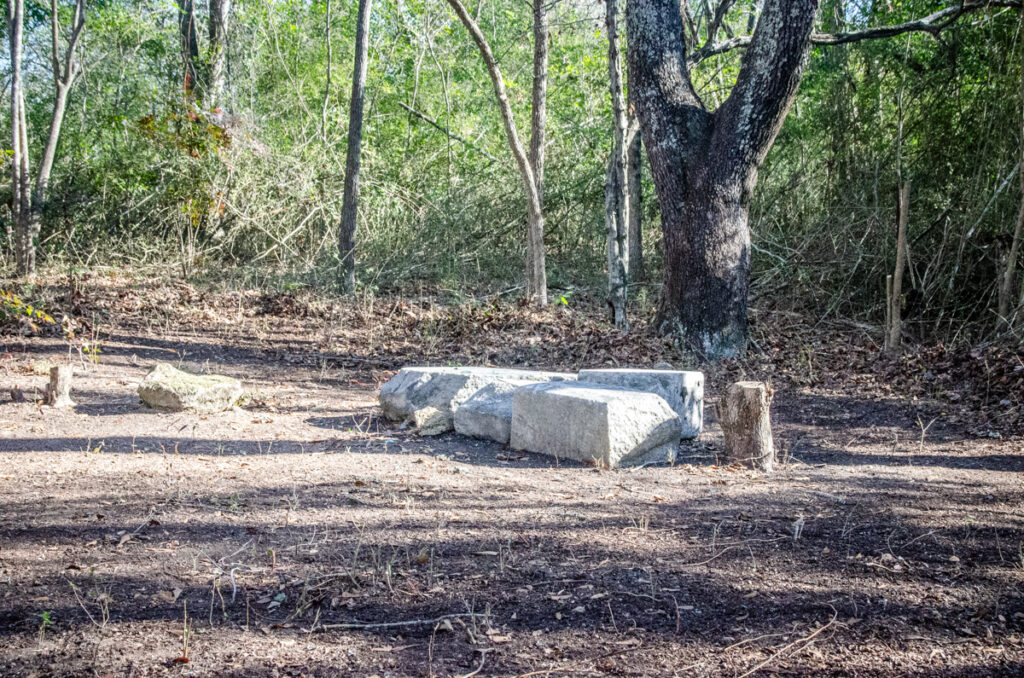
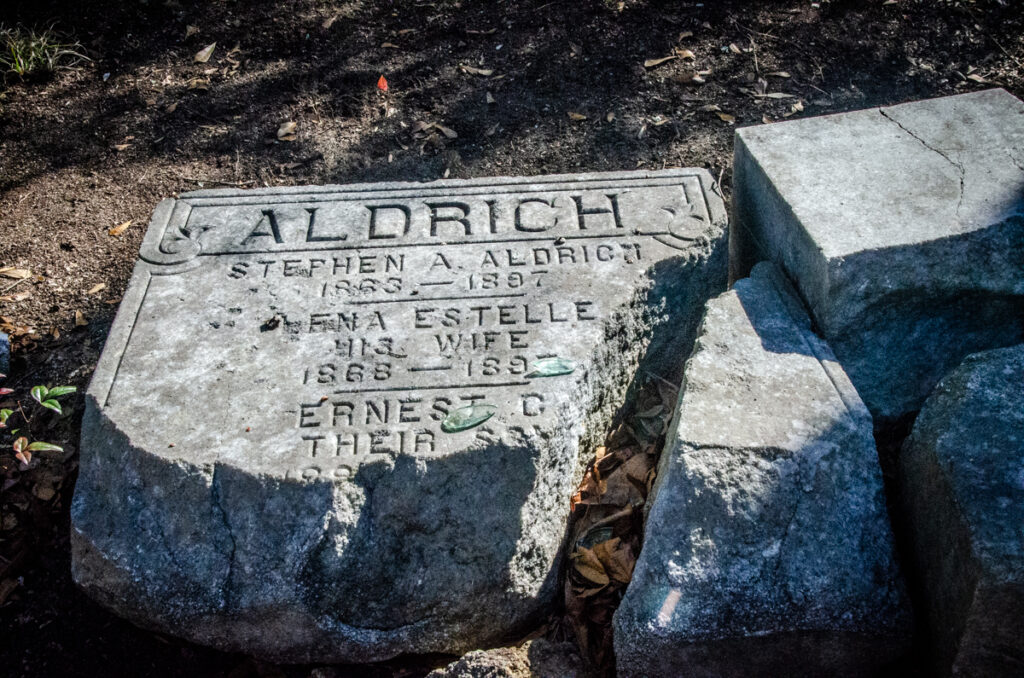
To the right of the school Alan found a grave marker that had been knocked over and vandalized. It had been an elaborate marker and commemorated Stephen A. Aldrich, his wife Nena, and son Earnest. We didn’t know if these was a single grave, an abandoned cemetery, or a marker that had been relocated.
Figuring that we had seen all we could at the school site, Alan and I decided to explore the surrounding community.
Continued on next page…
Very interesting, as always.