Kaleb asked if we wanted to see the old school. Even though it was our first stop on this trip, we were more than willing to head back and get his insights. We first walked over to the Aldrich headstone.
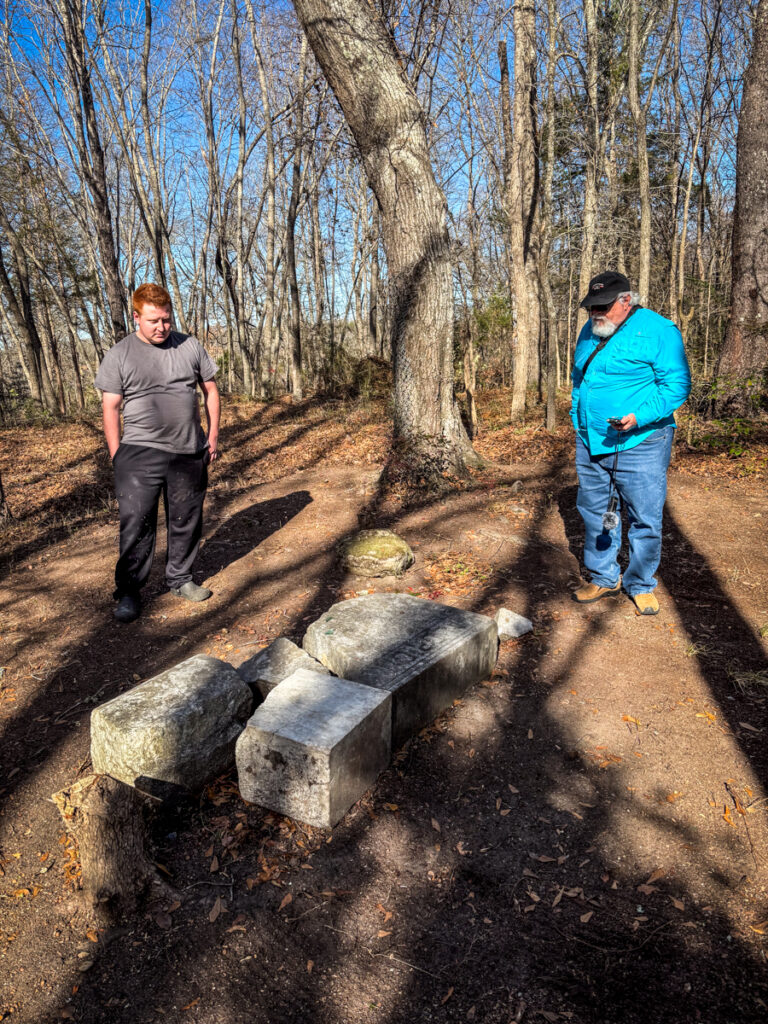
Kaleb said that this had been a large cemetery but this was the only remaining headstone. Kids would vandalize the cemetery, stealing the headstones and throwing them in the creek below. I did find a Find-a-Grave listing for Stephen Aldrich. The page says that the cemetery has been destroyed. I think ground penetrating radar, or even just a metal detector would be a big help in locating these graves.
As for Stephen Aldrich, I found an article from 1897 that said that Stephen A. Aldrich would be taking over the spinning department of Manetta Mill.
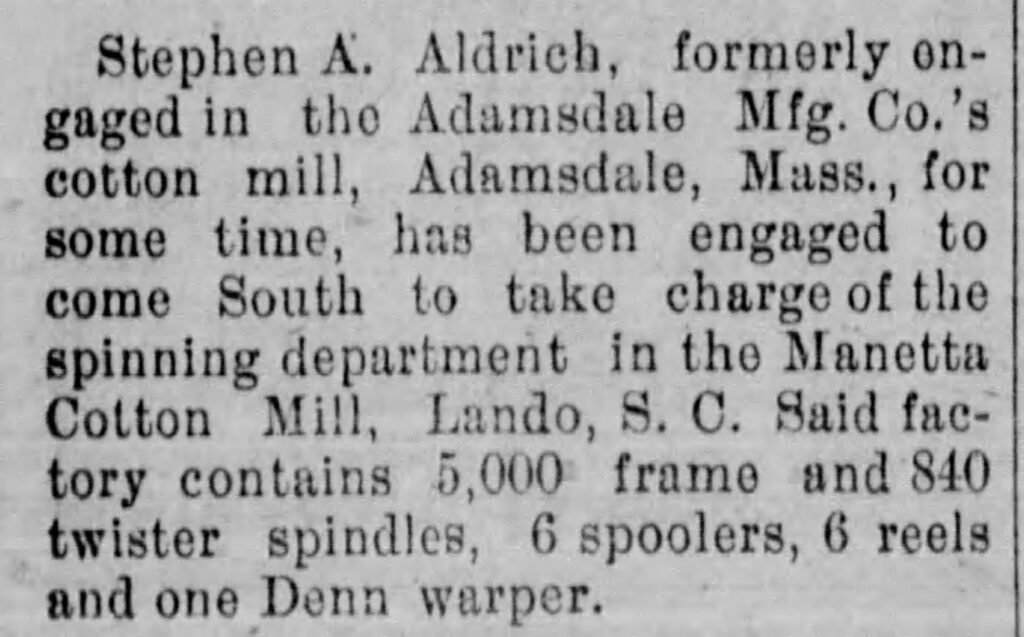
The only problem is that the headstone says that this Stephen A. Aldrich died 10 years earlier, in 1887, at the age of 23. As far as I know, Stephen only had one son, Earnest, so the Stephen from the article remains a mystery.
We turned our attention to the school building. The main entrance was boarded up, but Kaleb led us to the back where there was an accessible, but difficult opening. This time we didn’t hesitate to go in since we had someone from the history center with us.
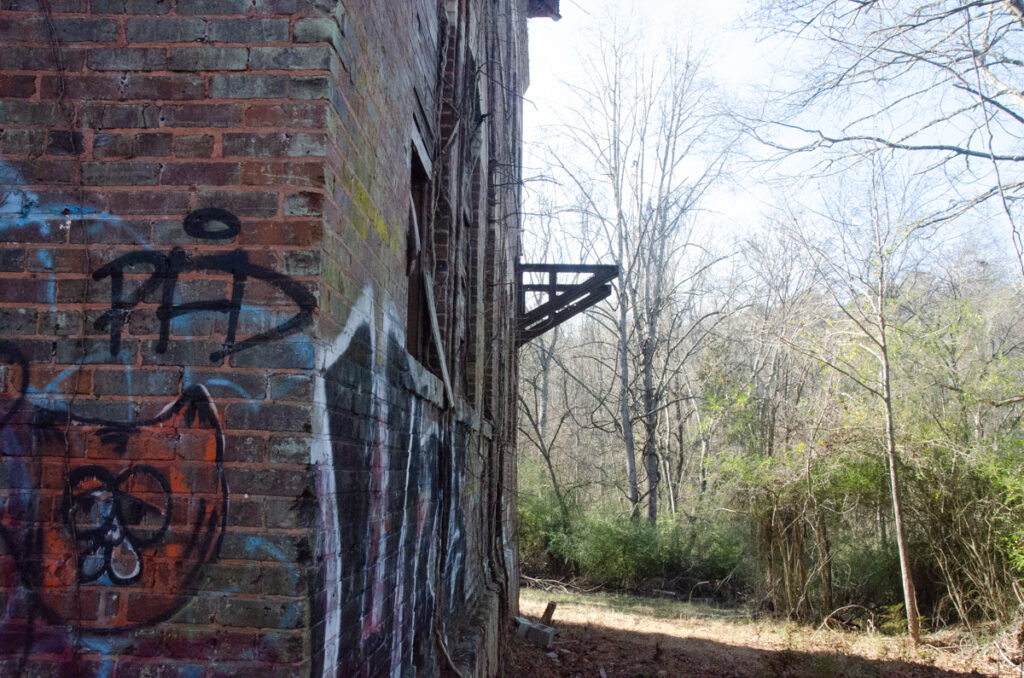
While the architecture was unique, the layout was similar to other old schools I’ve studied. The first floor had classrooms and the upper floor was an open auditorium for school and community activities. All of the walls were covered in graffiti.
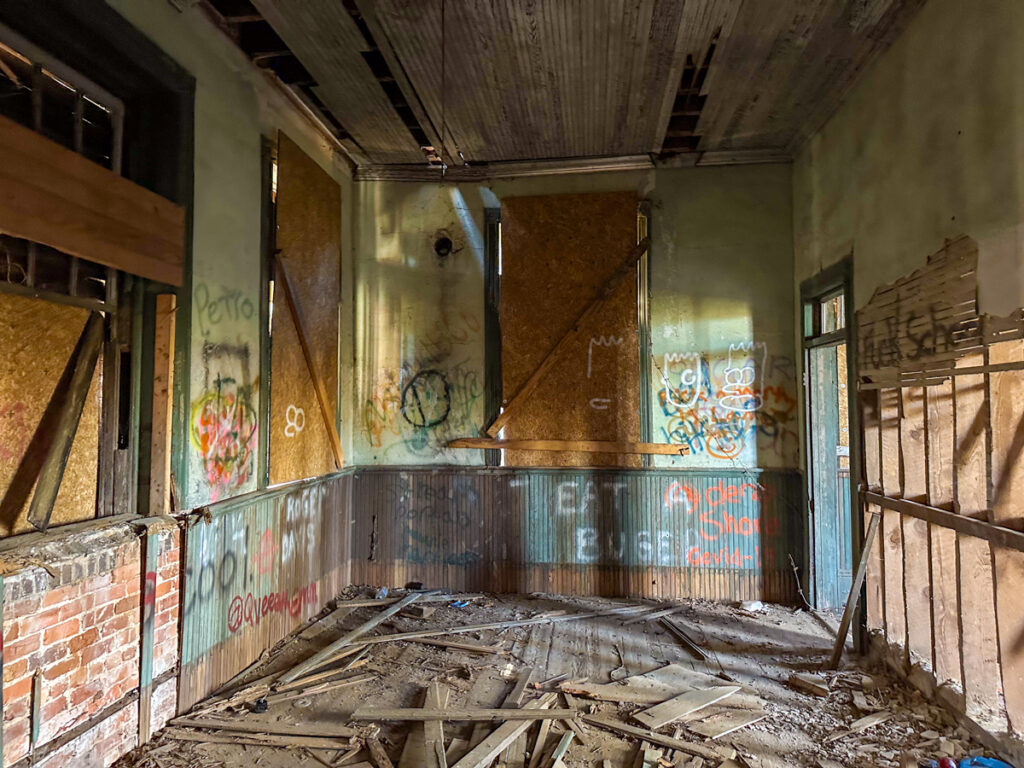
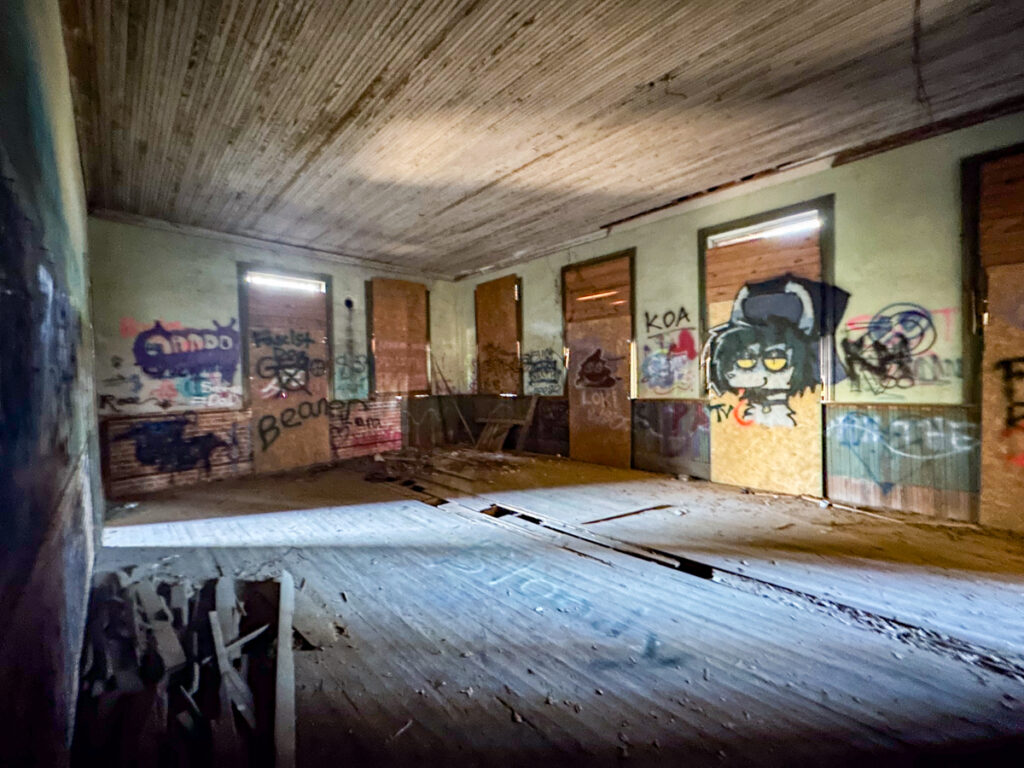
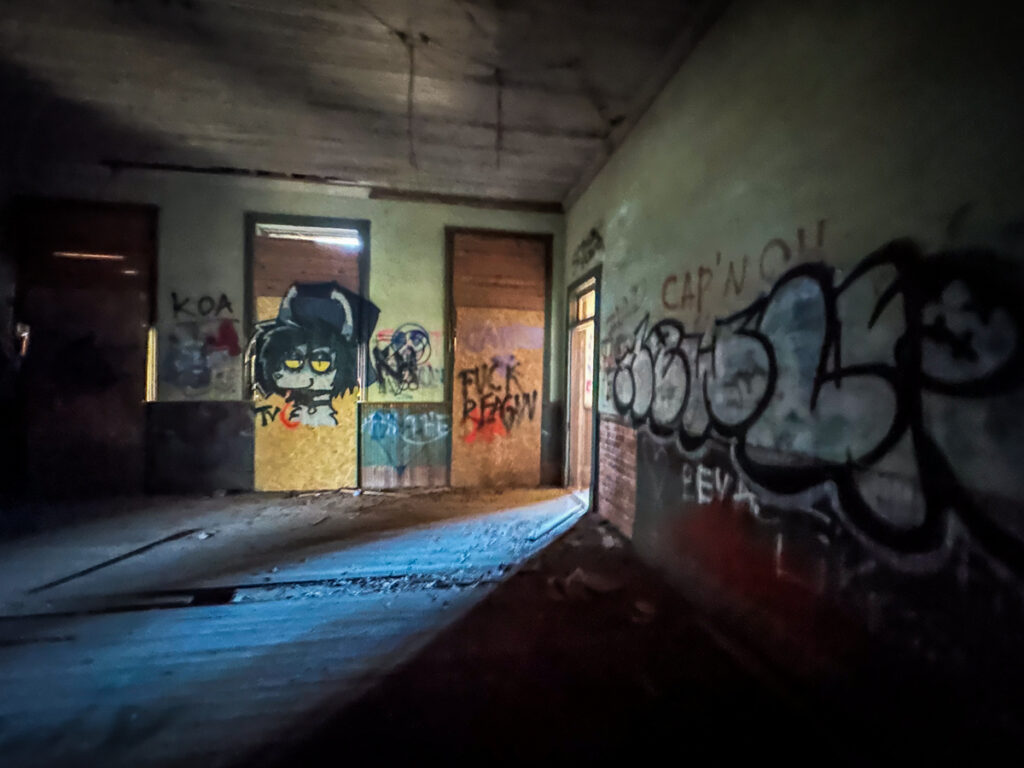
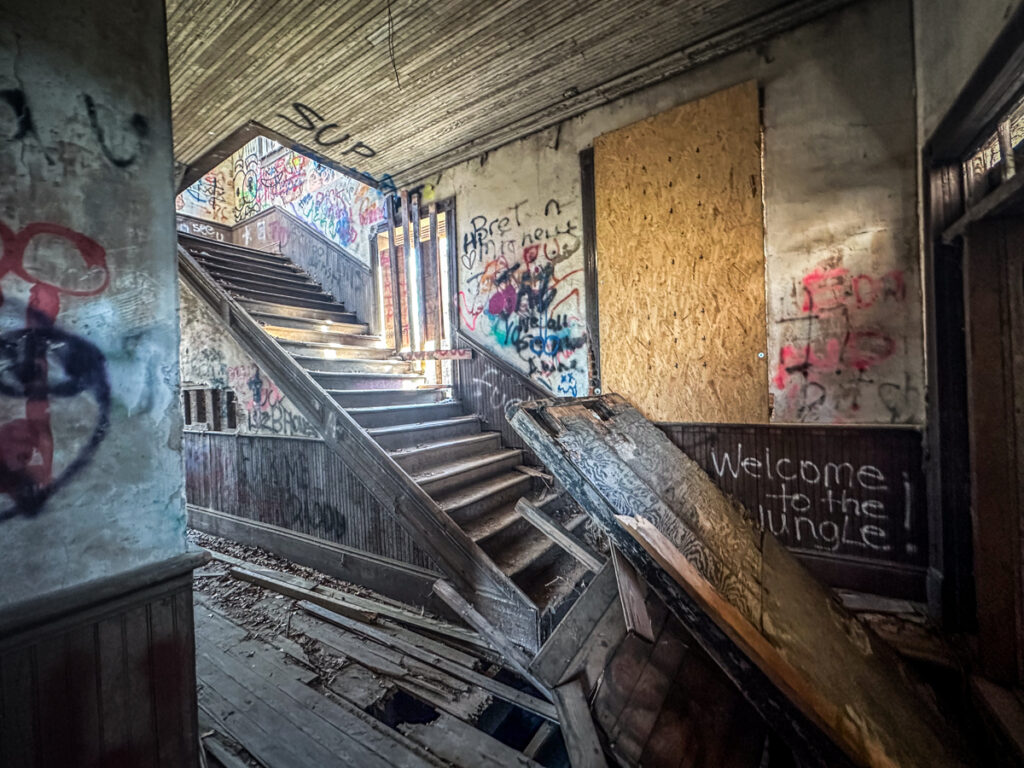
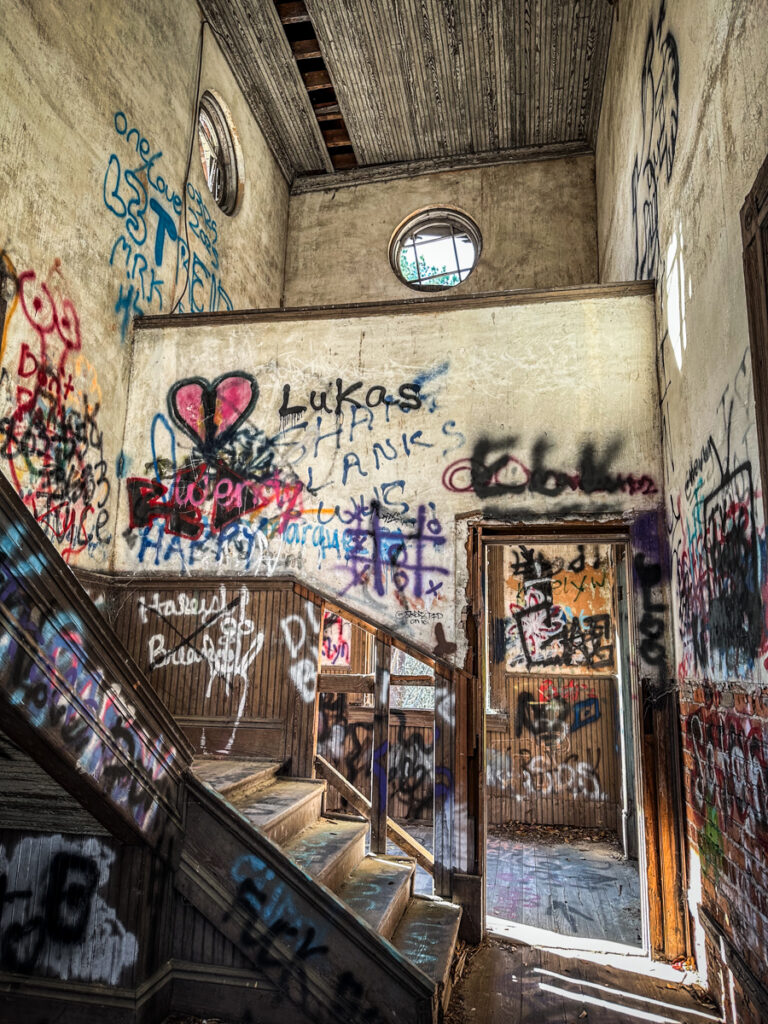
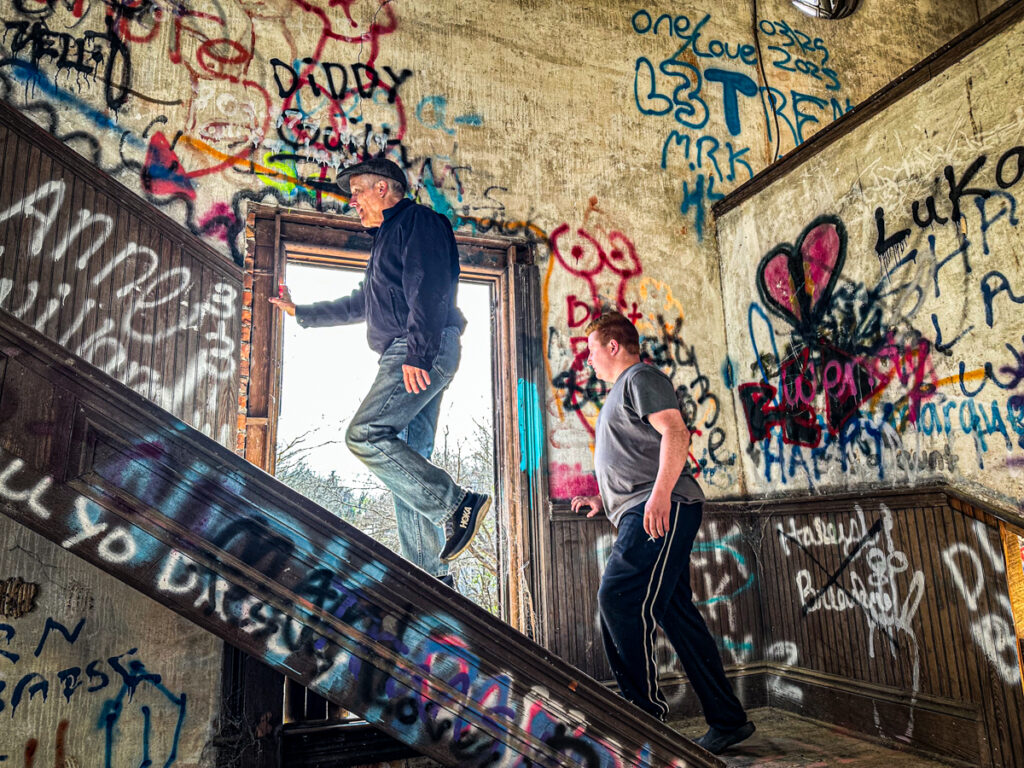
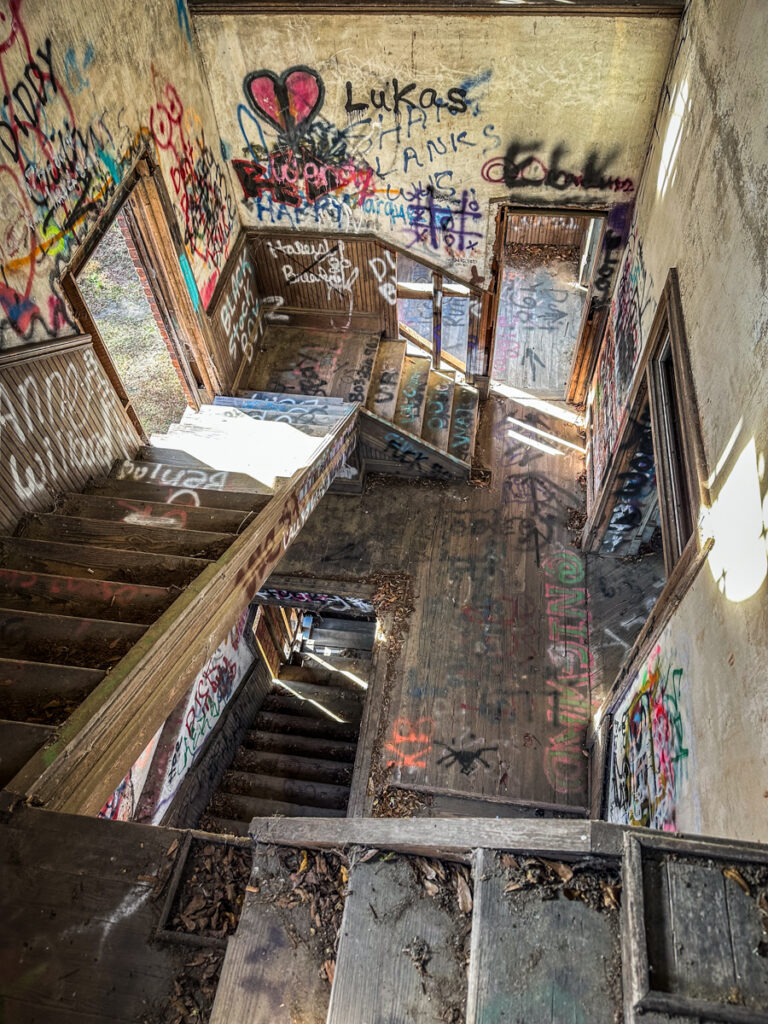
At the front of the building was a stairway leading up to the second level. Access was tricky because of a fallen door and holes in the floor, but we made our way up the stairs to the auditorium.
The space was large, opening up two stories. There was a small stage on one side of the room and a balcony on the other side. To the right of the stage was an open door space that had been a fire escape.
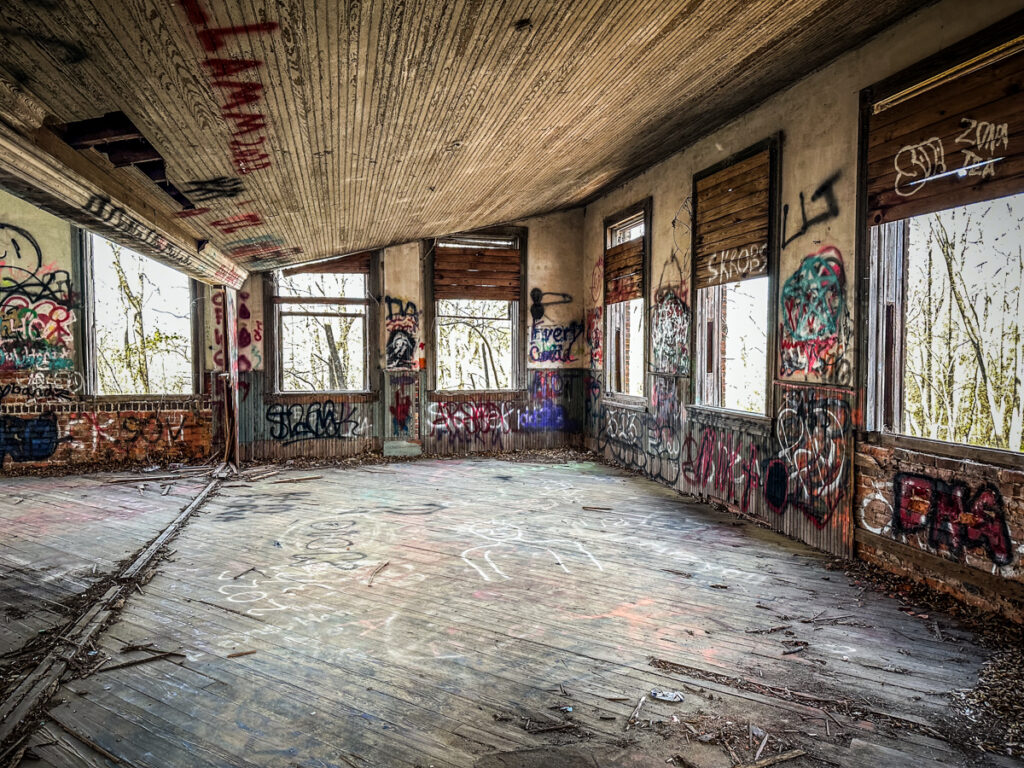
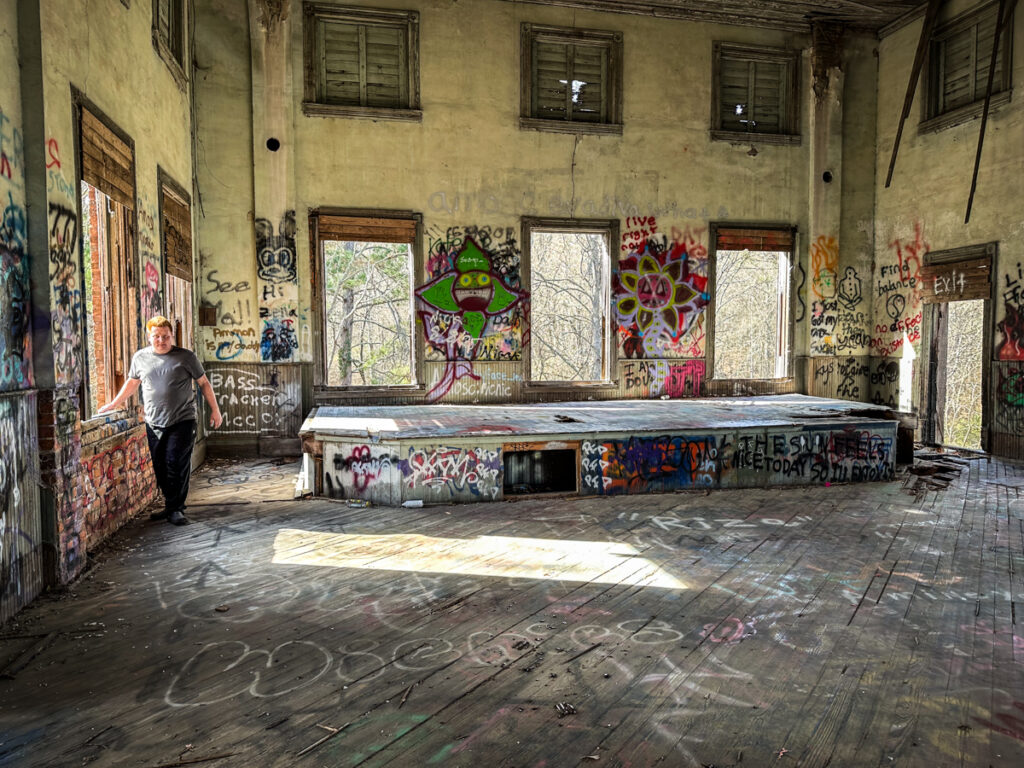
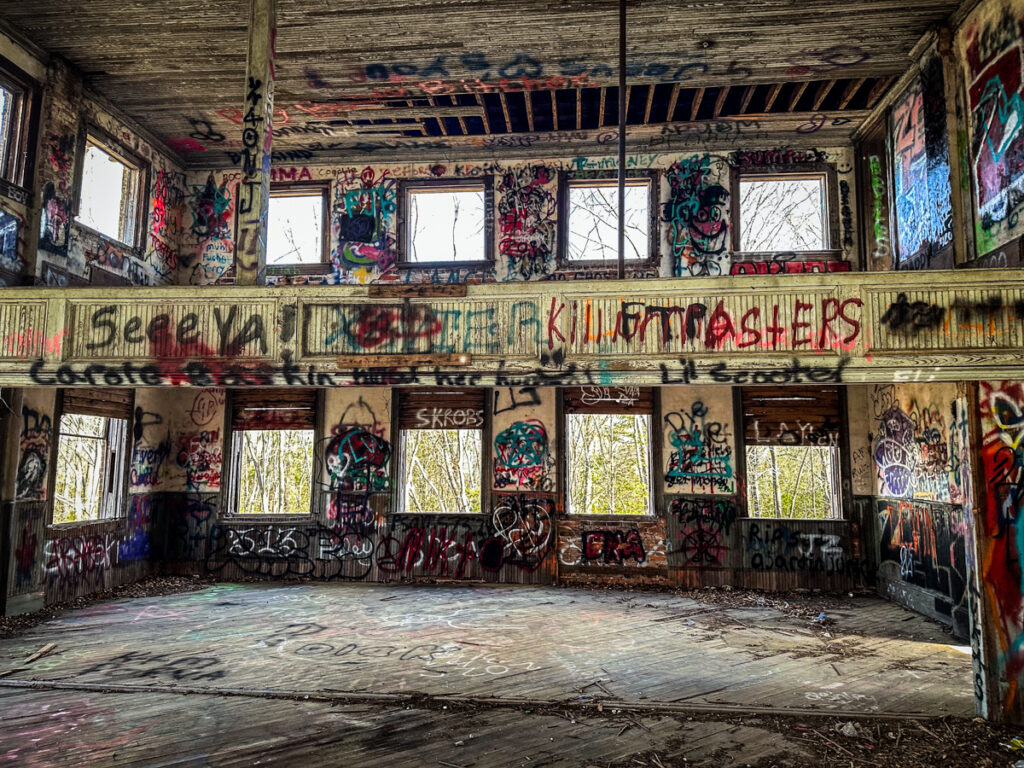

The staircase continued upward to the balcony. Kaleb insisted that we head on up so that we could take in the full view.
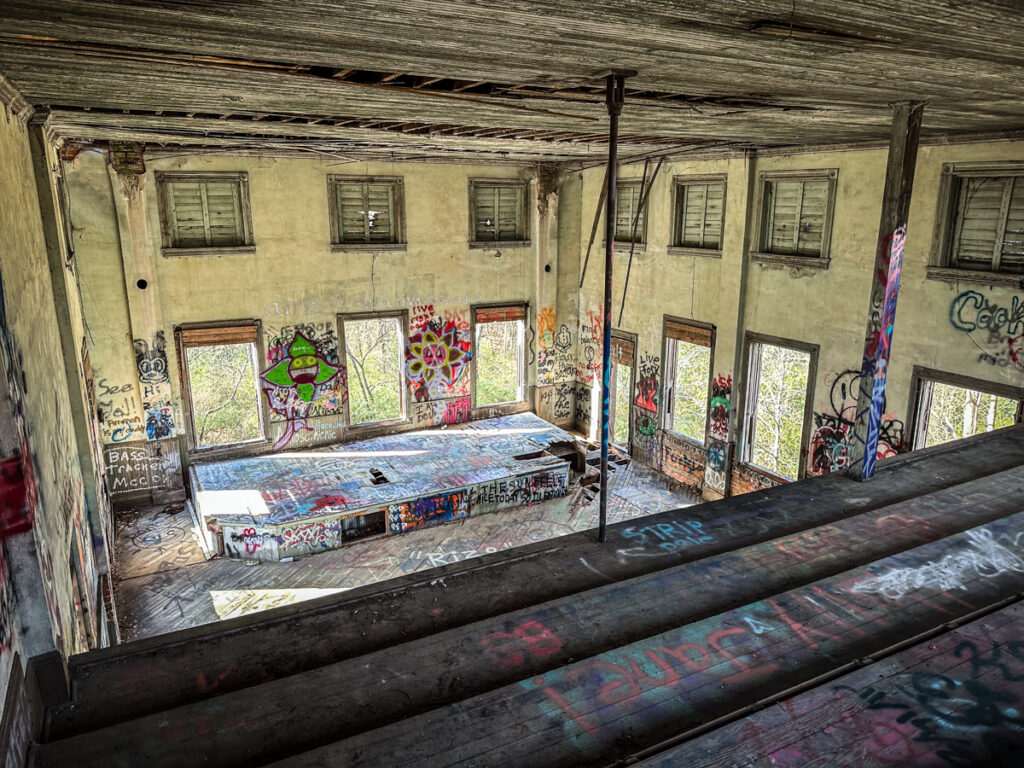
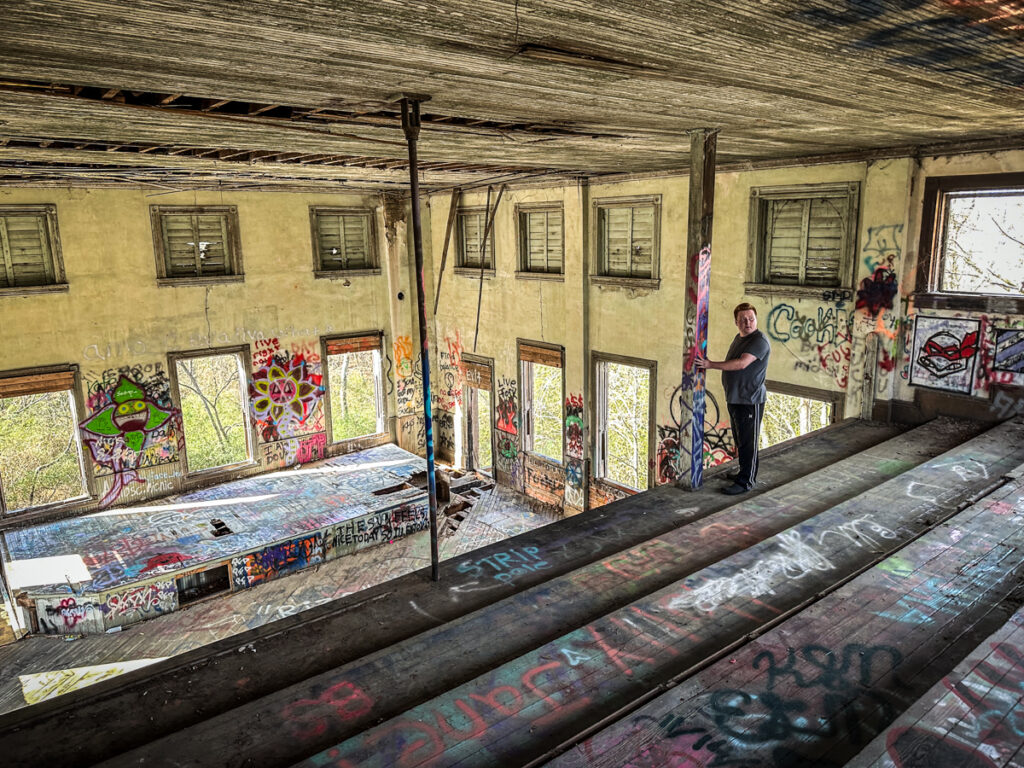
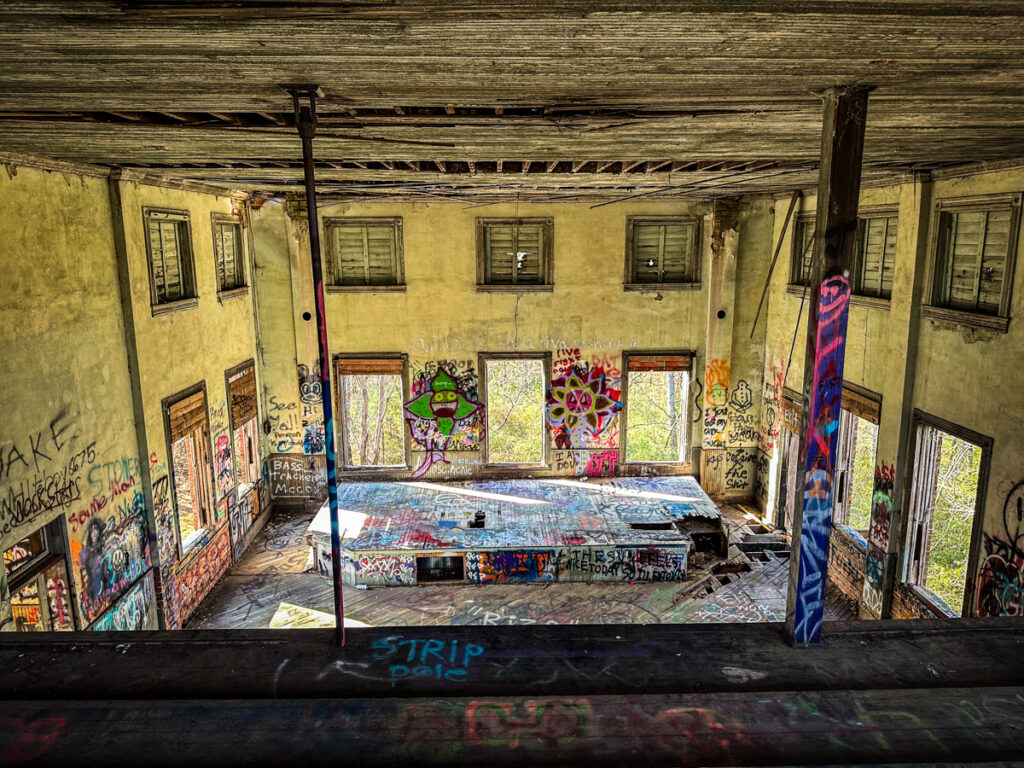

We stood there admiring the view while Kaleb told us about his dream of somehow restoring the old building, getting rid of the graffiti, and making it a place the community could use. I would also love to see that happen, but it would take a LOT of work and money.
We made our way back down the stairs to the lower level.
As with the mill site, there are historic photos that show what the school was like in better days. These three images are from the state’s National Register listing.
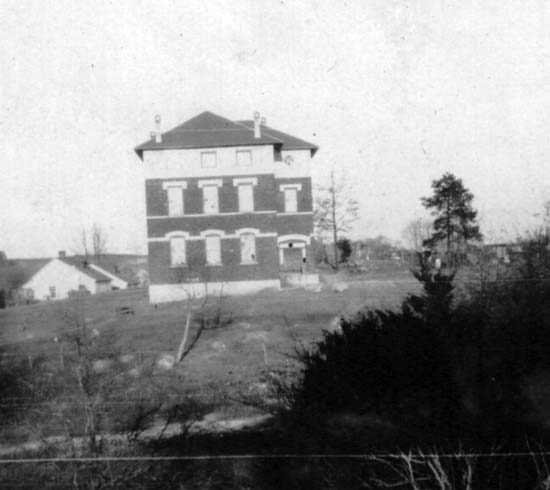
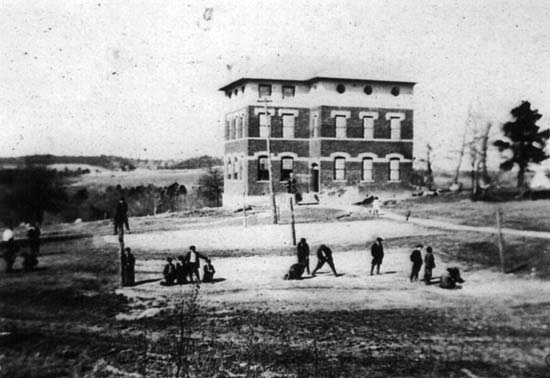
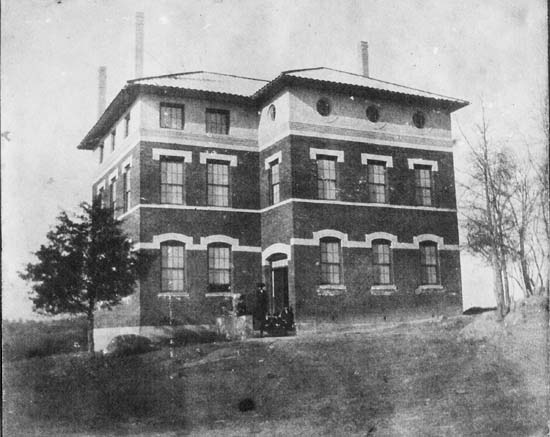
I would love to see the school restored, I’m not sure how feasible that would be.
The morning was getting on, but Kaleb wasn’t done with our tour. We had one more stop with him. That’s on the next page.
Very interesting, as always.