Sitting by itself outside of a brick family plot in the Rocks Cemetery on Church Island is a military headstone. This is a cenotaph. There is no body there, but only a marker to memorialize the body.
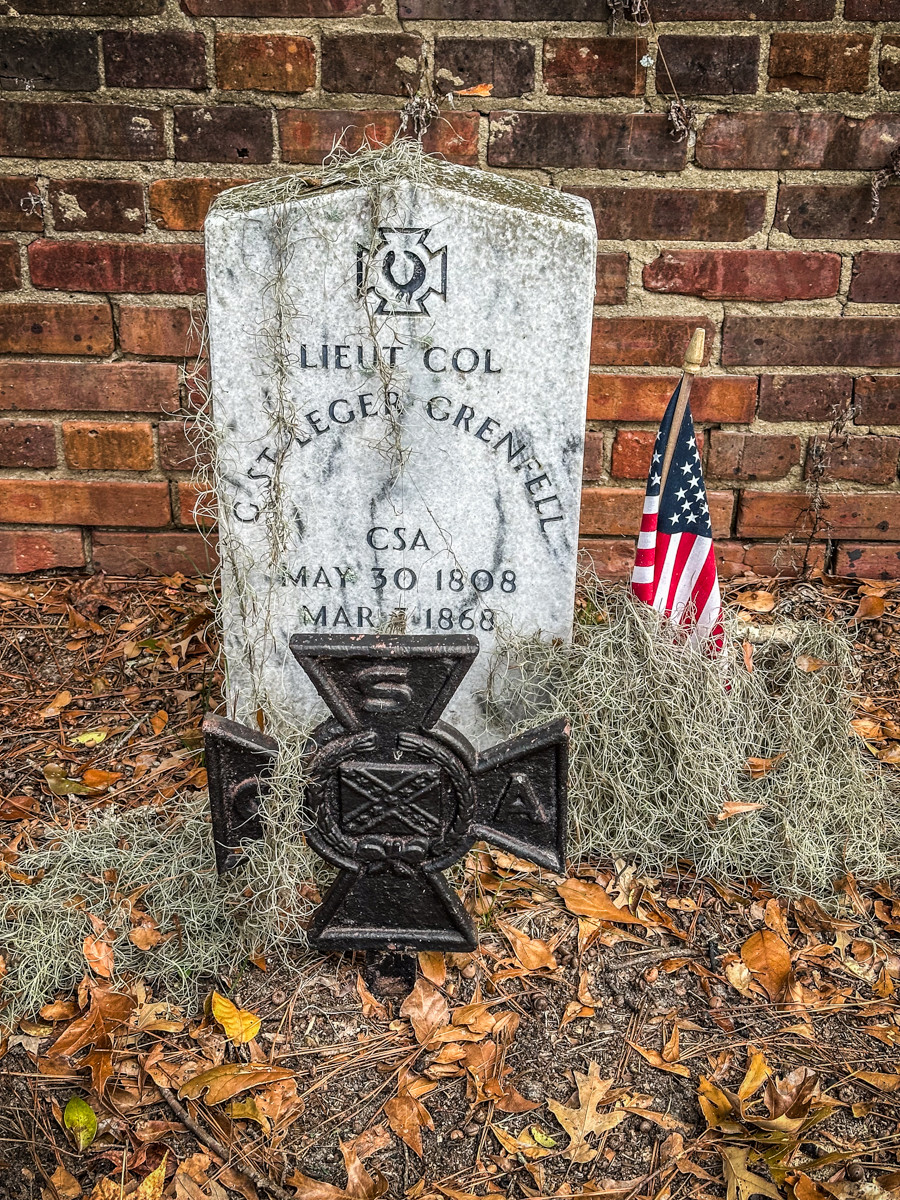
Lieutenant Colonel George St. Leger Grenfell’s marker has a Confederate iron cross and a US flag. Usually there is a Confederate battle flag flanking the left side, but that seems to be missing.
There’s just one problem… There is no reason that this stone should be here.
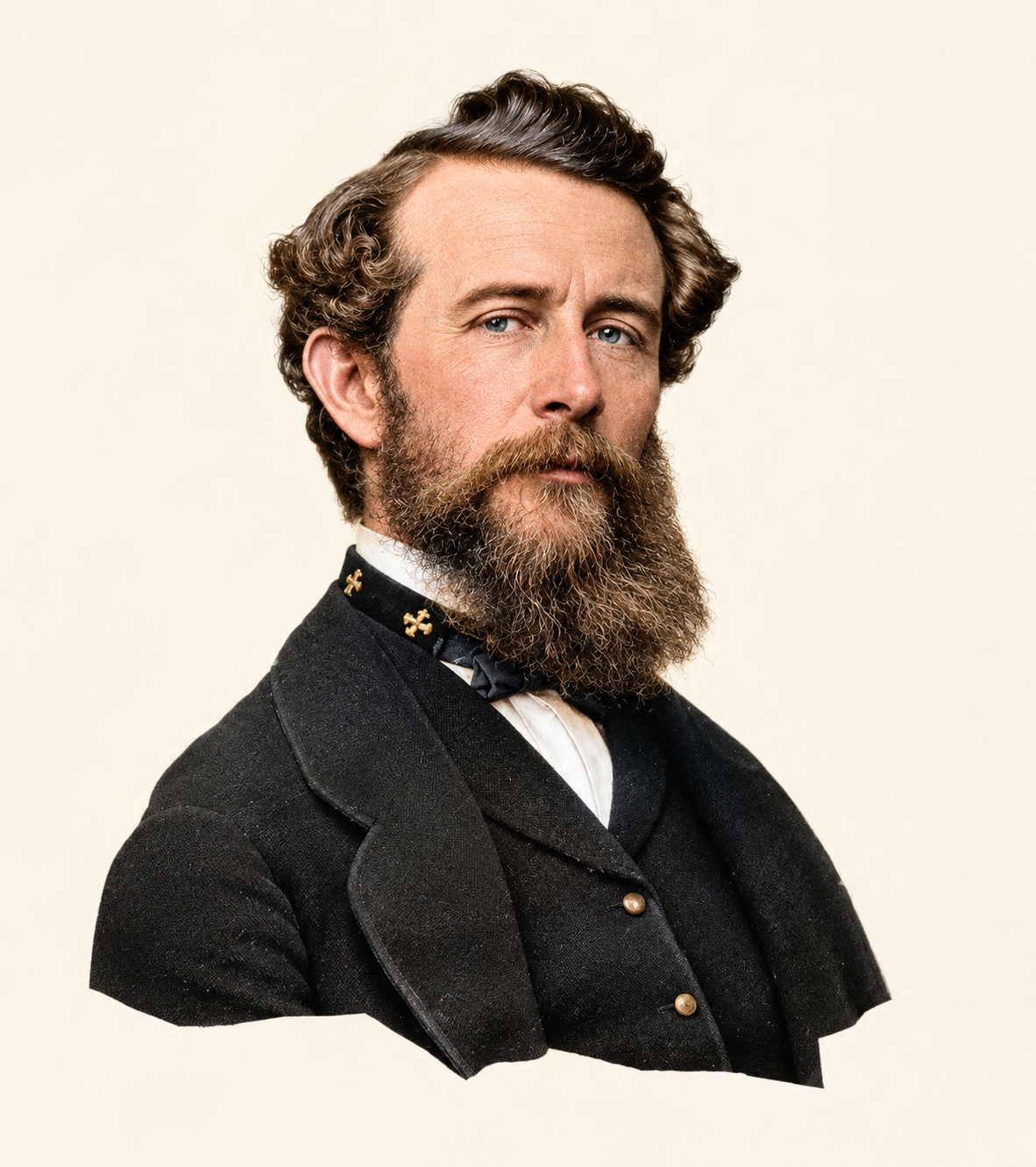
Grenfell was a British citizen who presented himself for service to the 2nd Cavalry of Kentucky. He told stories about having served as a soldier of fortune, fighting with the French Foreign Legion, fighting in the Crimean War, battling Barbary Coast pirates, and commissioned as a Lieutenant Colonel in the British Army. Almost all of these were exaggerations with a mere kernel of truth. Many were of the tales were completely made up. The Confederates, eager for experienced soldiers, excepted his wild tales at face value and let him retain his reported rank. Grenfell fought valiantly with several Confederate divisions. After the war he was incriminated in the Northwestern Conspiracy, a plot to establish a new Confederacy in Illinois, Indiana, and Ohio. He was imprisoned at Fort Jefferson in the Dry Tortugas, attempted escape in a stolen boat, and was considered lost at sea.
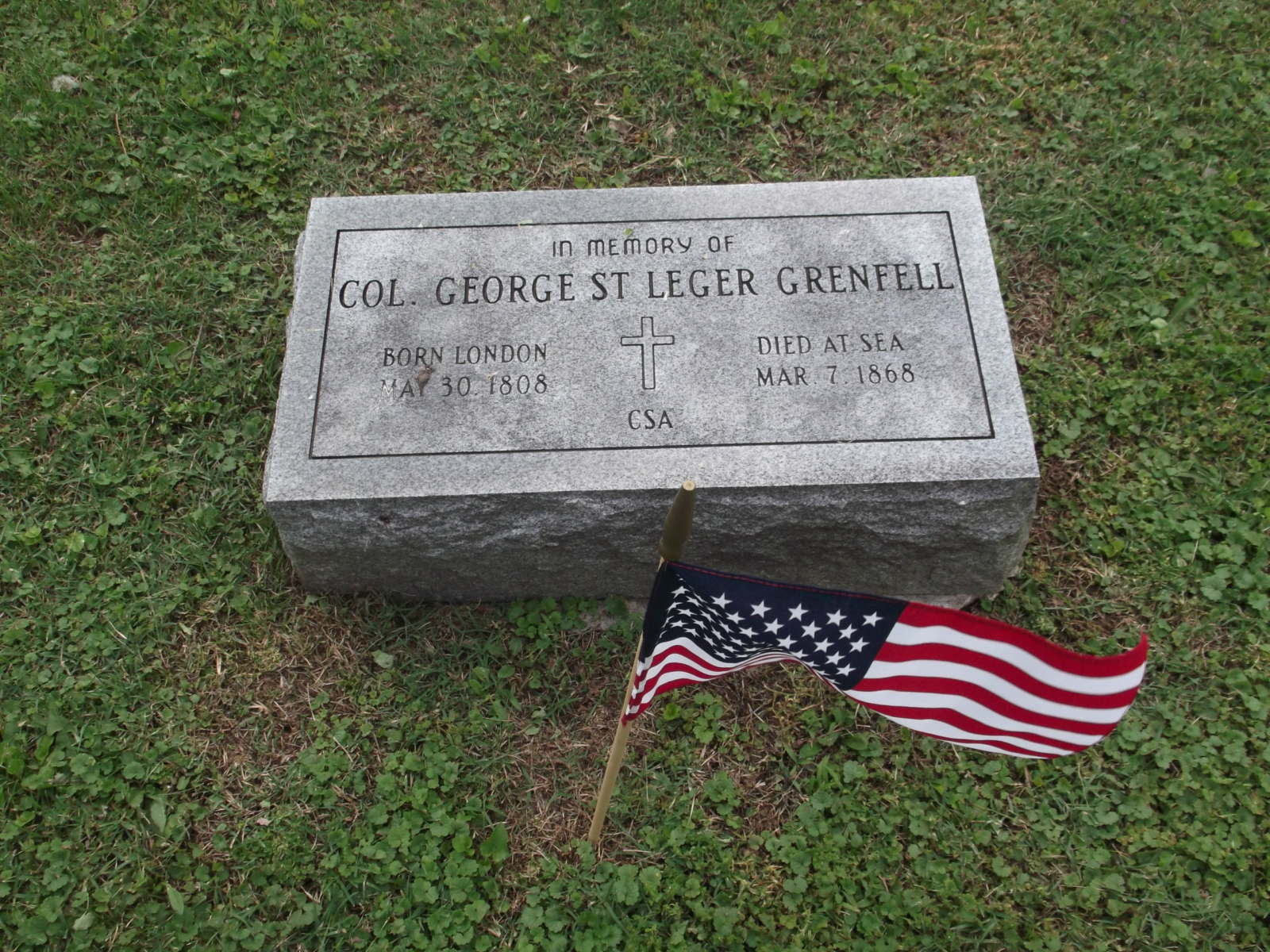
Yet, apart from a brief stop in Charleston upon his arrival in the US, Grenfell has absolutely no association with South Carolina, much less with a remote cemetery in the state’s interior. The stone’s presence in the Rocks Cemetery is a mystery. Grenfell does have another cenotaph marker at Spring Hill Cemetery in Harrodsburg, Kentucky. This makes sense, as most of his Civil War service was in Tennessee and Kentucky, but the SC marker is puzzling.
Grenfell was a braggart, to be sure, but he didn’t need to be. He led a fascinating life without having to embellish it. Later newspaper articles further sensationalized his exploits so that he became more myth, like a Paul Bunyan or Davie Crockett.
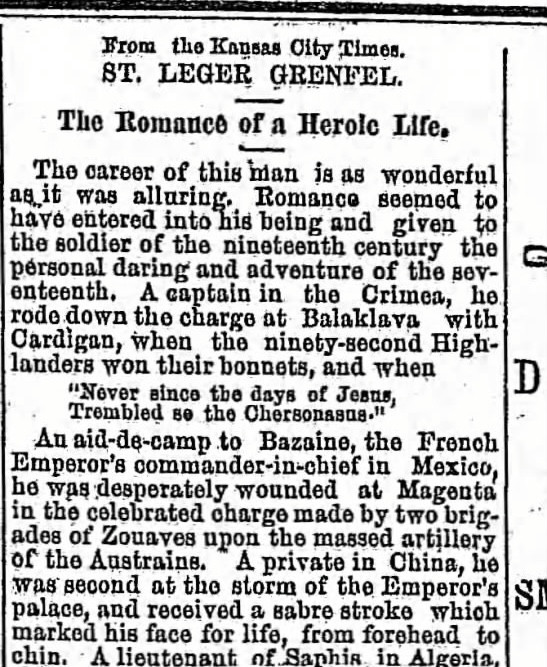
General Basil Duke of the Confederate Army wrote in his Reminiscences that…
He fought the Riffe pirates off the coast of Morocco, and then served with Garibaldi in South America. Finally, tiring of this irregular and barbarous strife, and desirous of settling down to a more Christian and civilized kind of warfare, he returned home and . . . obtained a commission in the English service. He fought in India during the greater part of the Sepoy rebellion, and then in the Crimean War, attaining the rank of lieutenant-colonel.
The most reliable resource I could find was a 1971 biography entitled “Colonel Grenfell’s Wars: The Life of a Soldier of Fortune” by Civil War historian Stephen Z. Starr. It strips away most of the myth and tries to present a true picture of Grenfell. Starr wrote in the preface of his work that…
His tales of glamorous derring-do on four continents made a great impression on a parochial generation of Americans. These tales, alas, were largely a fantasy, the product of his own romantic imagination, of his need to clothe himself in a glittering aura of color and high adventure.
Most of my information for this blog post comes from there.
George St. Leger Grenfell was born in London to a wealthy family and grew up near Penzance in Cornwall, England. He attended school in Holland, toured Europe for a bit, then returned to London to work in his father’s firm. The elder Grenfell opened a branch office in Paris and sent George to manage it. During that time Grenfell got married and had two daughters. He engaged in three days of street fighting as part of the French National Guard, not the Foreign Legion as was told.
While in Paris Grenfell speculated in risky investments with the firm’s funds. The investments failed, and Grenfell’s father was liable for the debts. The elder Grenfell disinherited his son and brought him back to London. George Grenfell was “Grenfell himself was later tried and convicted in absentia by a French court for the forgery of a commercial instrument and sentenced to six years’ imprisonment at hard labor,” according to Starr. He never served that time.
Grenfell was a restless soul and never one to remain in one place for long. In 1840 he obtained a Dutch passport under the name “George St. Leger” and made his way to Gibraltar, then to Tangiers. The French were invading Morocco at that time, and Grenfell found himself working for the British Consulate. At the same time, he found himself smuggling guns to aid Abd-el-Kader, emir of the province of Mascara. He apparently also smuggled leeches back to England for medical purposes. This led to his dismissal from British service
Once again, Grenfell found himself in a spot of hot water. He was returning from hunting with his dogs when he was taunted by a Moroccan boy. Grenfell had a temper, and began chasing the boy. He made the mistake of chasing him into a Mosque with his dogs and while carrying his gun, which was terrible sacrilege. Grenfell had to flee back to Gibraltar, and his farm in Morocco was destroyed. Grenfell hired a boat and tried to return to Morocco, but was fired upon and had to return.
Rather than return to London, Grenfell engaged in more smuggling between Gibraltar and Morocco. Along the way he had several run-ins with pirates, but was able to escape each time. According to Starr, “These encounters were the basis of the tales he told of having fitted out a yacht or a privateer to carry on ‘a private war with the Riff pirates.'”
Grenfell’s wife, Hortense, got tired of his escapades and left him in 1855, taking the two daughters back to Paris. Under his real name, Grenfell did join eventually join the British Army and was commissioned as a captain. He was sent to Turkey to train the Turkish cavalry, but saw no action.
According to Starr’s biography, it’s plausible that Grenfell fought in India, and he probably did make it to South America. That part of his life isn’t well documented. In 1862 he made his way to Charleston, South Carolina, then to Tennessee. He served several posts, but most of his fame was made with General John Morgan’s 2nd Cavalry of Kentucky. His experience in Turkey made him an ideal fit to train the Confederate soldiers. Morgan and Grenfell developed a unique cavalry fighting style, but Grenfell preferred the strict discipline of the British and Turkish troops. The two fell out over Morgan’s marriage, which Grenfell thought would interfere with Morgan’s leadership.
Grenfell then join General J. E. B. Stuart as an aide de camp, but once again became disillusioned with the way things were run. Grenfell left the Confederate Army in 1864, but didn’t relinquish the ideals of the Confederacy. Grenfell visited US Secretary of the Army Stanton in Washington and gained permission to travel in the north to do some hunting. For several months he travelled as a British hunter, while all the while plotting with the Confederacy.
A group in the midwest called the Copperheads and the Sons of Liberty wanted to establish a “Northwestern Confederacy” consisting of Illinois, Indiana, and Ohio. Connecting with Kentucky, Missouri, and the rest of the Southern states, this would essentially cut off the Union from further western expansion. Confederate General Hines and several others, including Grenfell, planned to release prisoners at Camp Douglas near Chicago, raid several munitions depots, and set fire to Chicago. The conspiracy was thwarted, and Hines, Grenfell, and several others were arrested.
Grenfell was tried in a military court and sentenced to execution by hanging. During the trial, Lincoln was assassinated. New President Andrew Johnson commuted Grenfell’s sentence to life in prison, to be served at Fort Jefferson in the Dry Tortugas.
By all reports Fort Jefferson was a dismal place. Malaria and dysentery were rampant. Grenfell was imprisoned with several of the Lincoln assassination conspirators, including Dr. Samuel Mudd. When Grenfell came down with malaria, Mudd nursed him back to health. Grenfell was also subjected to torture by the guards. There were several attempts to get Johnson to pardon Grenfell or to void his conviction and the basis that it was illegal, but those were in vain.
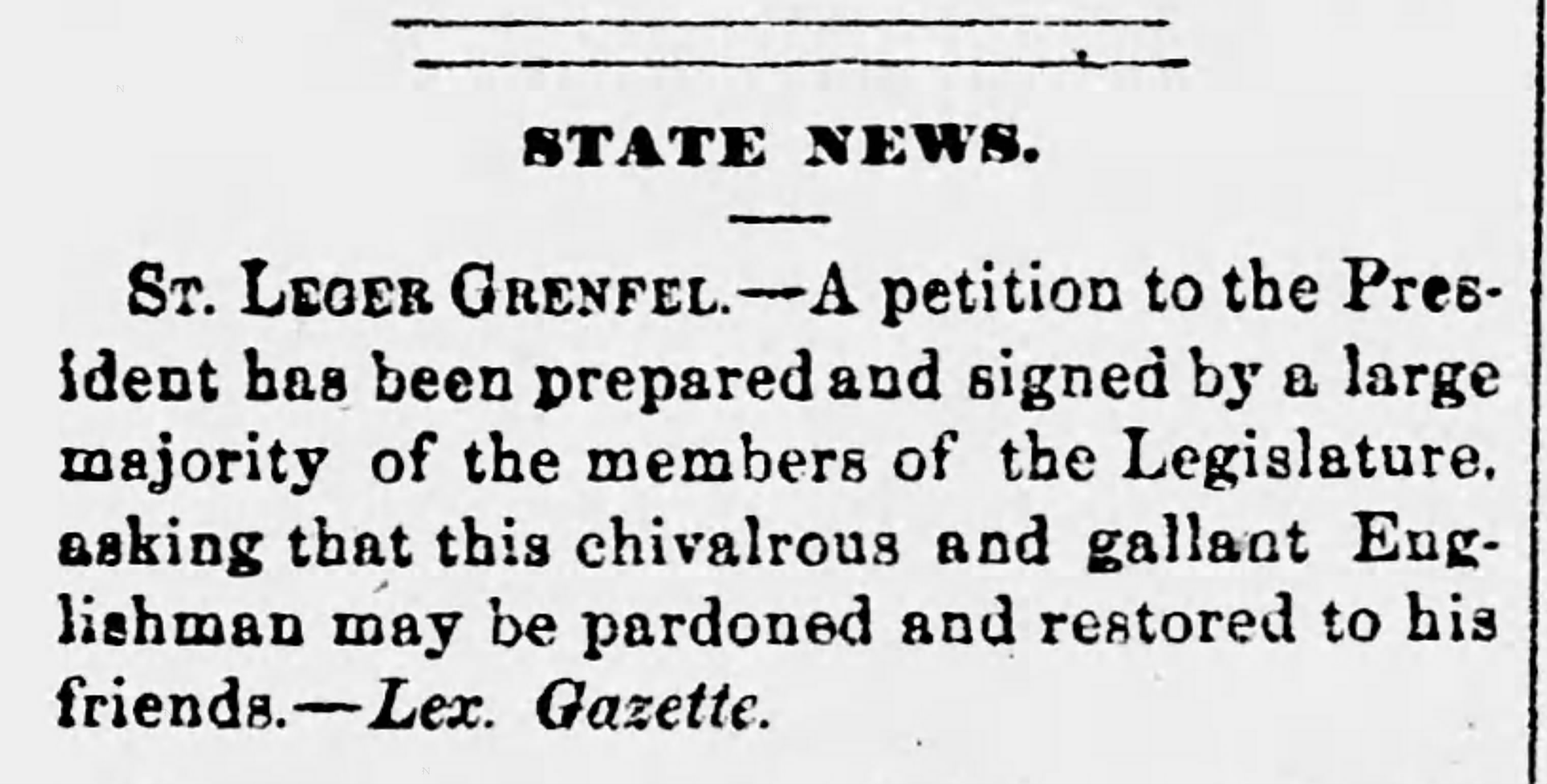
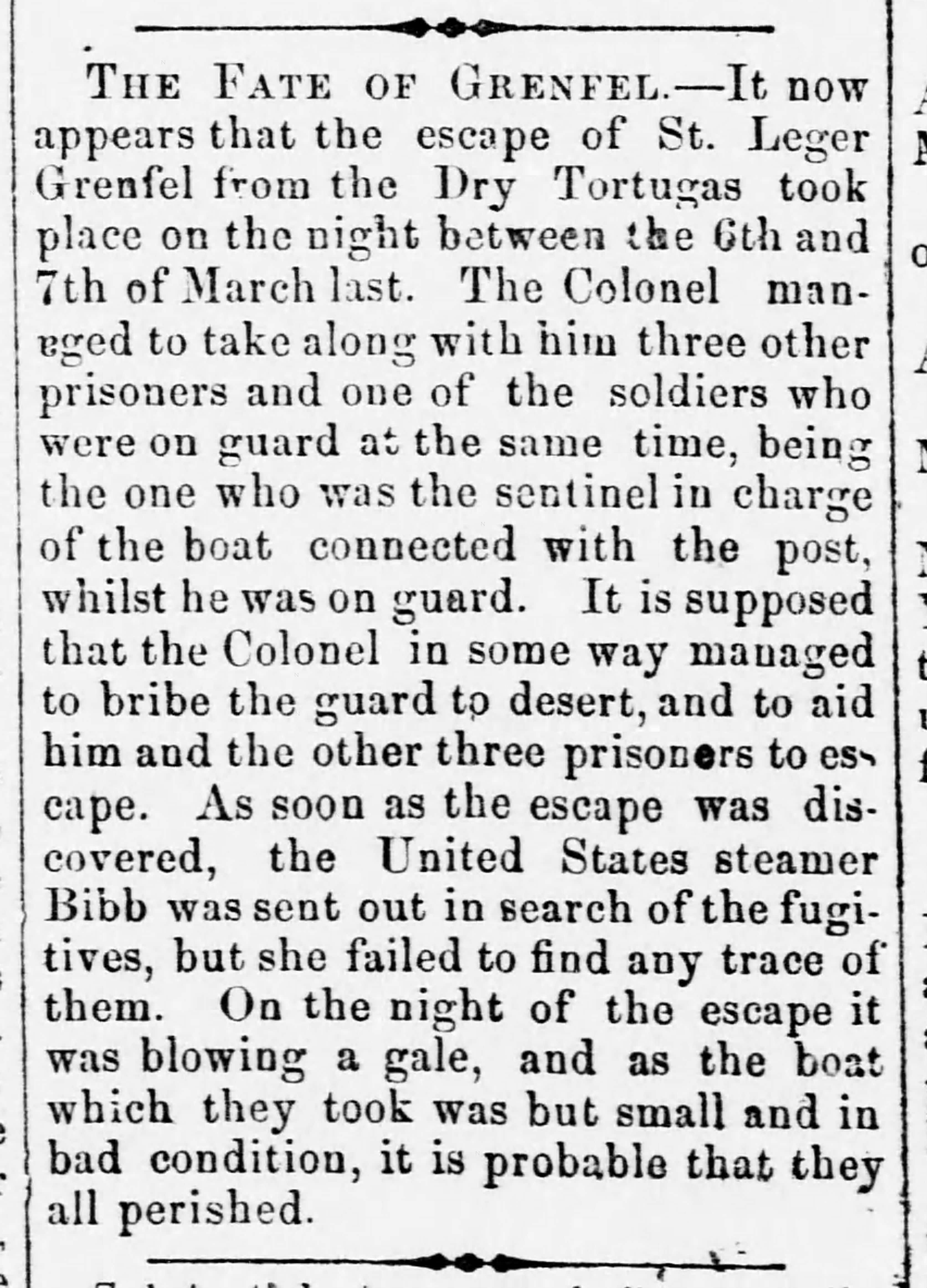
In 1868, after four years at Fort Johnson, Grenfell had enough. With three of the other Lincoln conspirators, he stole a small boat and tried to escape. Their timing was awful. A storm came up, and it was presumed that all were lost at sea.
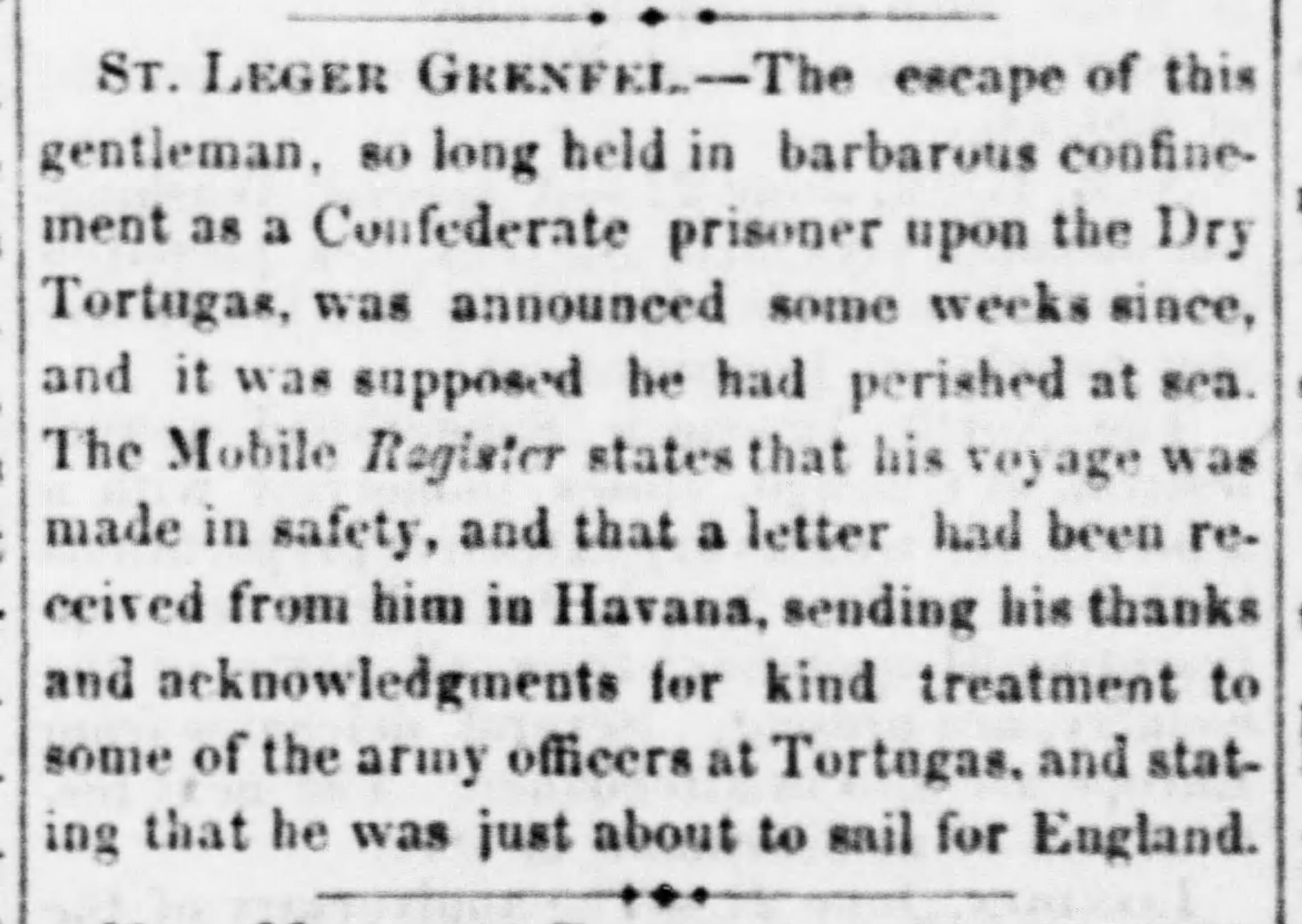
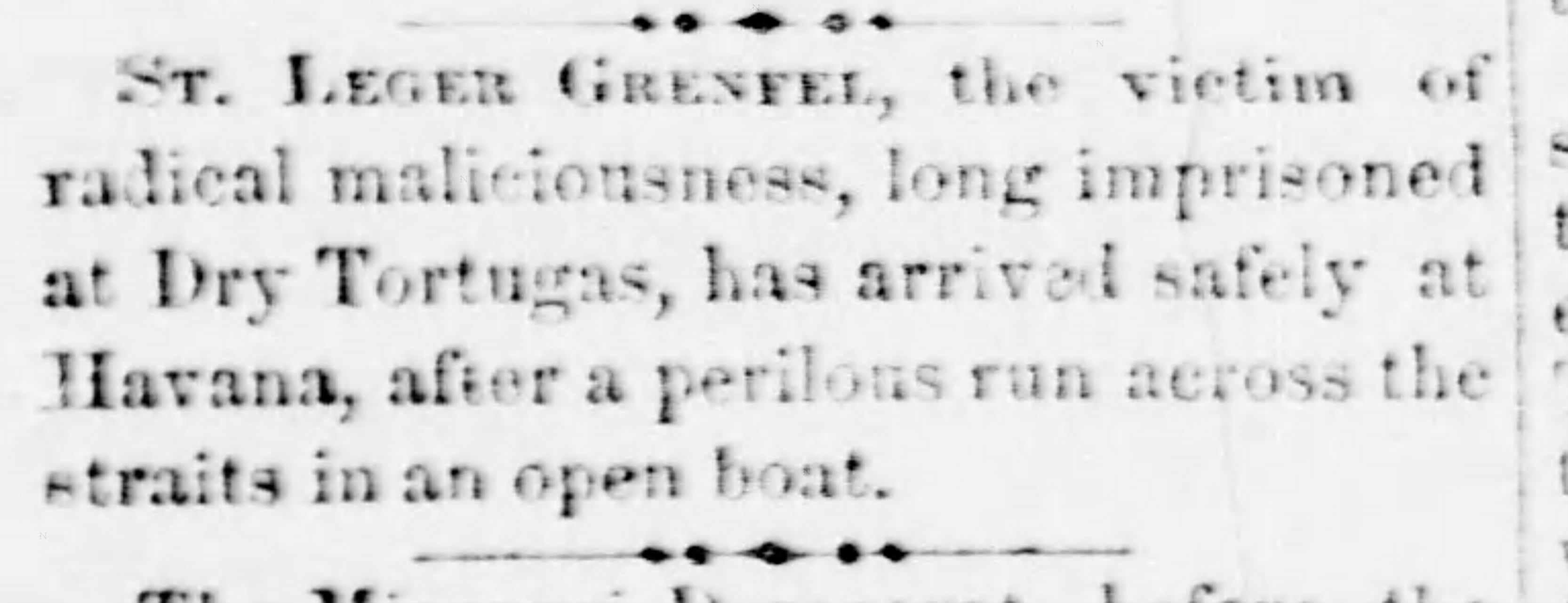
Thus ended the colorful career of George St. Leger Grenfell…maybe. There were rumors that he survived and landed in Cuba, where he then made his way to London. Newspaper articles reported this based on a supposed letter from Grenfell.
But back to Rocks Cemetery in Lake Marion…
Apart from passing through the state on his way to Tennessee, there is no recorded connection between Grenfell and South Carolina. His parents and siblings are all buried in England. His wife and daughters are buried in France. The men with whom he fought were from Tennessee and Kentucky. It’s possible that there was a South Carolina soldier upon whom Grenfell made an impression, but enough to place a monument??
The story gets weirder. I reached out to the Church of the Epiphany and the Berkeley County Historical Society to see if they had any info. I wanted to know who placed the stone and when. I haven’t heard back from the church yet, but Erin Newcomb from the Society responded quickly. She said that a survey of the cemetery done in 2000 has no record of the headstone. She thinks that it was placed after that survey. That makes this a recent addition to the site. She was going to reach out to several groups that help with maintenance of the cemetery and see if they know anything.
Until then, that’s all I know about this mystery stone. Grenfell’s life isn’t as much of a mystery, due to his notoriety and aggrandizement, but this stone remains a puzzle.