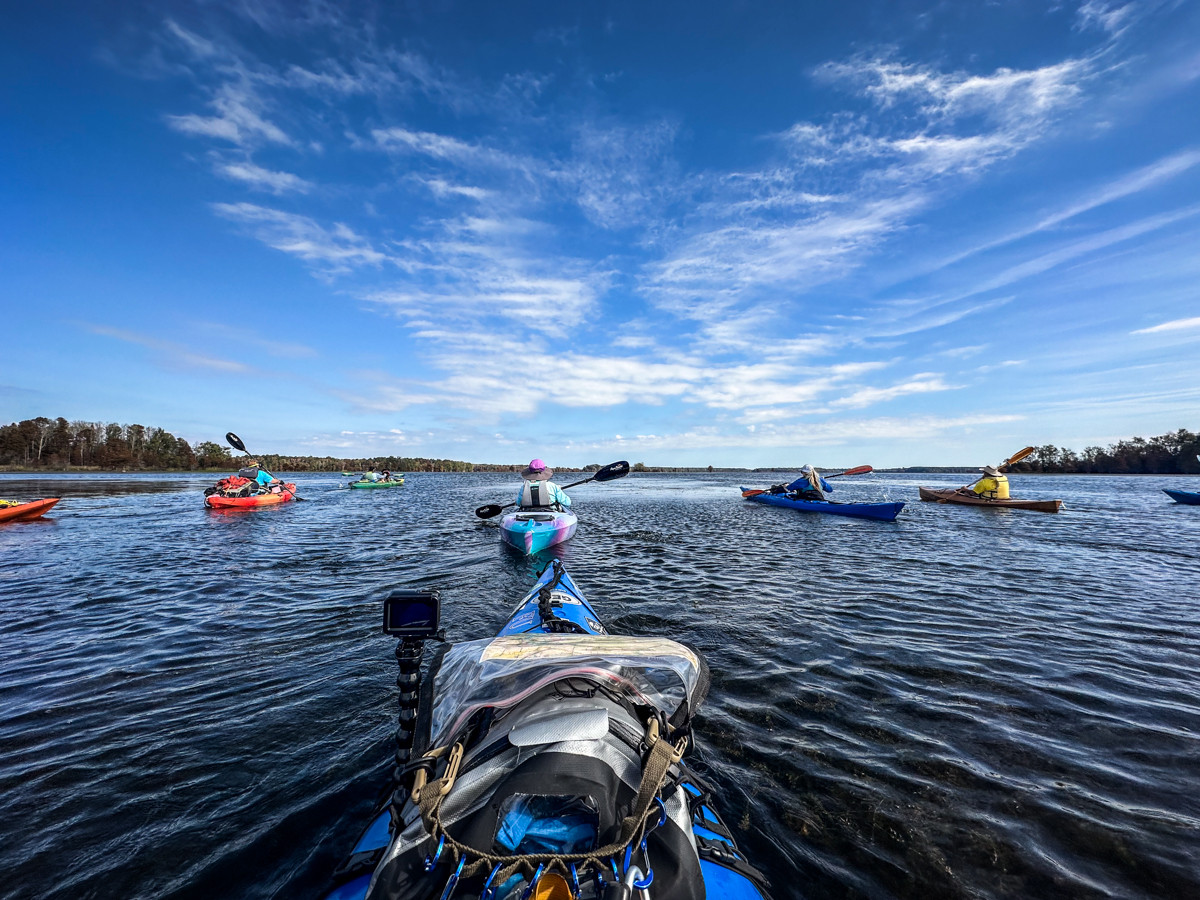
This past Saturday I joined a group of about 20 paddlers from the Carolina Splash Mob for a trip out to Church Island in Lake Marion. CSM organizer Dawn Marie asked if I could lead the group and record audio for an upcoming episode of Carolina Ghost Towns. The plan was to paddle out to the Rocks Cemetery on Church Island, talk about the history of the lake, as well as the history of the cemetery and the nearby ghost town of Ferguson.
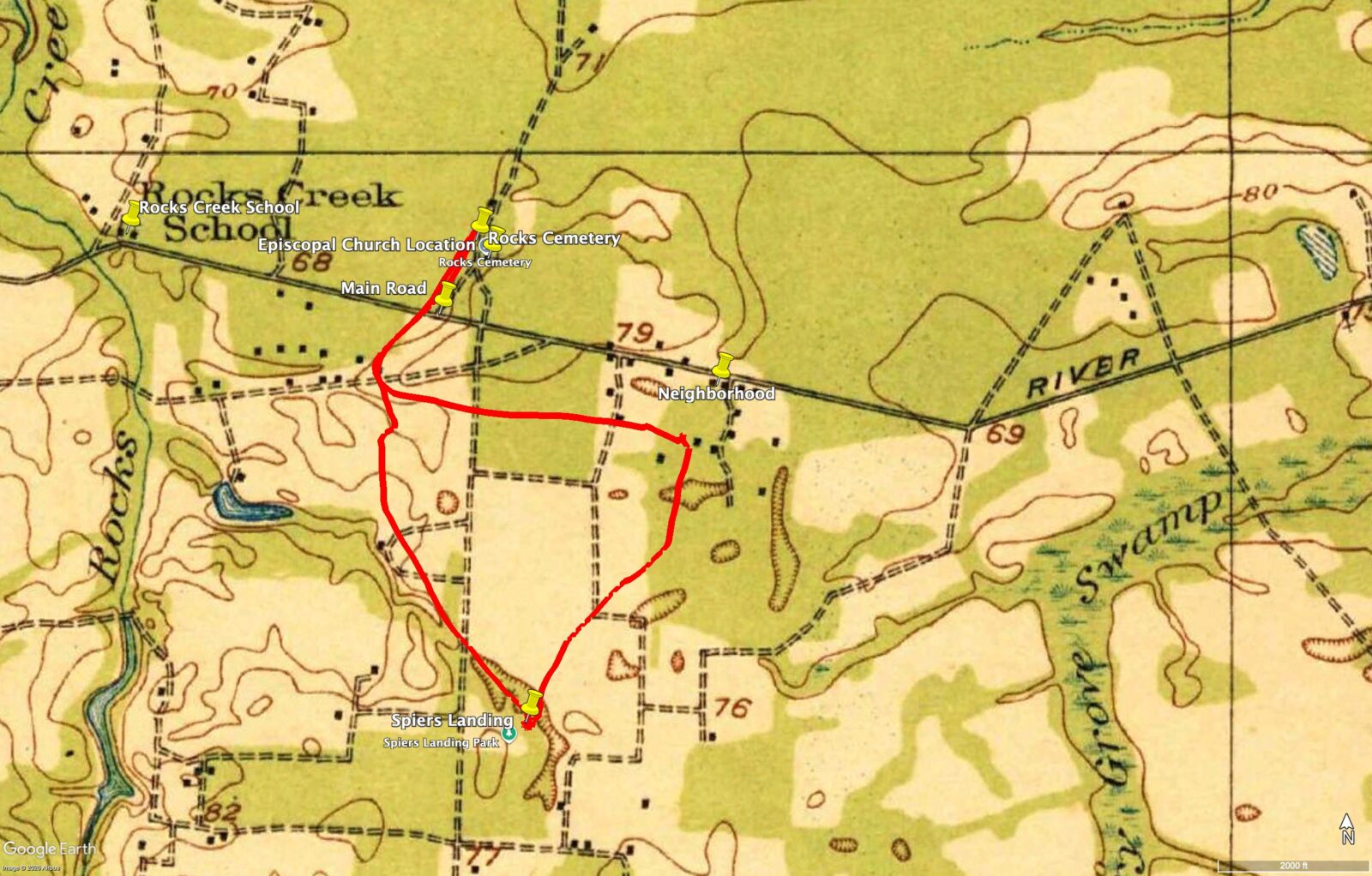
I have a tendency to overthink and over prepare. The original plan was to camp out on Church Island and record us telling ghost stories. That got pared down to a day trip, and us talking about spooky things we had seen while paddling. Having never done a podcast like this, I wasn’t sure what to bring, so I loaded up tons of recording gear, leaving no room for camping gear. As part of my preparation I took a 1923 USGS topo map of the area and marked some interesting waypoints from before the lake was filled. I also loaded up my phone with tons of notes about the old Santee-Cooper plantations and other interesting tidbits about the Rocks Cemetery and history of the Church of the Epiphany.
This was the first time I’d paddled in nearly two months, so I was not on my A game. I had a new wooden paddled that I wanted to try out, but I wanted a spare, just in case. Turns out I brought two halves of a mismatched set for my spare. To top that off, I’d brought the wrong paddling jacket, and half the lights on my kayak trailer weren’t working. I didn’t like the way this day was starting. I shouldn’t have worried. The drive down was stunning, with a thin crescent moon playing with Venus nearby.
When I arrived at Spiers Landing there were already a couple of paddlers there. I unloaded my boat and waited for the others to arrive. Soon others joined us. I only knew a couple of the paddlers, but they all seemed like nice folks.
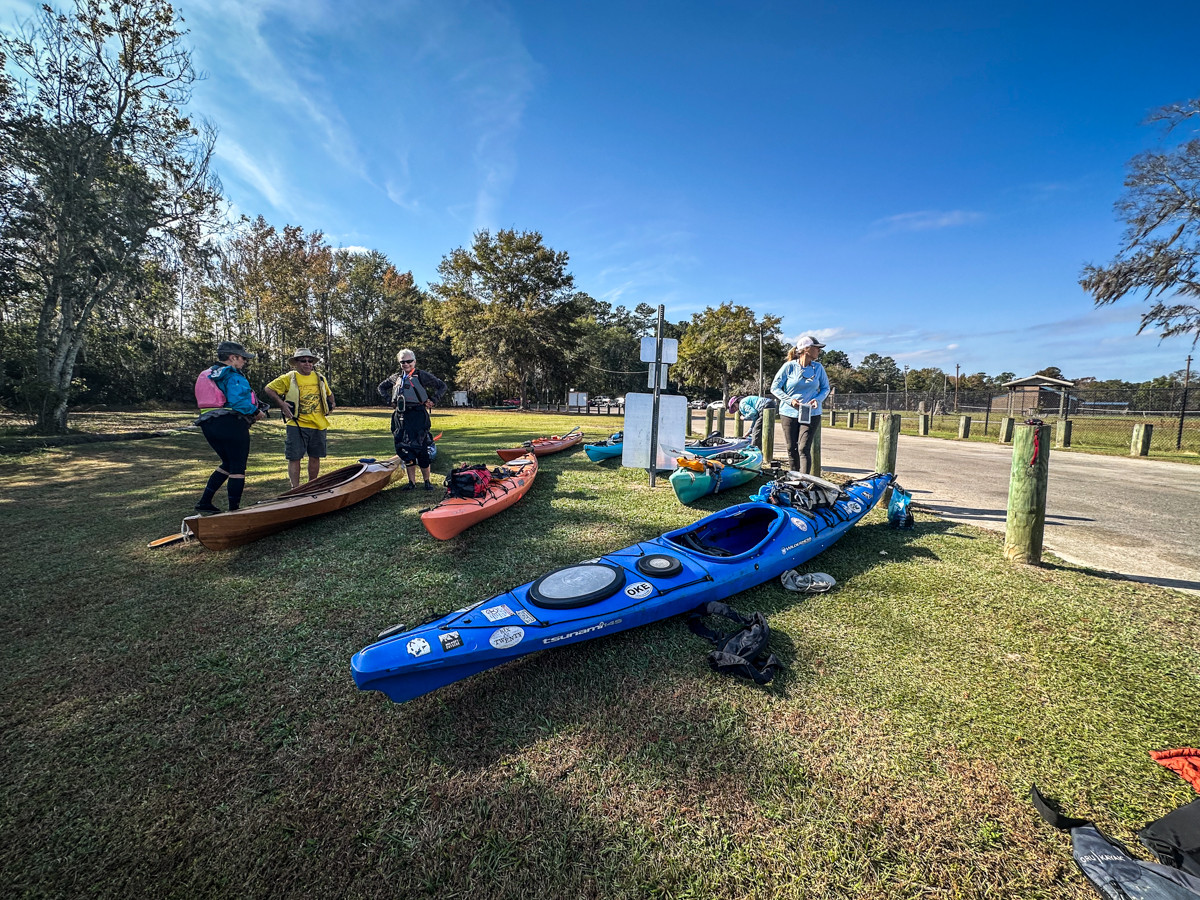
Dawn and a few of the other paddlers were going to camp out on Chimney Island, nearby. They were going to run a shuttle over to a closer take-out. While they were doing that we watched a pair of bald eagles in a nearby tree. Some folks were ready to get onto the water, and started launched before the shuttle arrived. Can’t blame them. It was time to get on the water.
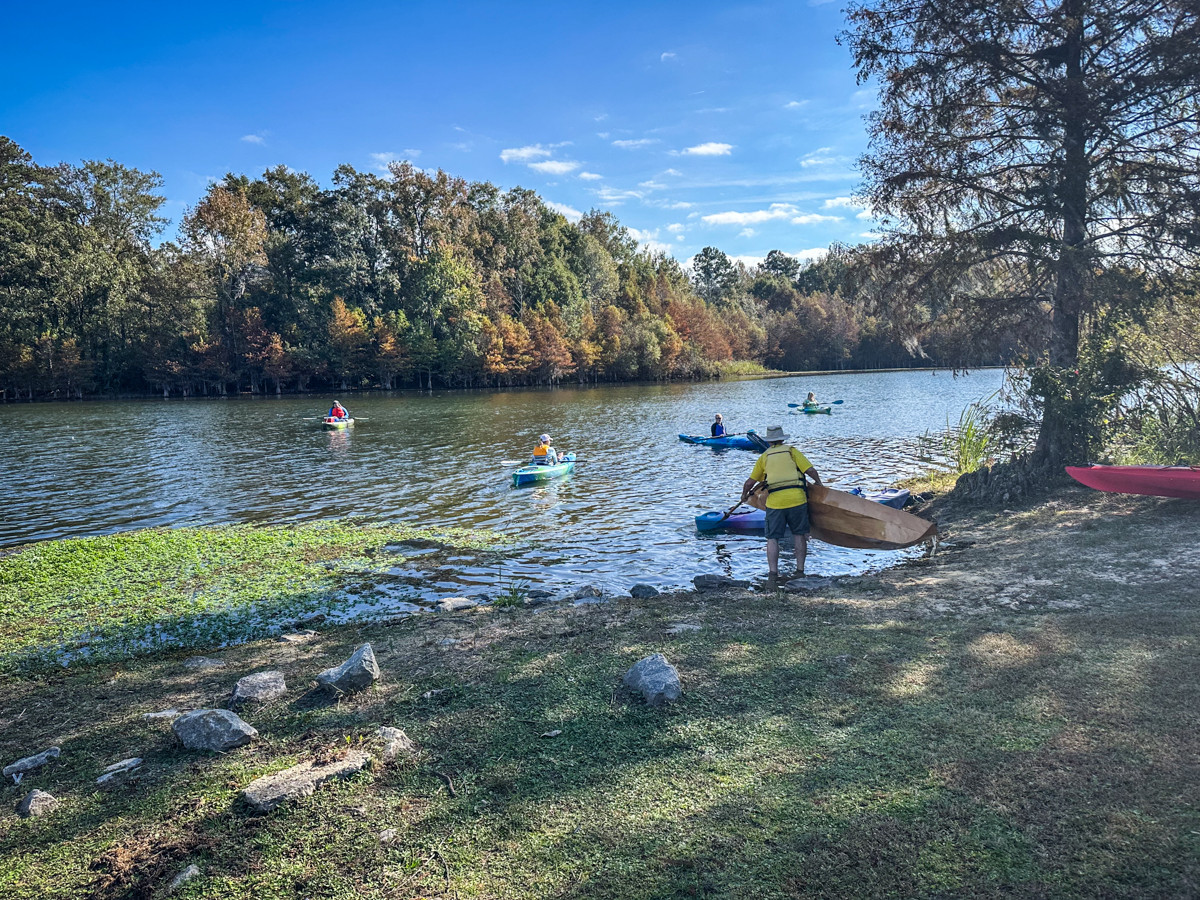
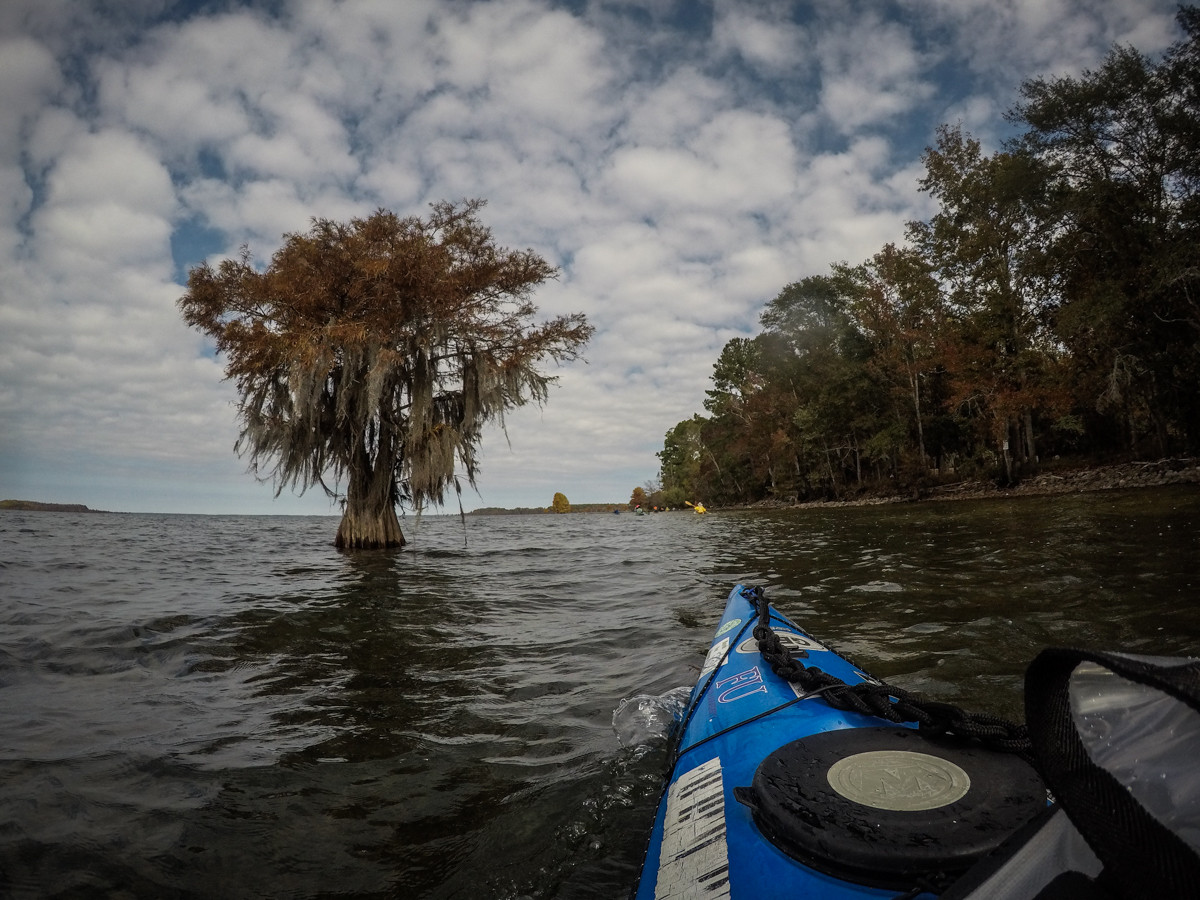
I was wearing a small recorder and I had a lavelier mic for Dawn. We both narrated and answered questions as we paddled. Church Island was visible from the launch and didn’t look to far away. What complicated things was a bit of headwind and some invasive weeds. The weeds, more than anything, made paddling difficult. The scenery was gorgeous, but the short paddle to the island proved challenging.
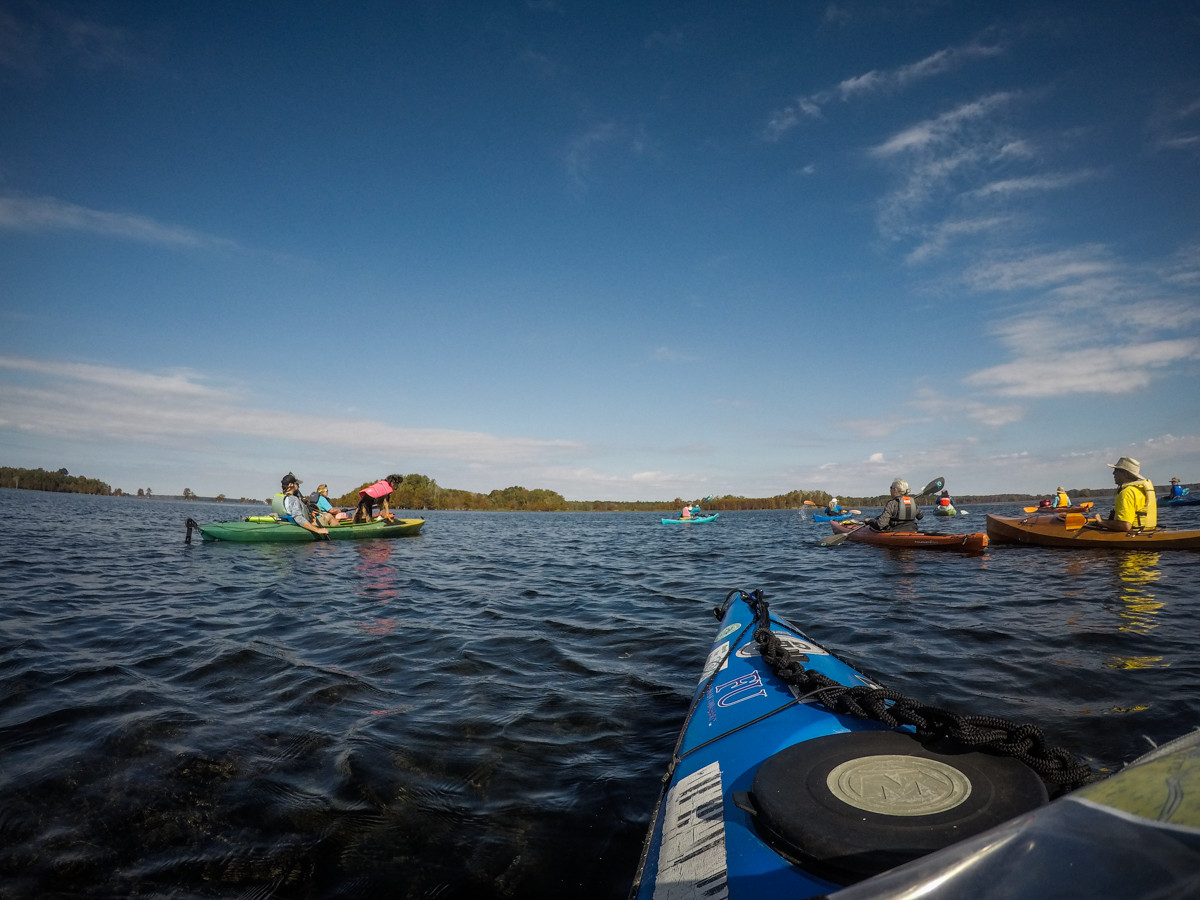
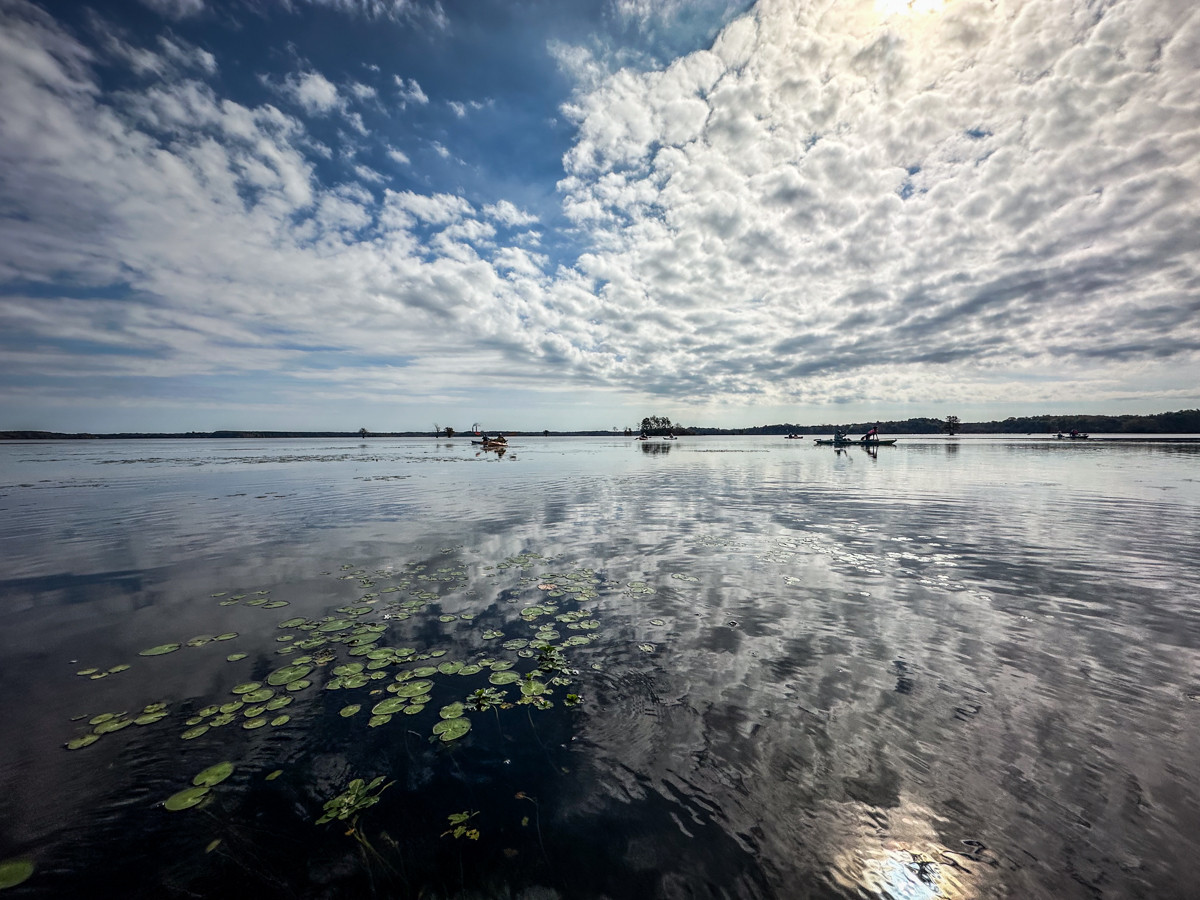
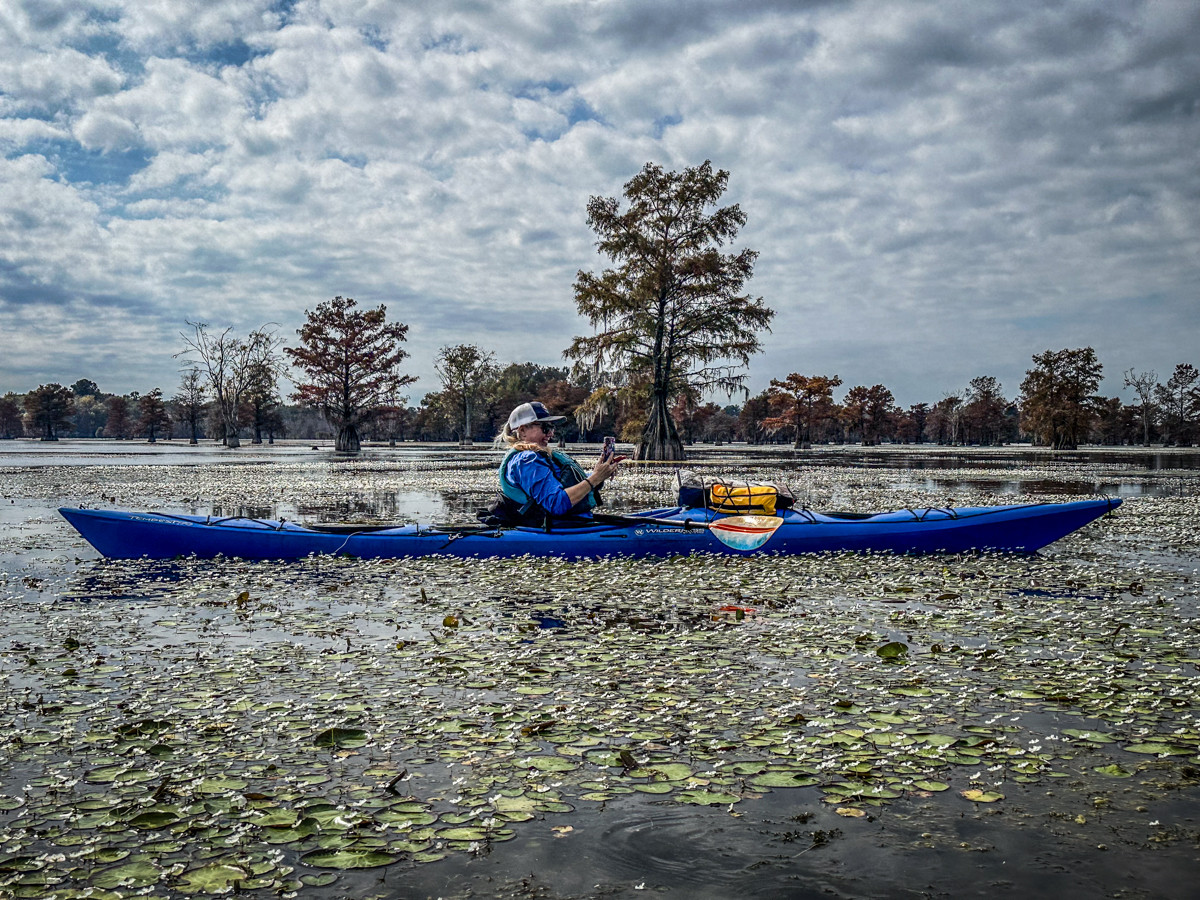
Our first stop was at the east end of the island. I’d marked a spot where there had once been a neighborhood and where the old Highway 45 had crossed the island. We gathered up and I gave the group a quick history of the lake, and how the onset of WWII affected the scenery. The lake was filled quickly because they needed power generation, so instead of logging the basin, they left many cypress trees standing in the lake.
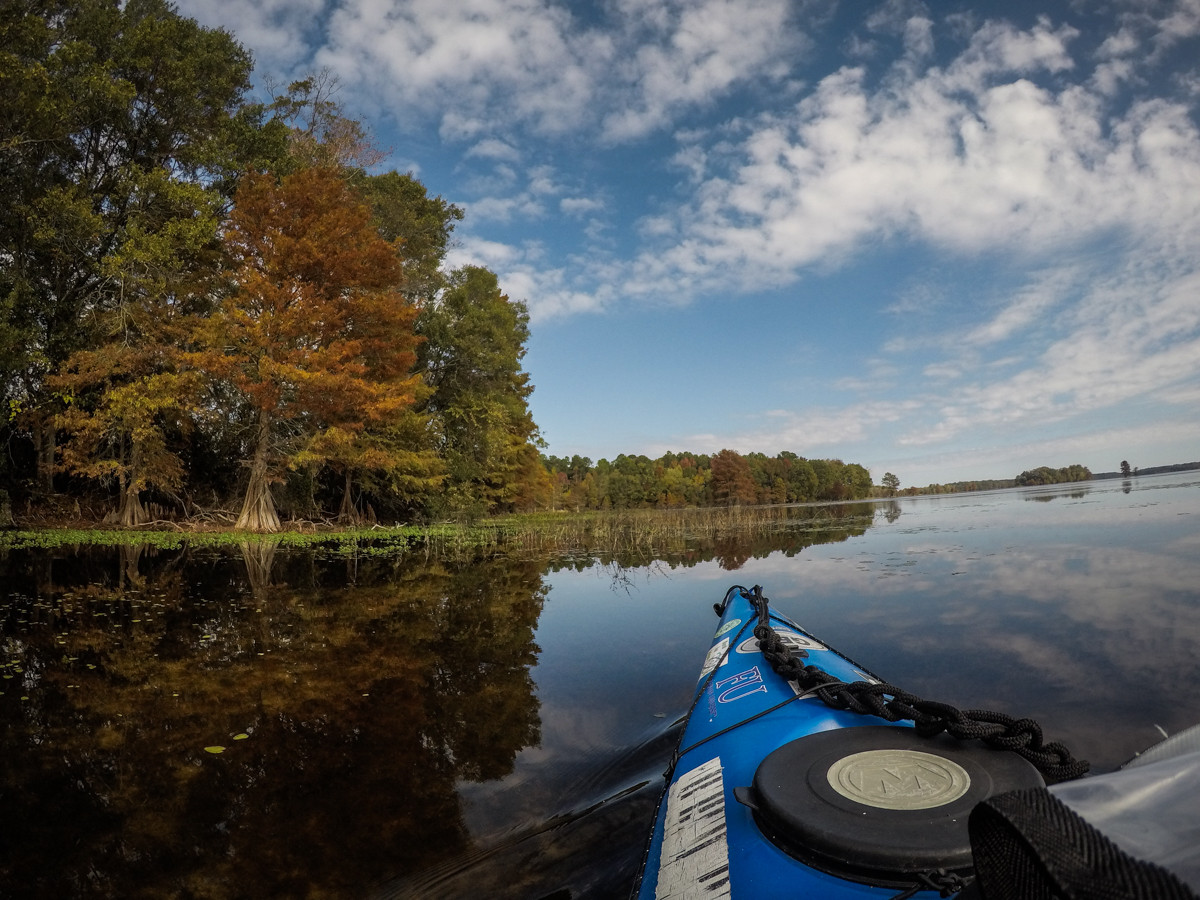
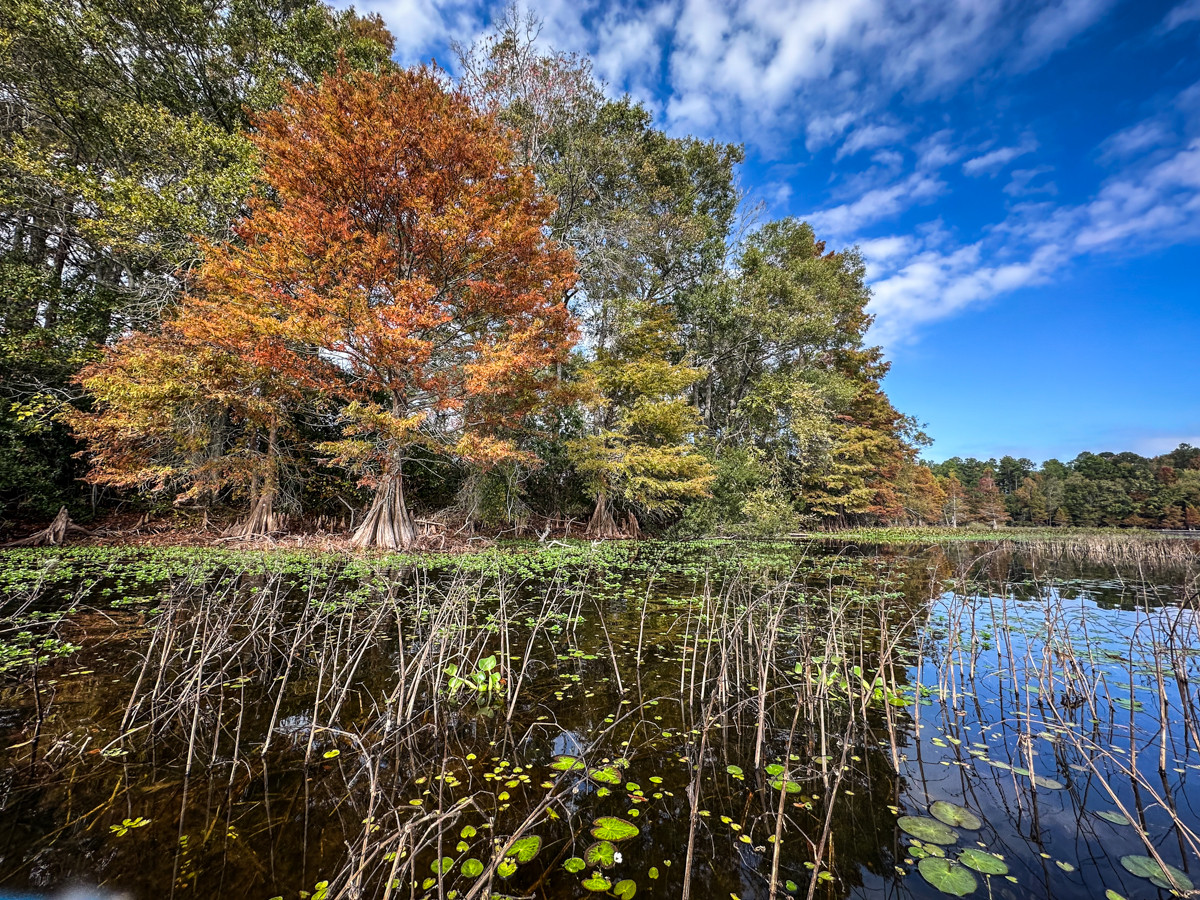
From here we paddled along the south side of the island, still fighting weeds. We would round the western tip and head on up to the cemetery from there.
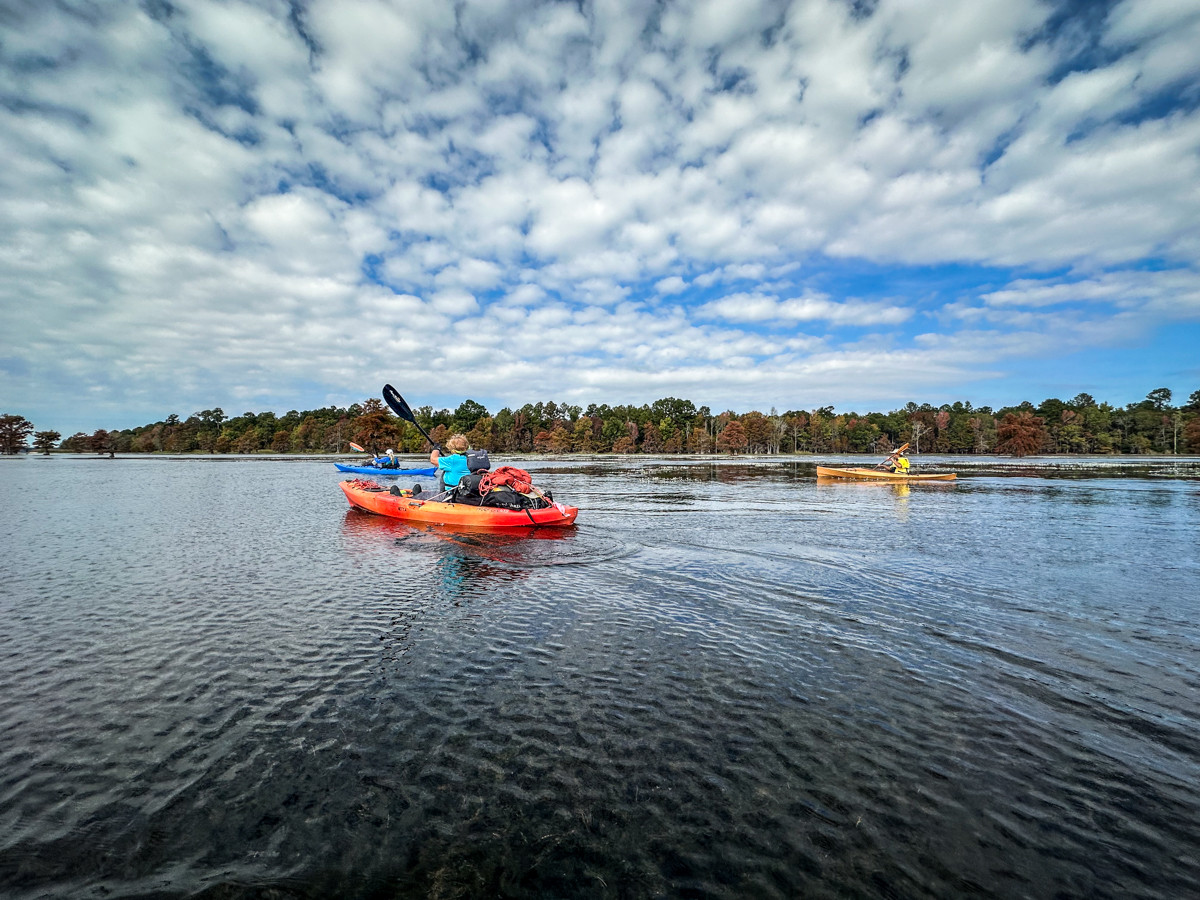
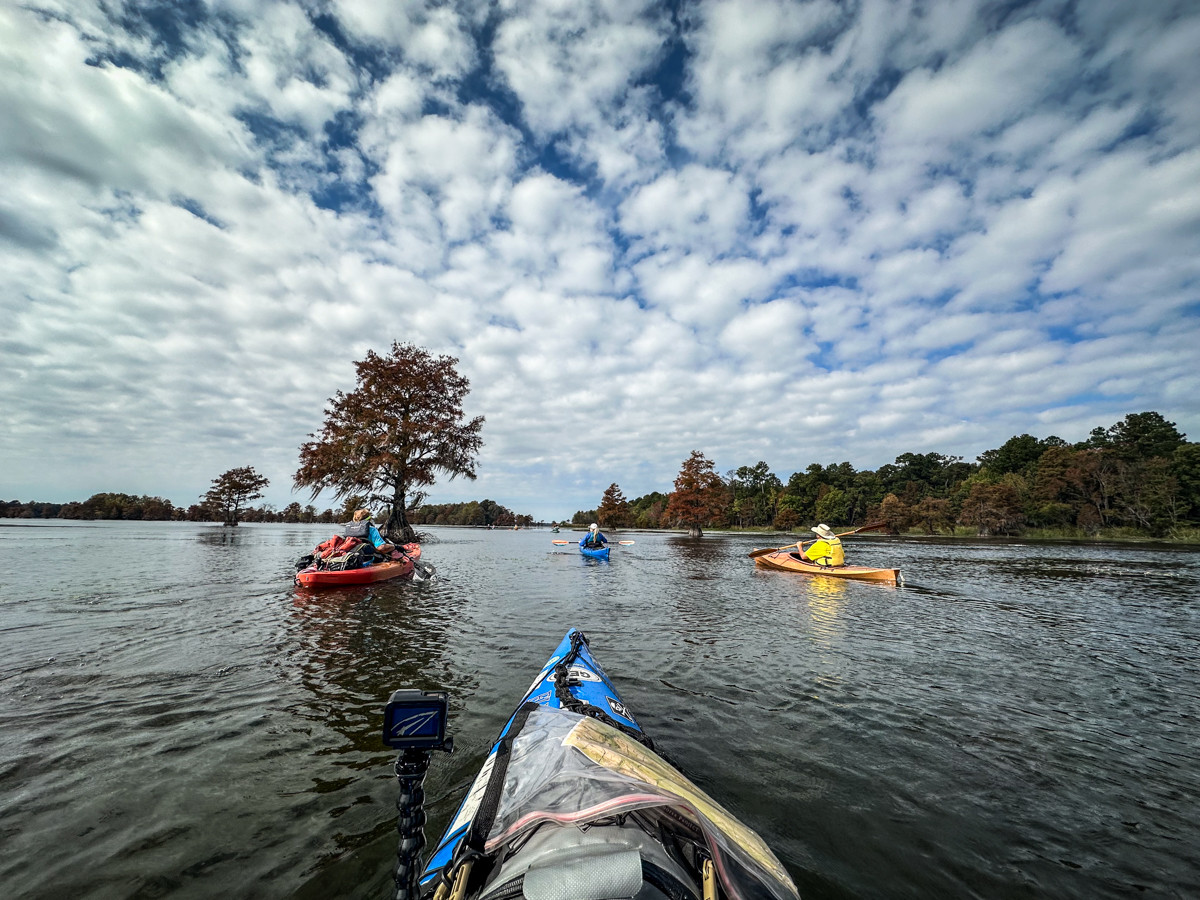
Once around the point, the wind from the open lake picked up. We didn’t have to deal with weeds, but choppy water made things about as difficult. Soon, though, we made it to a beach where we could pull up. A few paddlers had camped out the night before and were already there.
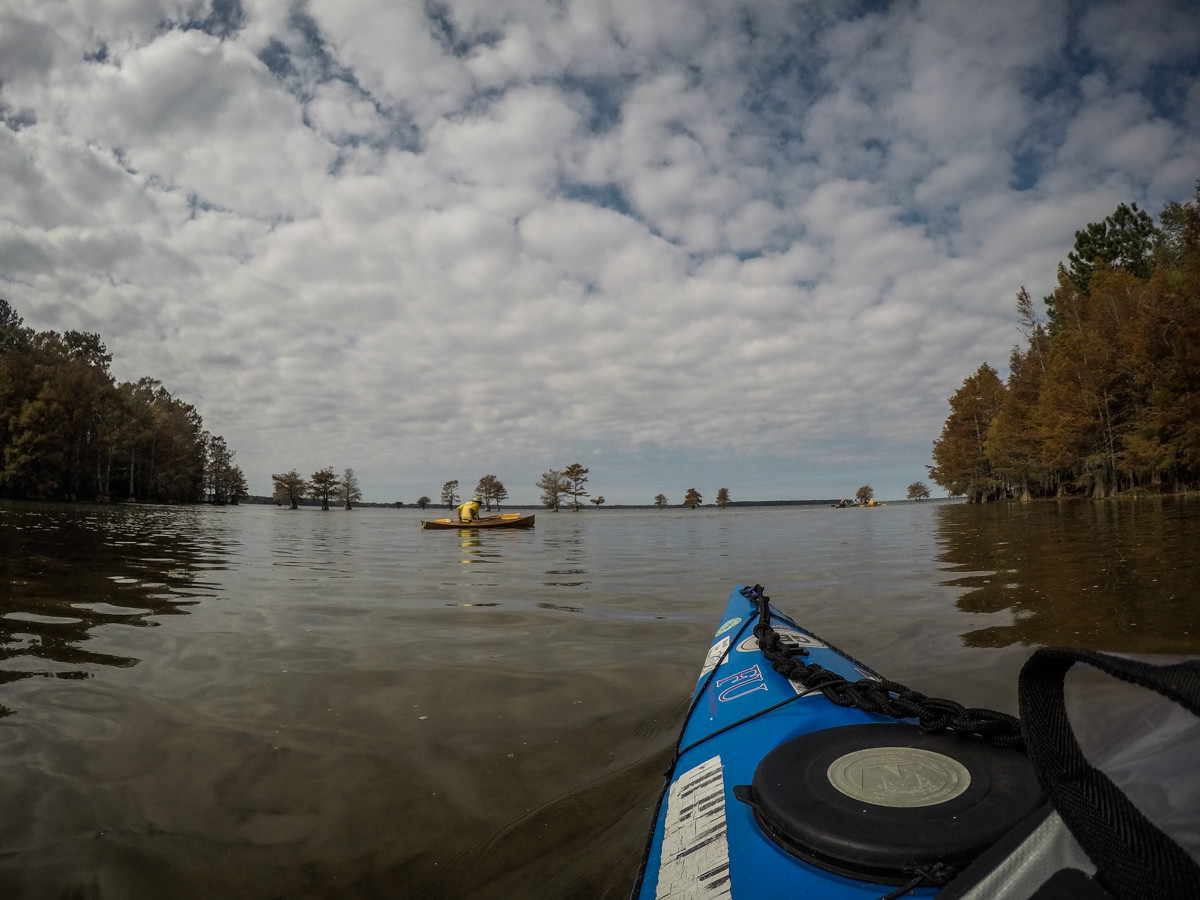
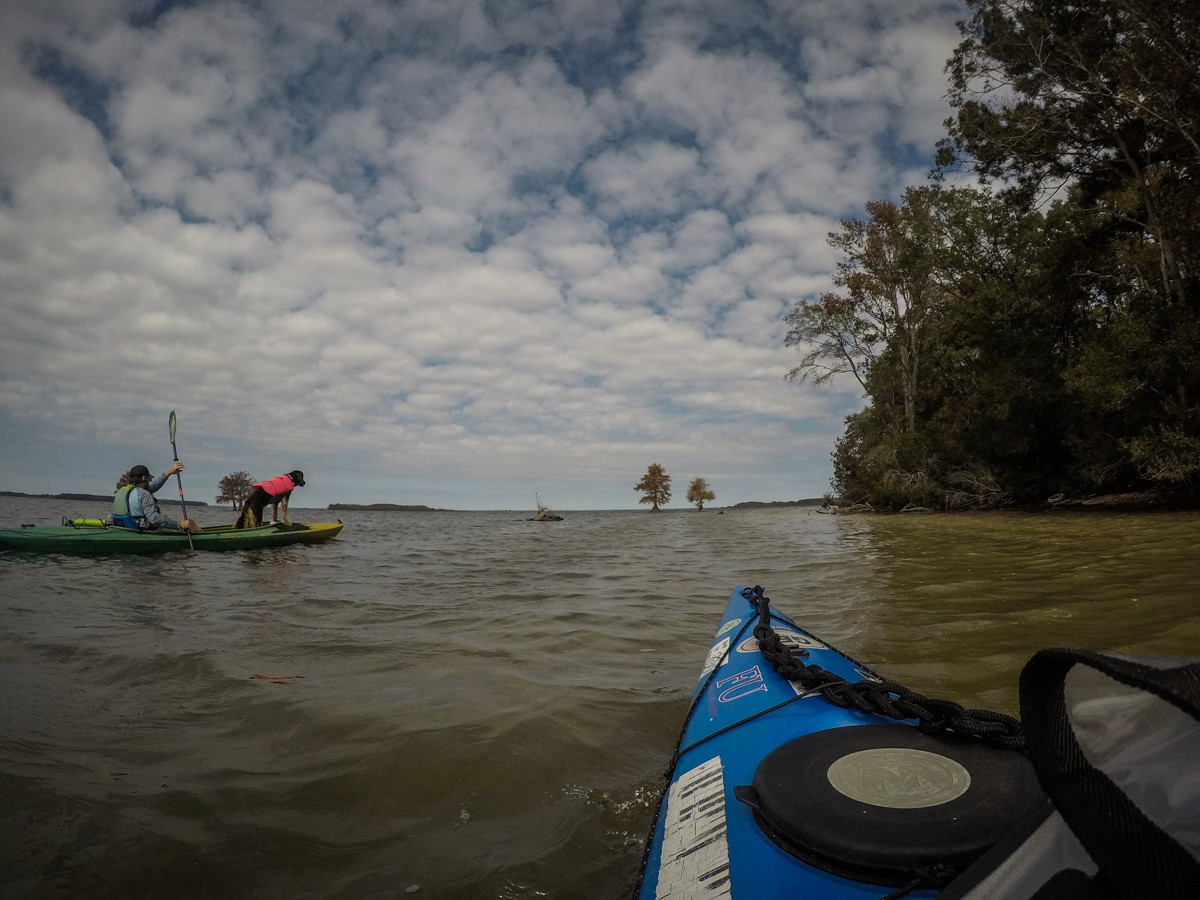
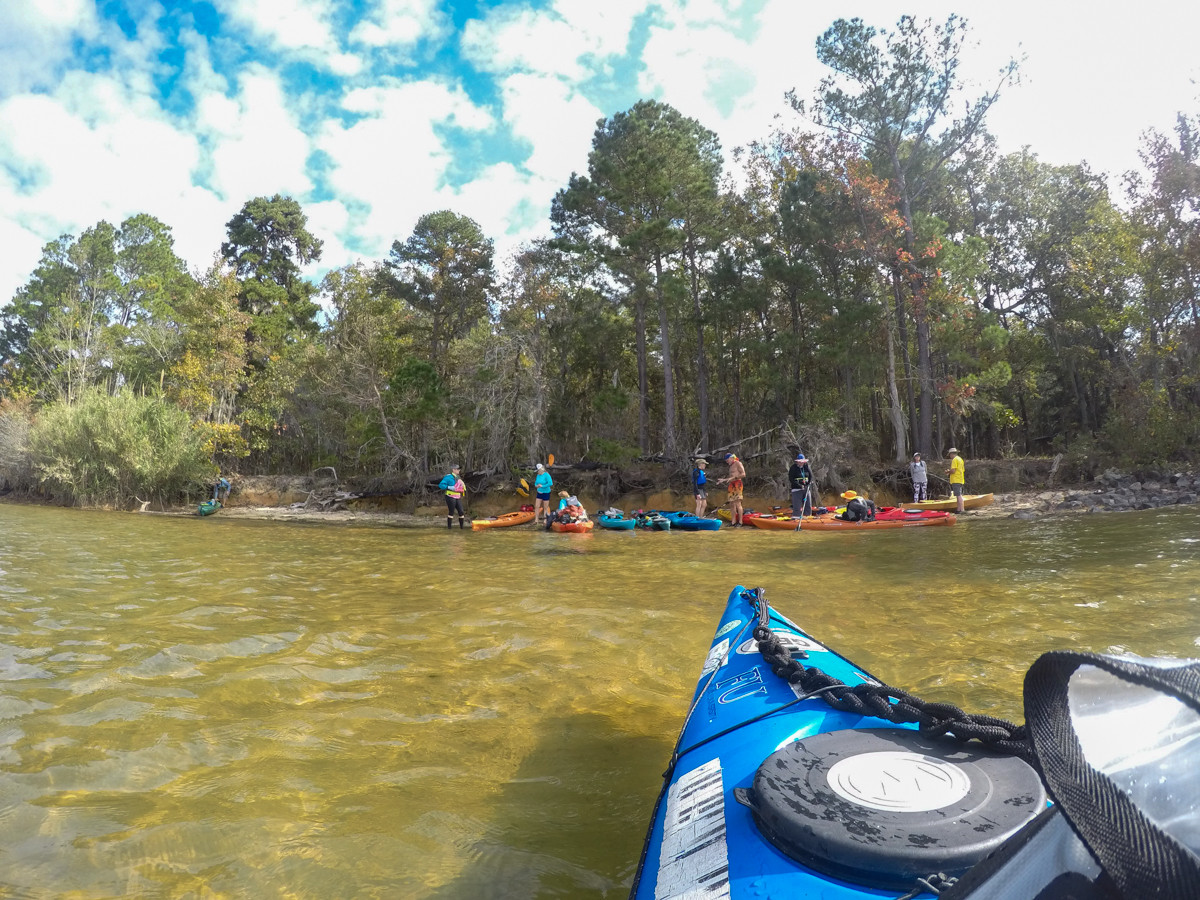
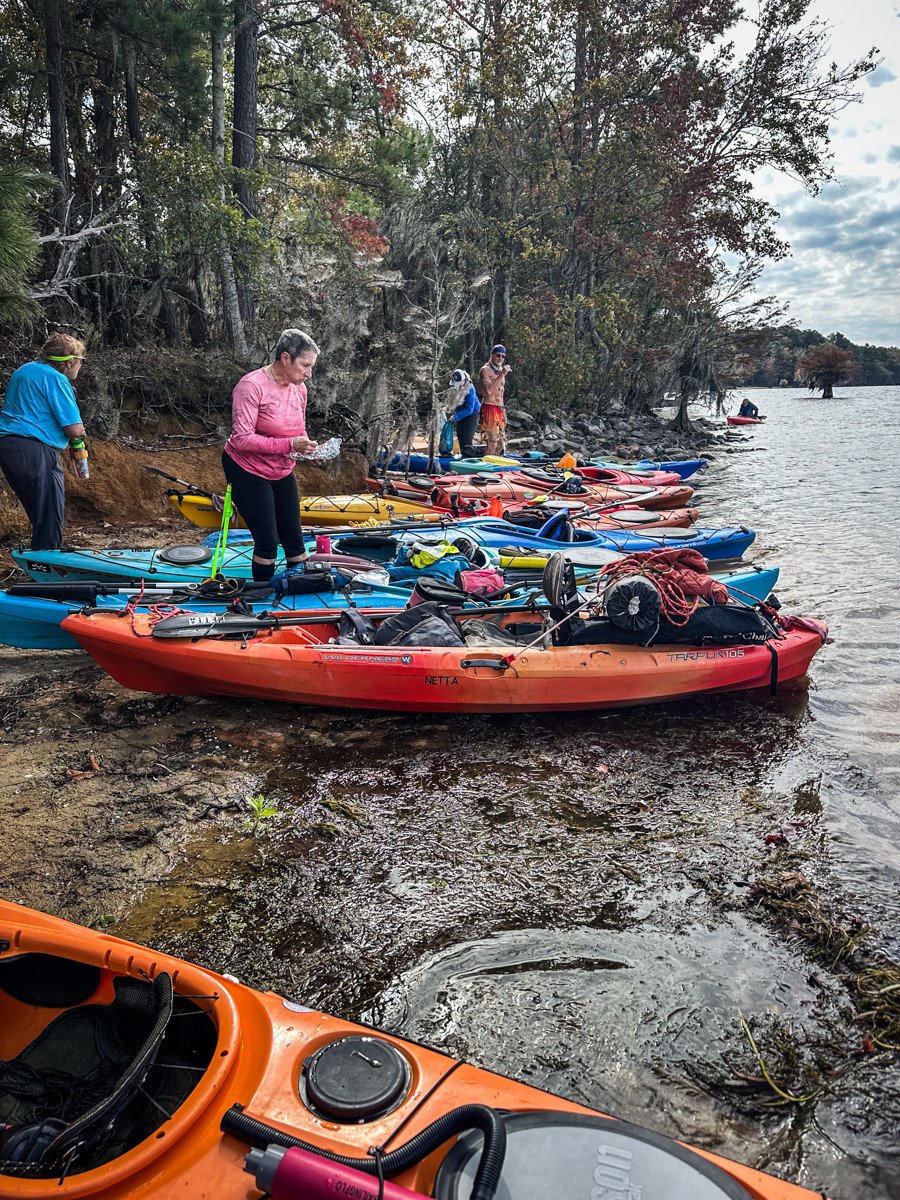
As we ate lunch I talked about the history of the Rocks Cemetery. The Episcopal Church of the Epiphany started as a chapel of ease for the St. Stephens congregation in 1808. In 1839 it became a congregation in its own wright, with a wooden structure built on what is now Church Island. Not long afterwards the church got its own chapel of ease in nearby Eutawville. The two churches shared a minister and held services on alternating Sundays. In 1939, when the lake was flooded, the original Church of the Epiphany was deconsecrated, and the church in Eutawville became the primary congregation of that name.
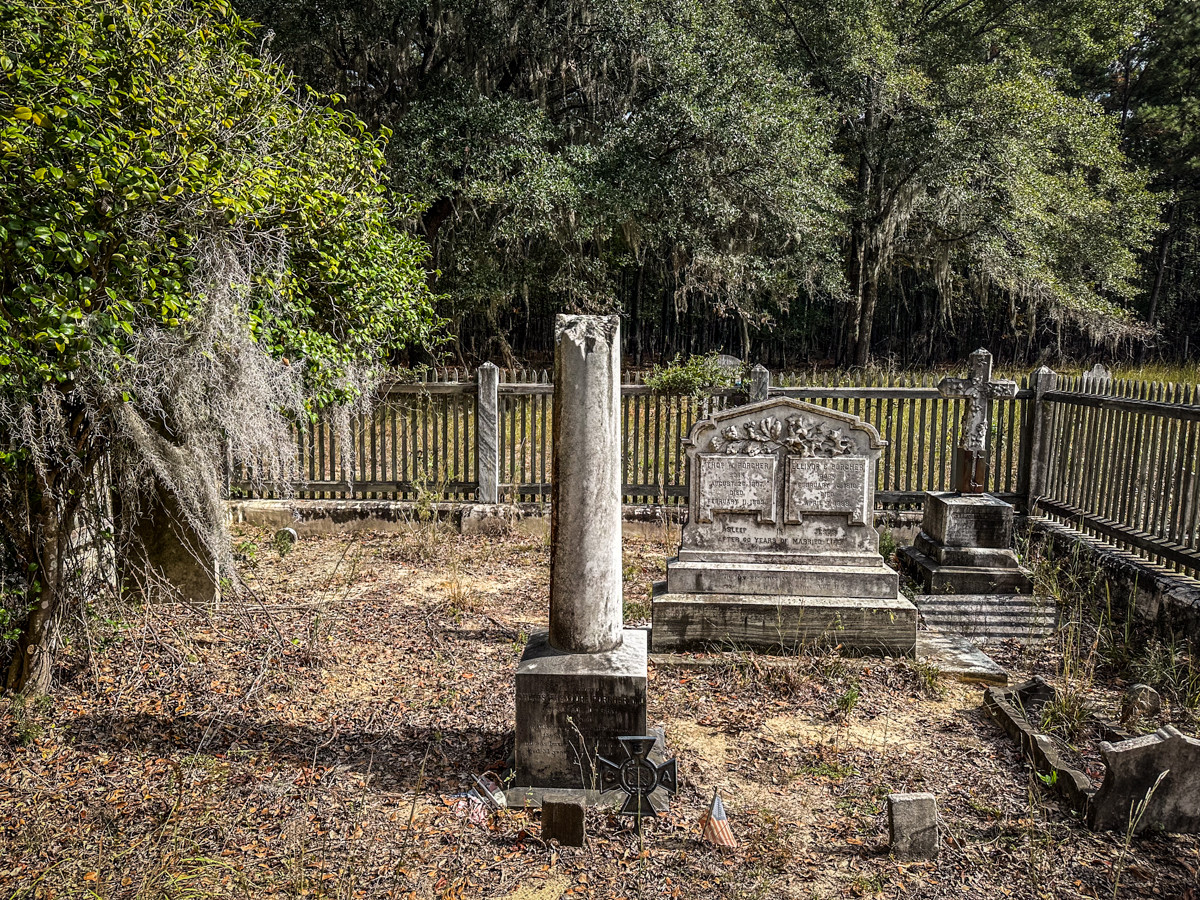
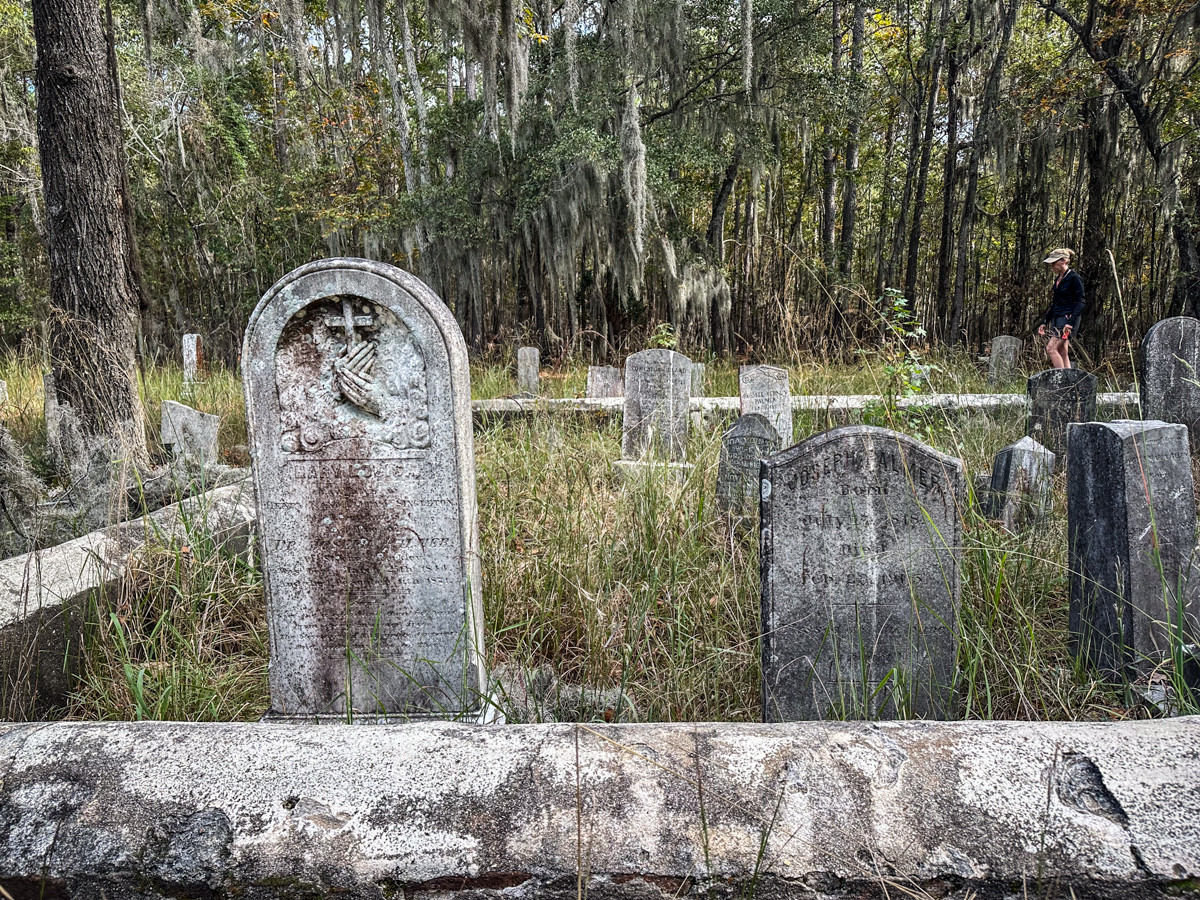
I then started talking about the cemetery itself. There are lots a surnames closely associated with Charleston – Porcher, Gaillard, Causey, etc. Most of these families had their primary residence in Charleston, but owned plantations in the area. It was something of a closed society. There were lots of intermarriages among the families, as born out by the names on the headstones. The oldest of these graves was from about when the church started, in 1808.
The church was much, much more overgrown than my previous visits. It made it difficult to see some of the headstones, but gave the site an even more eerie feel.
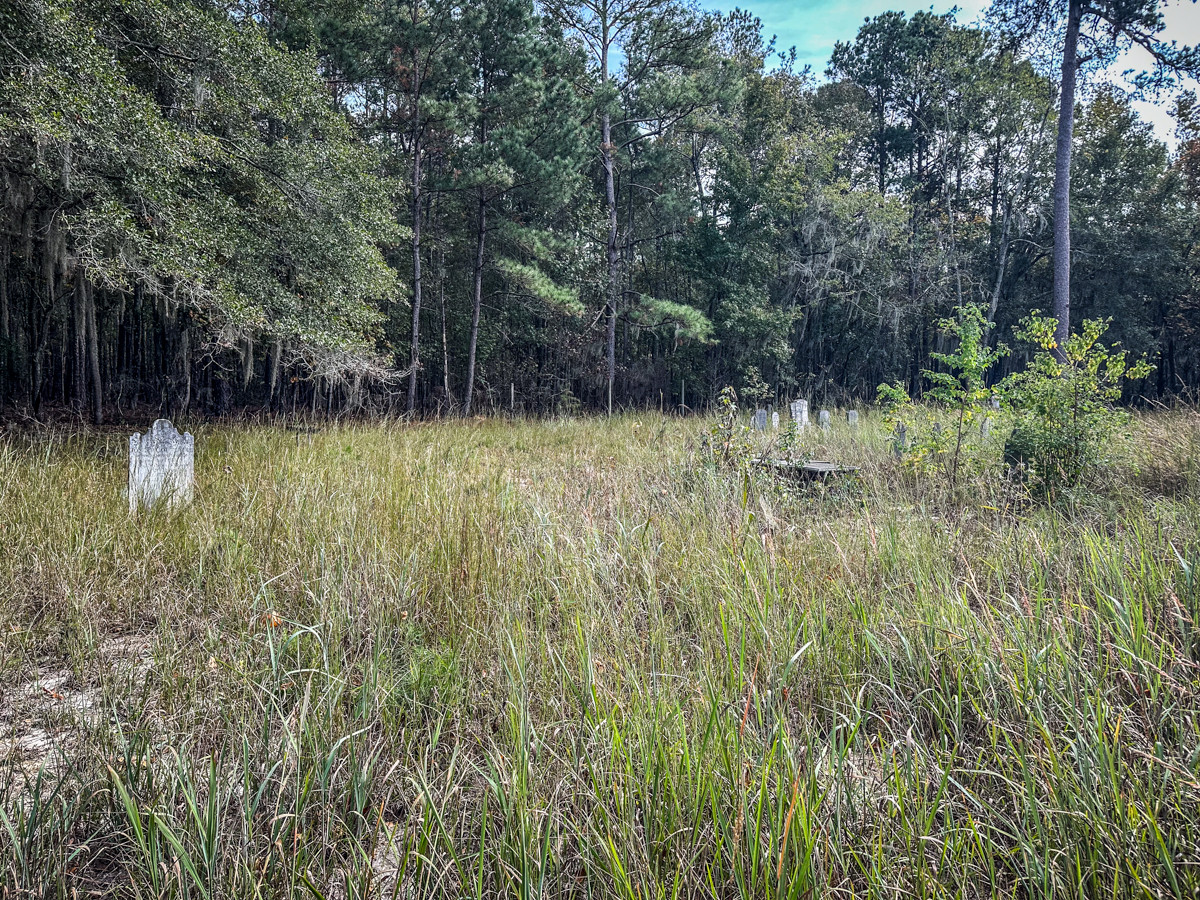
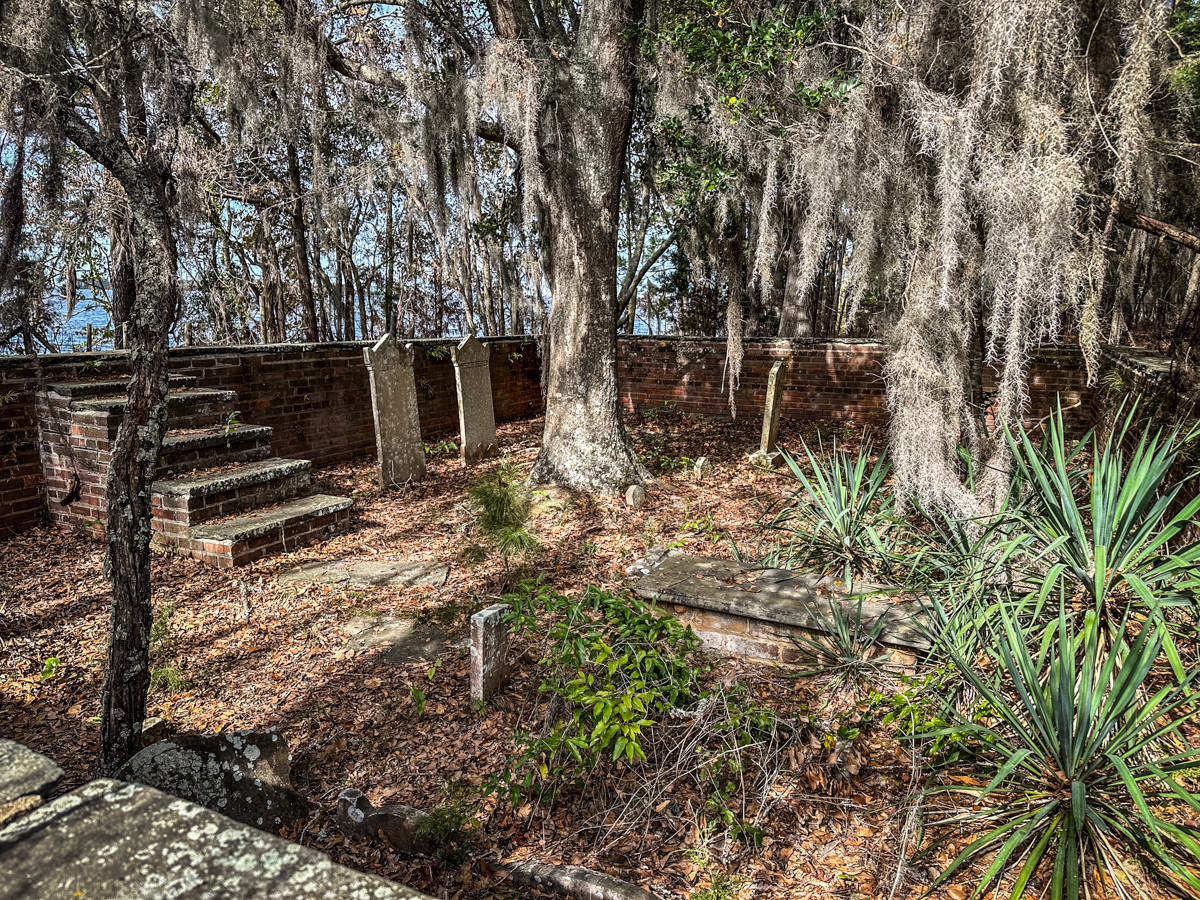
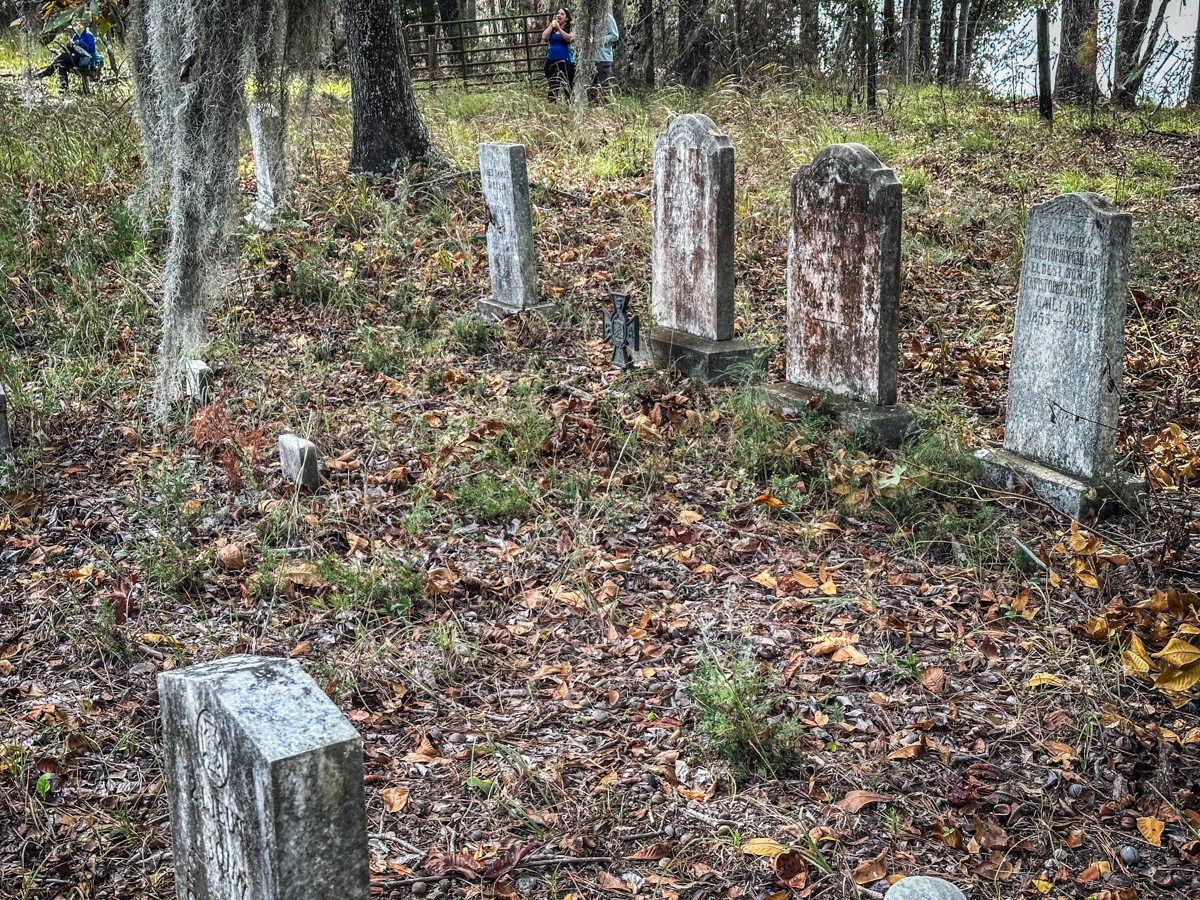
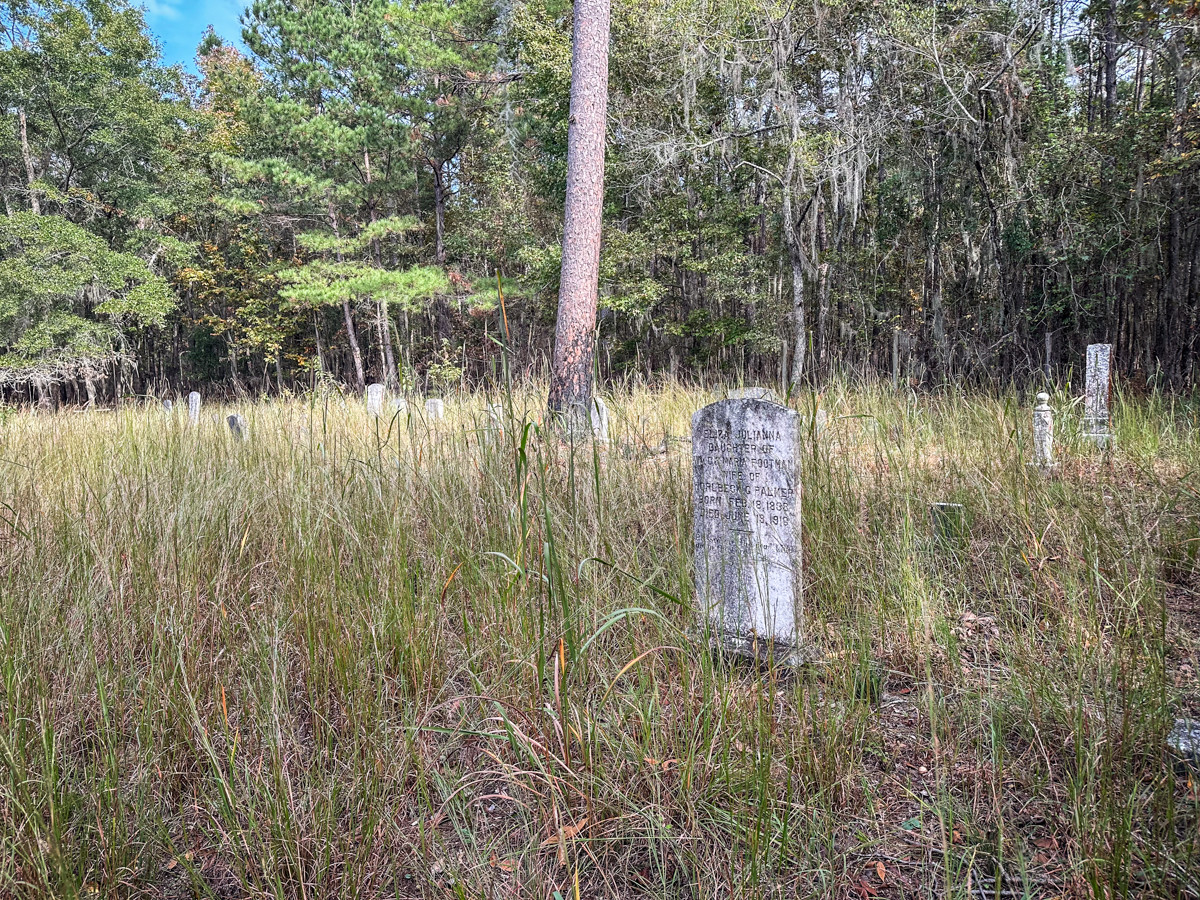
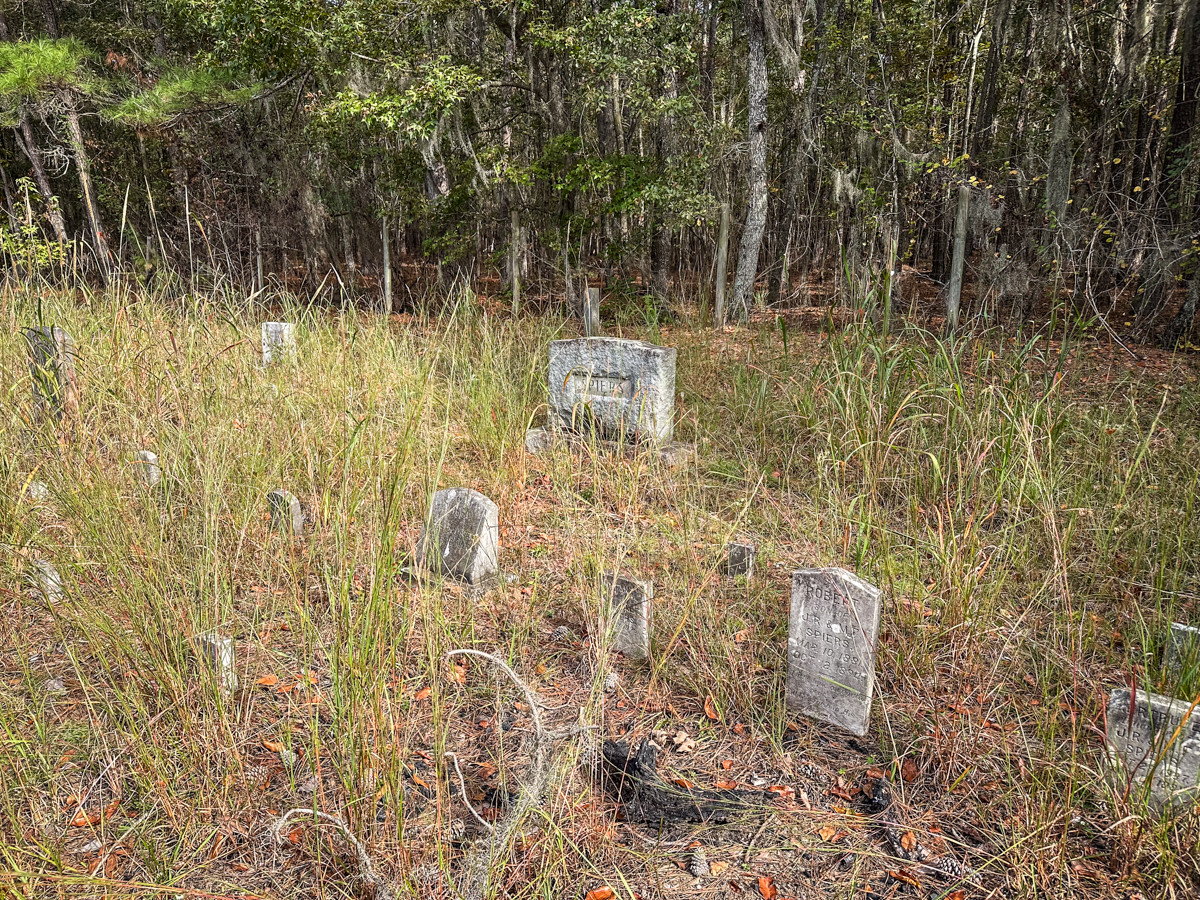
I pointed out some of the more interesting headstones. Julius T. Porcher was a Confederate soldier killed in battle. His marker is a cenotaph, rather than a grave, meaning that it’s a memorial without a body. In this case, his stone is a broken column, indicating a life cut short. This led to a discussion of other cemetery iconography, such as clasped hands, willow trees, etc.
I did some research on some of the more prominent names in the cemetery. There were several medical doctors, as well as public figures. I found lots of newspaper articles about these individuals. One served as the executor of Francis Marion’s will. Another was a tax collector with announcements about collections. As an Antebellum plantation society, most of these were slave owners. I found a couple of news clips where slave owners were offering their slaves for various public works projects. The undersigned were many of the names I saw in the cemetery.
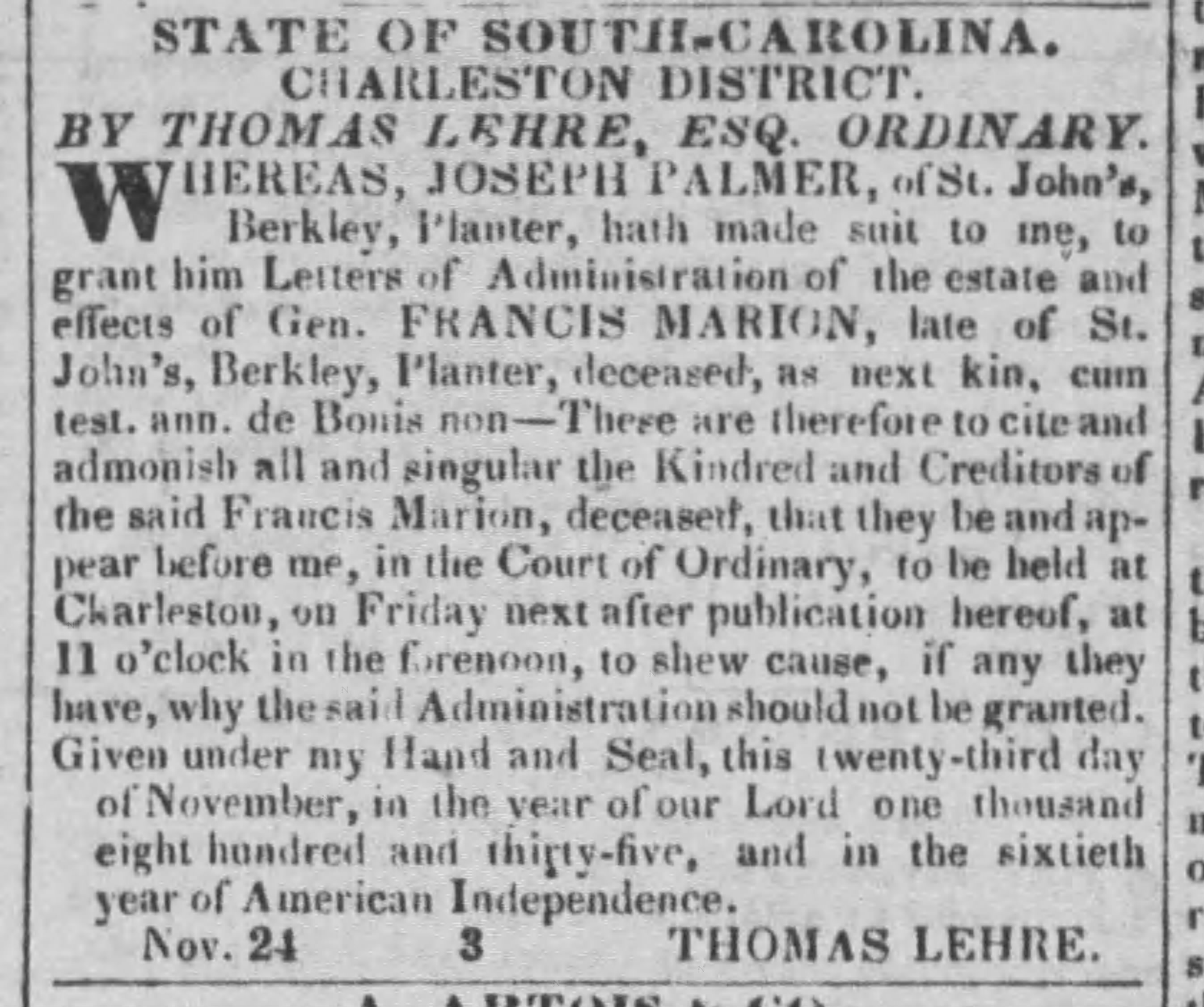
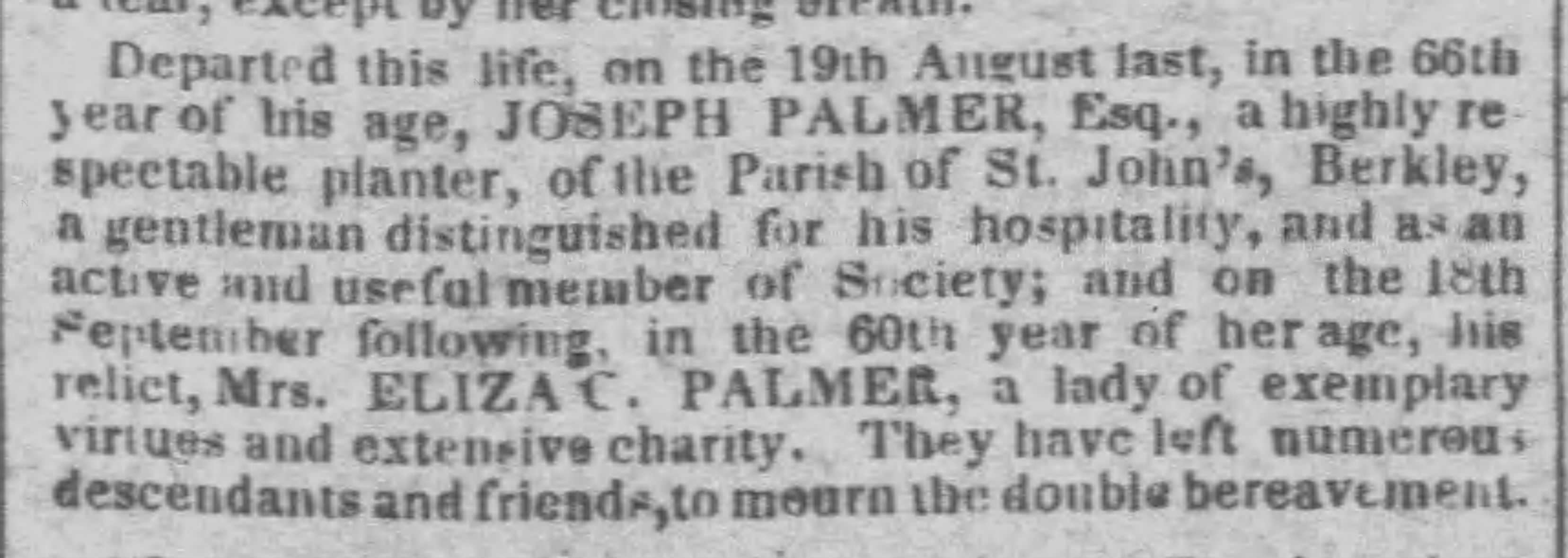
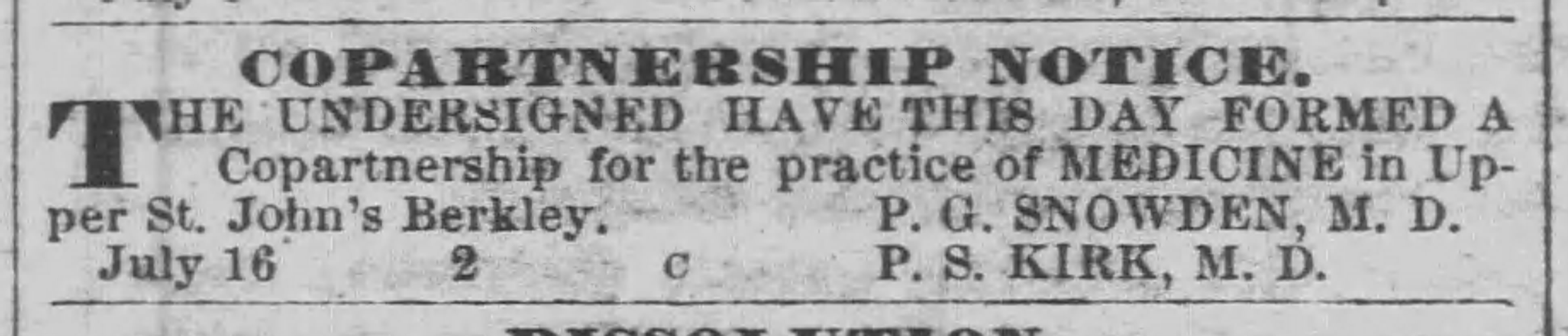
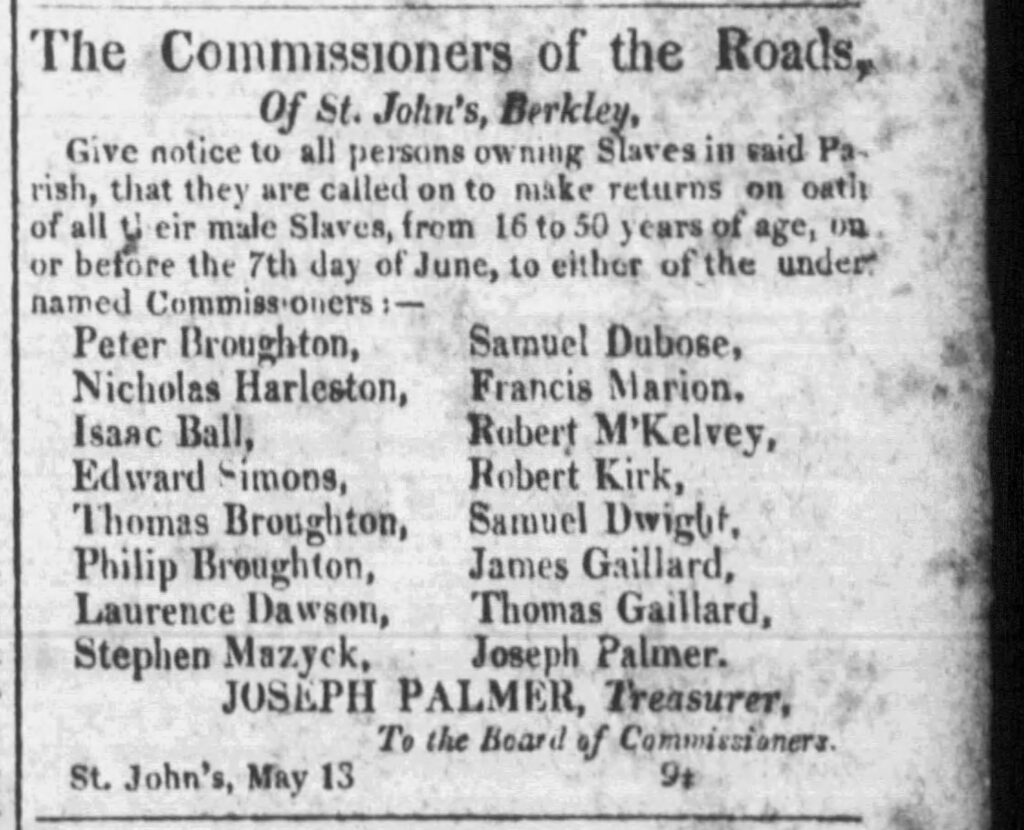
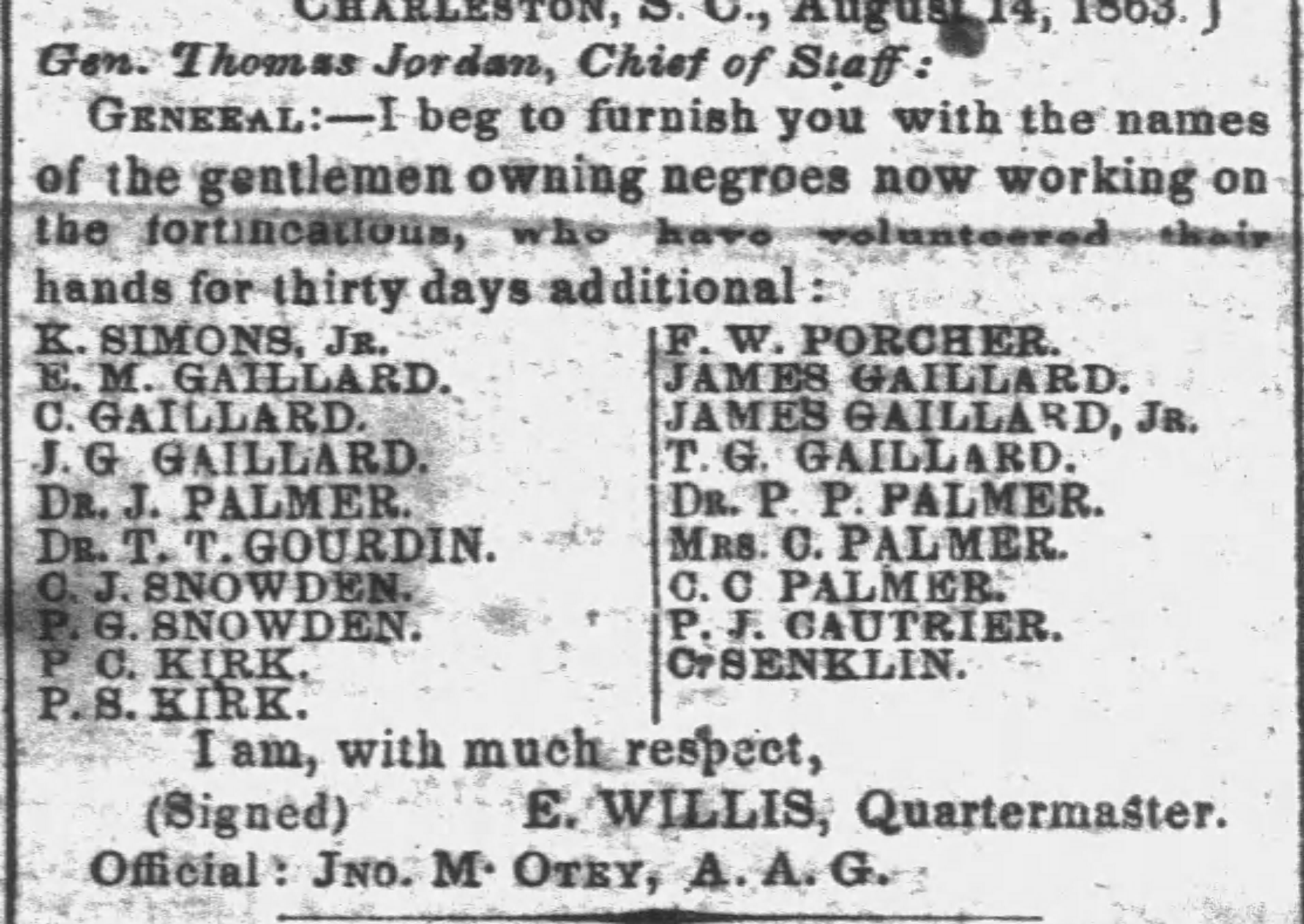
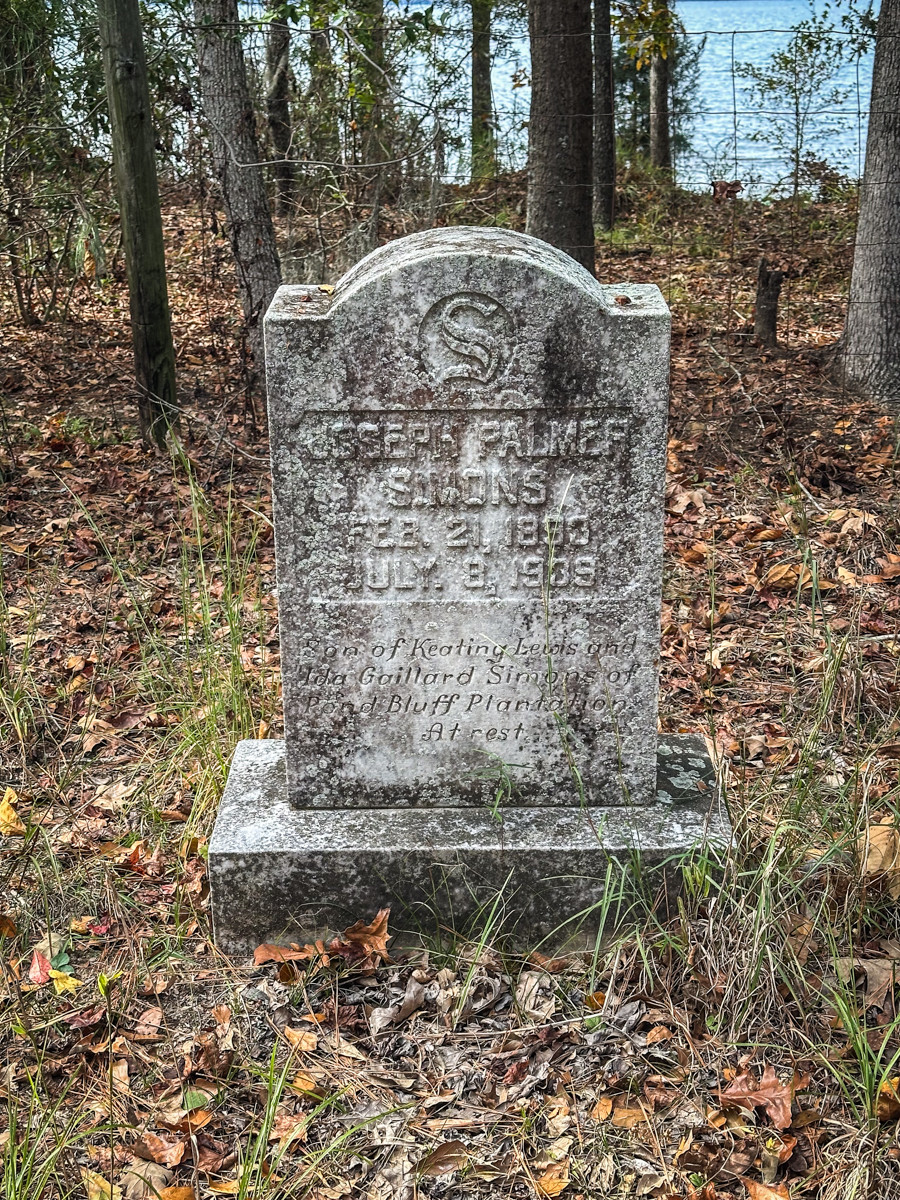
I pointed out a couple of other interesting graves. Joseph Palmer Simons owned the plantation at Pond Bluff that had once belonged to Francis Marion. When eminent domain was used to obtain his property for the Santee Cooper Project, Simons was distraught. Rather than see his beloved home flooded, Simons stood on his front porch and took his own life.
Probably the most intriguing headstone was one that most people overlook. It’s a simple military headstone for Lt. Col. George St. Leger Grenfell, and there is absolutely no reason I’ve been able to find as to why this stone should be here.
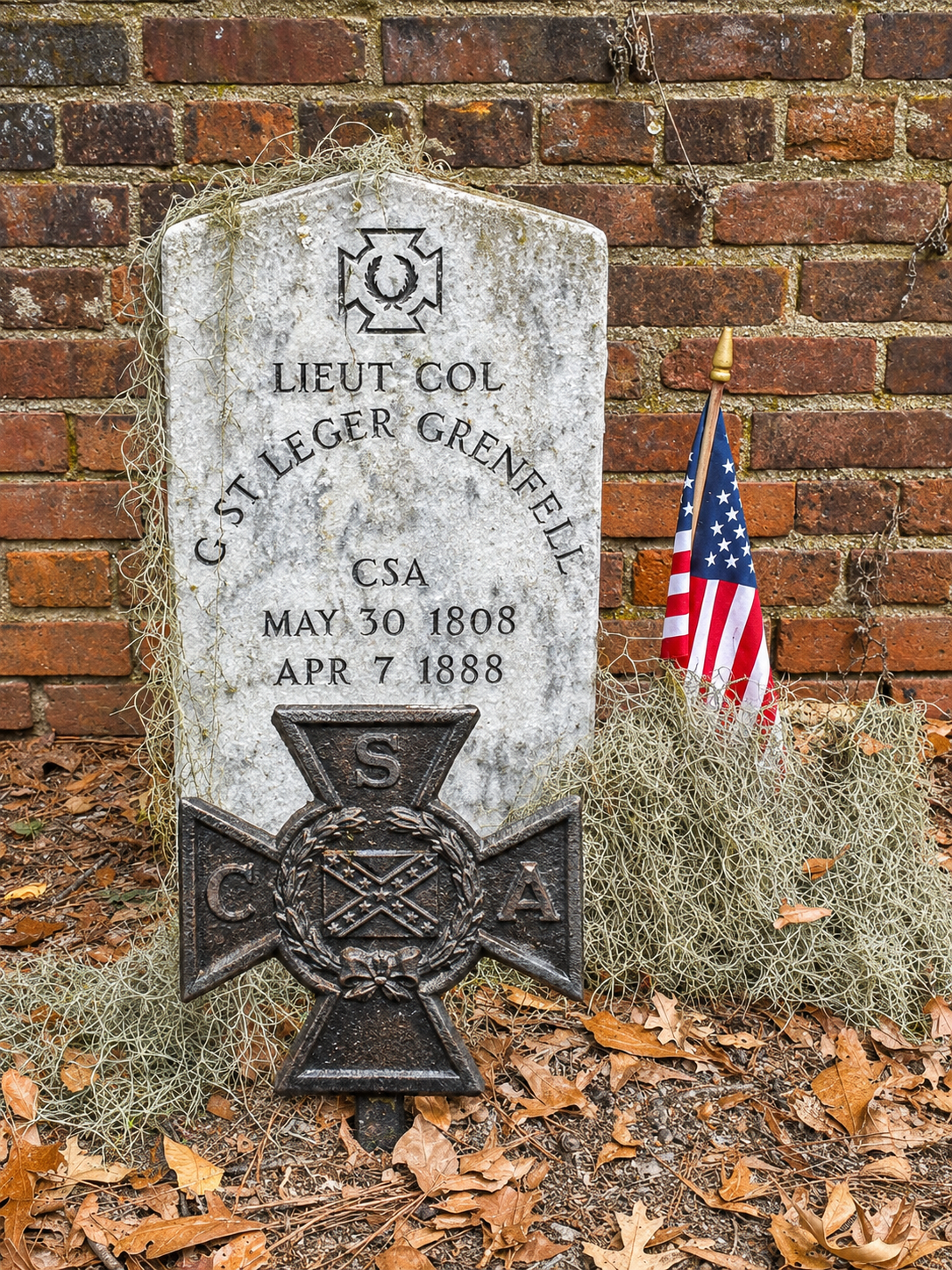
Like Julius Porcher’s stone, this is a cenotaph. Grenfell was a British soldier of fortune who fought with the Confederacy and died at sea while attempting to escape from Fort Jefferson in the Dry Tortugas. His only time in South Carolina was when he first landed in Charleston, then moved on to Tennessee. As far as I can tell he has no other association with the state, and certainly not with this cemetery or church. Grenfell’s life is so intriguing that I’m doing a follow-up blog post just on him.
The group wandered through the cemetery looking for things that I’d pointed out, such as stone carver signatures and other iconography. I tried to answer questions as best I could, getting audio recordings as I went. Dawn was also interviewing paddlers and getting stories from them. It seems that several of the paddlers had come out on an earlier trip armed with ghost hunting equipment such as EMF meters, EVP recorders, etc. They were taking the “ghost” part of Carolina Ghost Towns quite literally.
It was time to head back. With the lights not working properly on my trailer I didn’t want to be driving too much after dark, and I had a three hour drive. We parted ways – some to explore further, some to head to the night’s campground, and others back to Spiers Landing. I found myself paddling alone for most of the return trip. I got into the weeds again, but was able to find an alternate route that was more open.
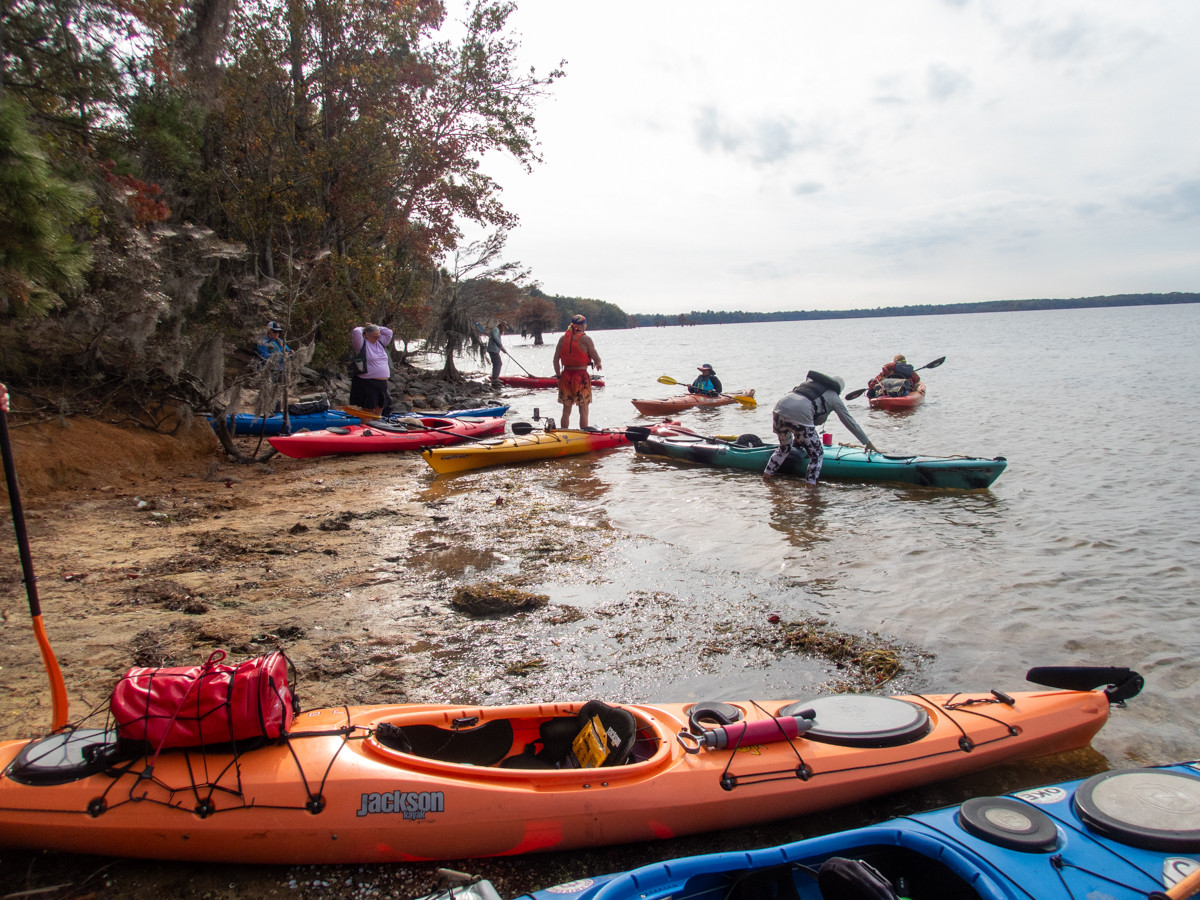
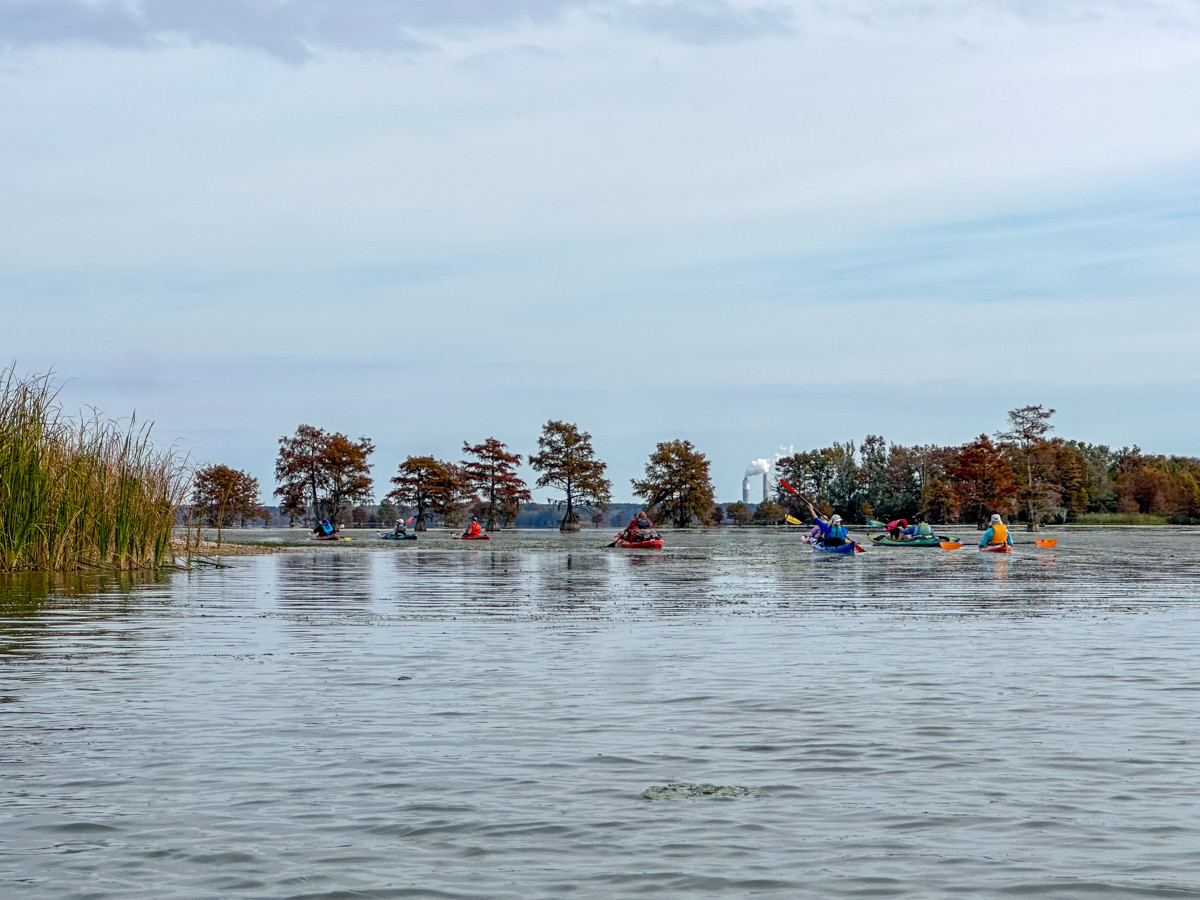
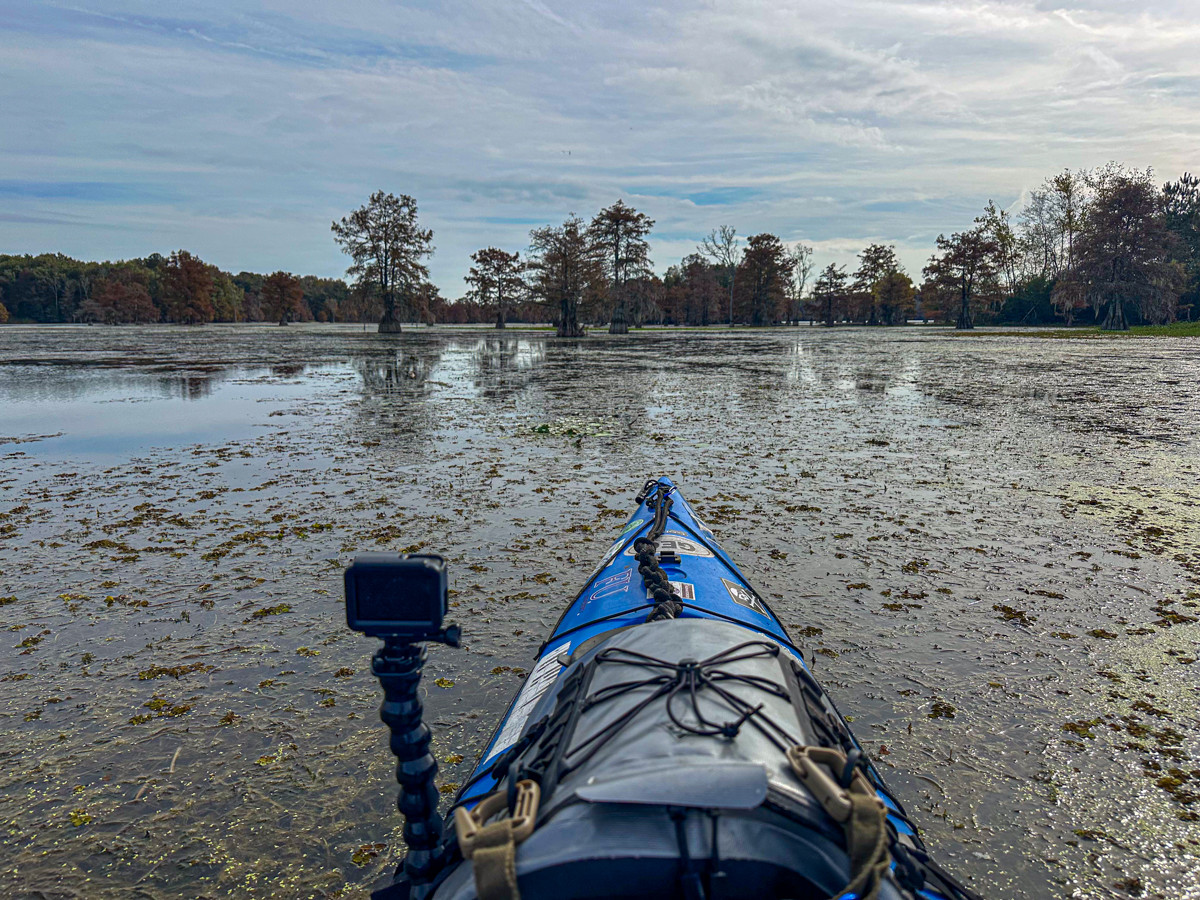
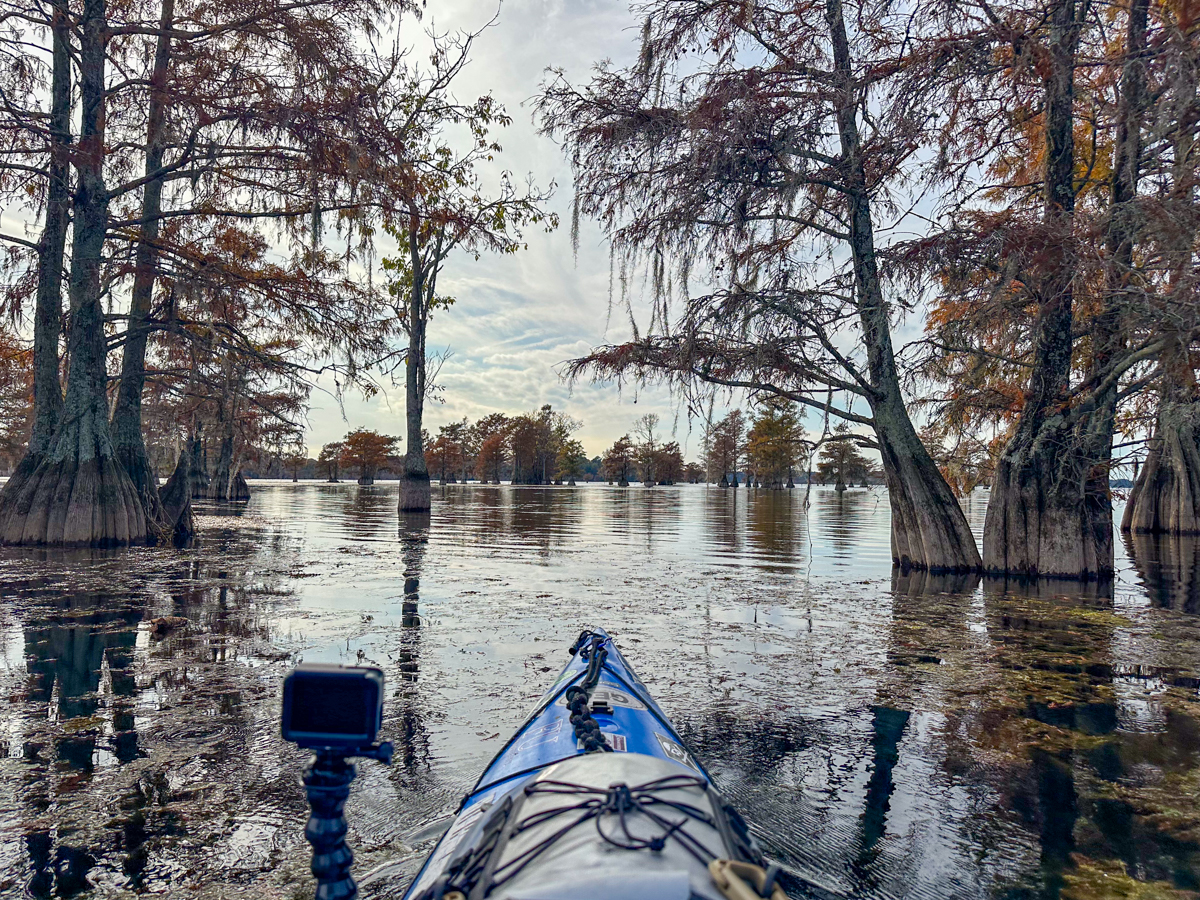
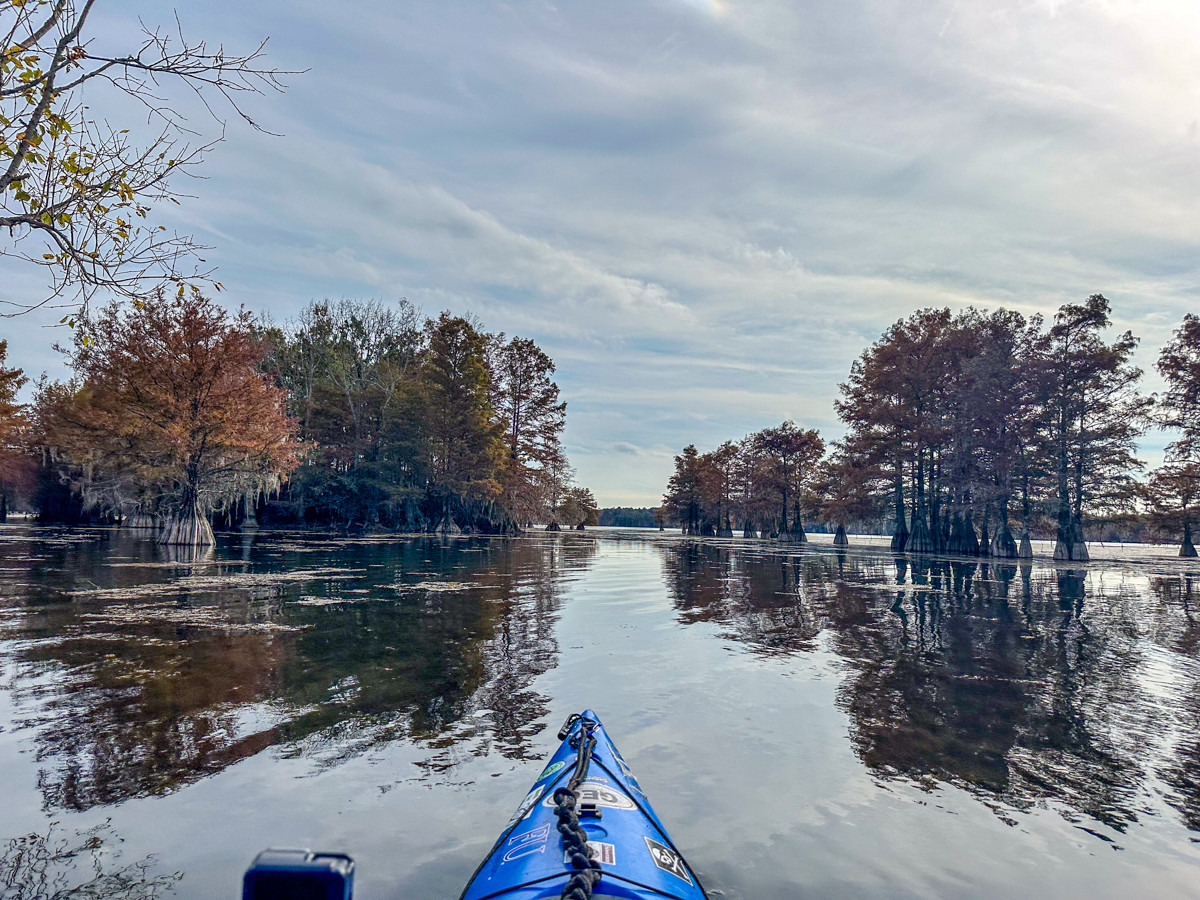
Even though it was a very short paddle by my usual standards, only 4 miles, I was exhausted. I was out of shape and using an unfamiliar paddle, and that contributed to my fatigue.
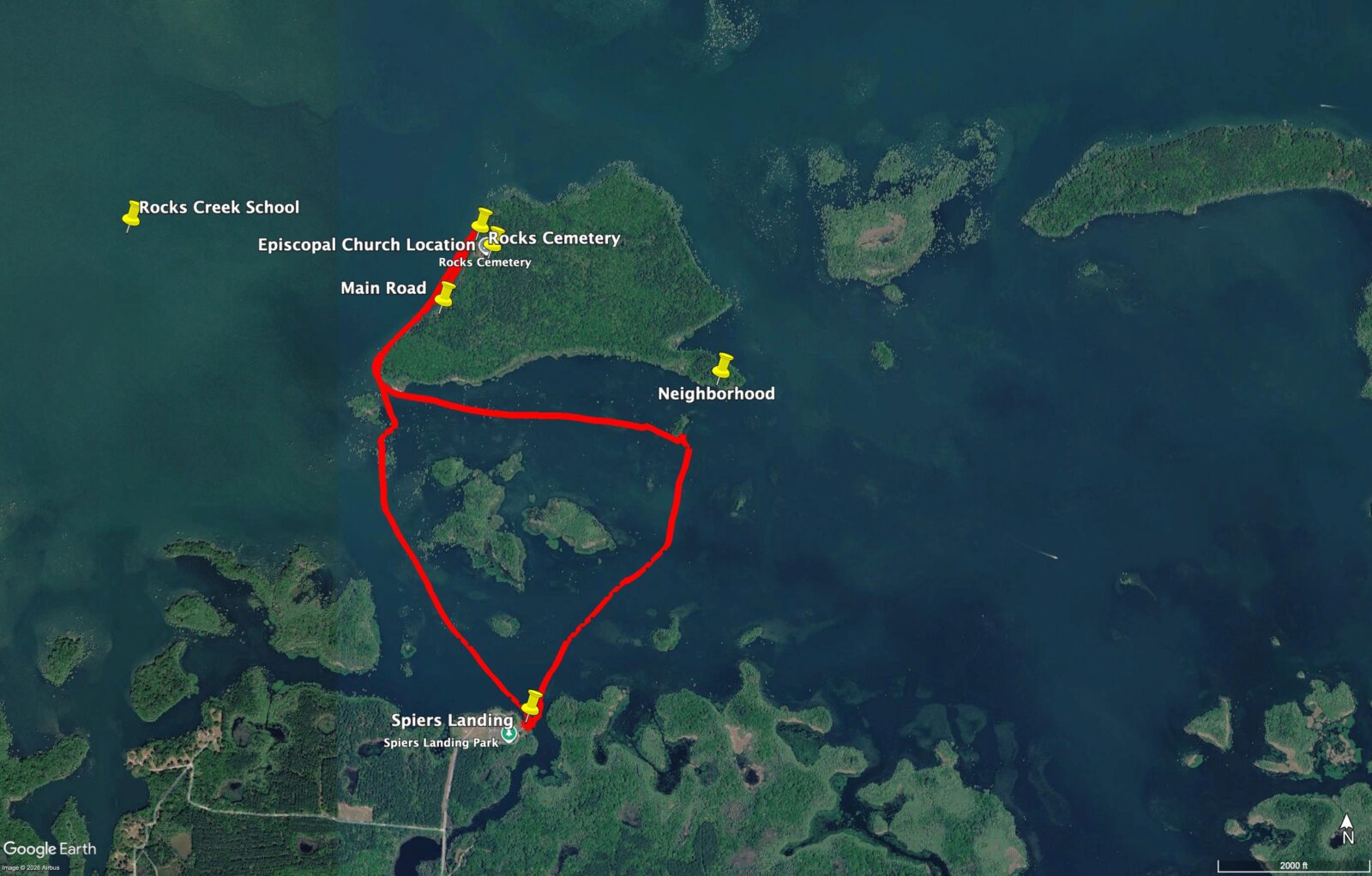
Here’s the track from our trip. The second image shows that track overlaying the 1923 USGS map.
I did make a time-lapse from the GoPro images.
As far as the podcast episode goes, I had planned to release it the Tuesday after the trip. Today, as I’m writing this. That was just not going to happen. I’ve got several hours of recordings and it will take me a while to through and edit it. I hope to get it out sometime before the end of the year.
Despite my anxiety, I think the trip went well. It’s always fun meeting new paddlers, and we couldn’t have asked for a better day in terms of weather and scenery.